Which Ming Tomb Can You Actually Go Inside?
Only one of the thirteen Ming Tombs lets you walk into the buried throne chamber, and a second lets you into its above-ground halls. Here is what each one actually contains, what entry costs, and how the reservation works.
Which Ming Tomb Can You Actually Go Inside?
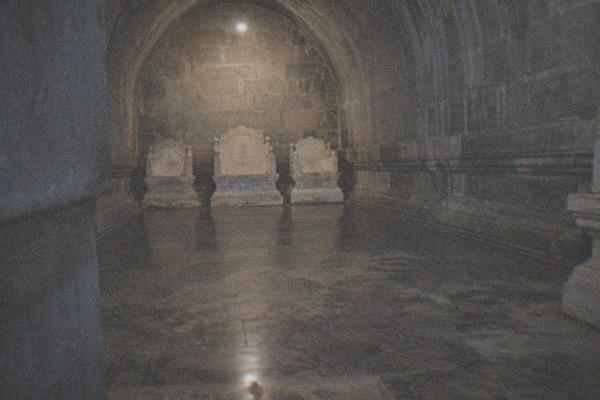
Only Dingling lets you walk down into a real underground burial palace, a vaulted stone chamber deep beneath the mound where the Wanli Emperor and two empresses were laid to rest. Changling is the second tomb with genuine interior access, but its treasures are above ground: the enormous Ling'en Hall, the largest surviving timber hall in the complex. The other eleven tombs are closed to interior visits.
That asymmetry surprises a lot of visitors. The Ming Tombs, or Shisanling, are marketed as one attraction, and the ticketing often reads as though you are buying "the Ming Tombs" as a single thing. In practice the site is a valley of thirteen separate tomb complexes scattered along a few kilometres of road, each behind its own walls, and the state opens the interiors of only two of them. The Beijing Museums roster records the pair plainly: Dingling and Changling are the two with an entry product, at a combined door price of CNY 60 for the pair, and no other tomb in the valley sells interior access.
Dingling is the headline. It is the only one of the thirteen where excavation reached the burial chamber itself, and visitors descend a stairway cut through the mound into the vaults where the emperor's coffin platform still stands. Changling, the tomb of the Yongle Emperor who built the Forbidden City and chose this valley, works differently: you enter its surviving above-ground halls, and the mound behind them stays sealed. Between the two you get both faces of Ming imperial burial, the marble underworld and the timber grandeur, in a single half-day.
The distinction matters for planning because the two sites reward different expectations. Dingling is about depth and atmosphere: a cool, echoey descent into chambers built to be sealed forever. Changling is about scale and craftsmanship: courtyards, gate towers and a hall whose columns were cut from single trunks of hardwood. A visitor who arrives expecting a museum hall of gold artifacts at either site will be disappointed, because the architecture itself is the exhibit. Read on for what each interior actually holds, what the tickets cost, and why the other eleven mounds will stay shut on your visit.
What Is Actually Inside Dingling's Underground Palace?
The underground palace at Dingling is a network of five vaulted chambers cut from stone, reached by a long stairway that drops well below ground level. The central throne room holds the original coffin platform where the Wanli Emperor, Empress Xiaoduan and Empress Xiaojing were buried together. The chambers are stripped of treasure today, so it is architecture you are walking through, not a display of gold.
The story of how it opened is the reason the interior looks the way it does. Dingling was excavated in the mid-twentieth century, the only Ming tomb ever archaeologically opened, and the excavation famously went wrong: the silk textiles and organic finds deteriorated rapidly once the seals were broken, and the planned excavation of Changling was called off as a result. That decision is why Changling's mound has never been opened, and why Dingling remains the one place in the valley where you can stand inside a Ming burial chamber at all.
What you see below is deliberately spare. The vaults are deep, cool and echoey, lit for visitors, with the great self-supporting stone gates that sealed the emperor in for four centuries. The original burial goods are in museum collections rather than in situ, so go in expecting an architectural experience: the scale of the chambers, the engineering of the gates, and the strange quiet of a room built to be never entered. Visitors with mobility concerns should note that the descent and climb back out are substantial, and the stairway is the only way in or out.
The layout follows the logic of Ming cosmology. The chambers run along a central axis, with side vaults for the empresses and a rear chamber where the coffin platform rests, mirroring above-ground palace planning turned downward. Guides and signage explain the sequence, but even without commentary the geometry reads clearly: you are walking the floor plan of a palace designed for one occupant and no visitors. Bring a light layer even in summer, because the temperature underground stays well below the surface heat, and the walk back up the stairway is steep enough that comfortable shoes matter more than at any central-Beijing museum.
What Do You See At Changling If The Mound Is Sealed?
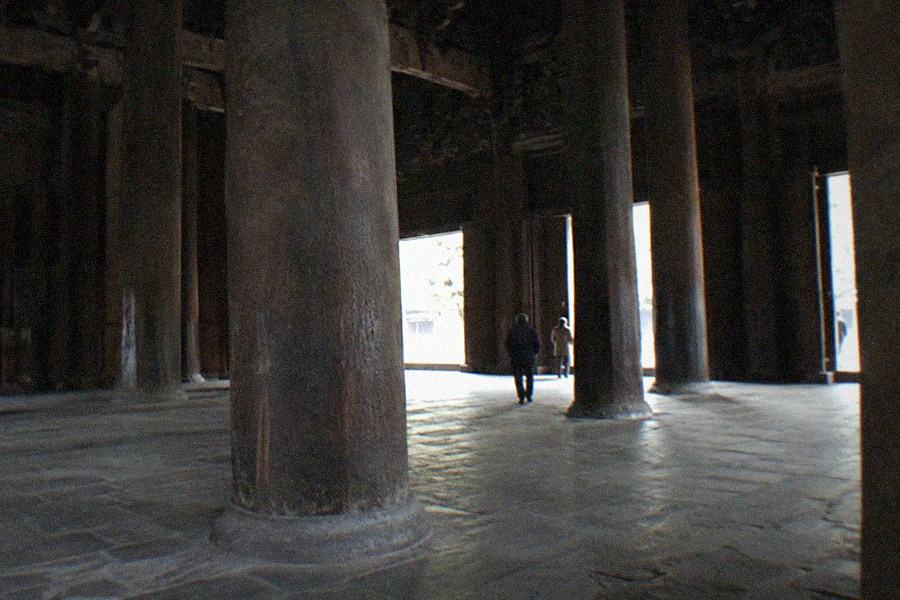
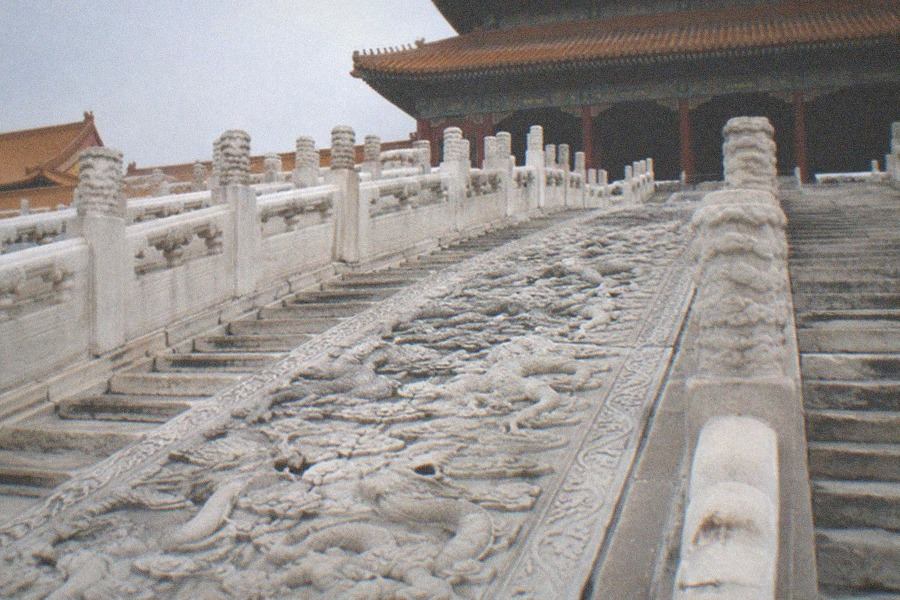
Changling gives you the finest above-ground architecture in the valley: the Ling'en Hall, a vast timber hall on a three-tiered marble terrace, built for the Yongle Emperor, the founder of the Forbidden City. Its interior, with its immense columns of nanmu hardwood, is open to visitors, along with an exhibition of tomb history and artifacts. The earthen mound behind the hall is sealed, so Changling is an above-ground experience.
The pairing is what makes the two-tomb ticket work. At Changling you stand in the world of the living, processional courtyards, gate towers, the hall where imperial sacrifice took place, while at Dingling you see what the ritual was protecting. The Yongle Emperor chose the valley in the early fifteenth century, and his tomb set the pattern the other twelve followed, which is why Changling is the one historians treat as the archetype. The hall's columns are the detail people remember: dozens of single trunks of a dense aromatic hardwood, and a coffered ceiling that has survived fires and dynasties.
A practical note on time. Changling rewards a slower walk, because the exhibition inside the hall explains the whole valley, the excavation history at Dingling, and the burial customs of the dynasty. Do it before Dingling and the underground palace makes more sense; do it after and the exhibition answers the questions the vaults raise. Either order works, but skipping it turns the trip into two photo stops.
The terrace itself is worth a slow circuit. From its corners the whole Changling precinct reads as a diagram: the spirit way arriving from the south, the gate towers narrowing toward the hall, and the green mound rising behind, closed and grassed over, exactly as the ritual intended. Photographers do best here in morning light, when the timber columns glow and the crowds are thinnest. There is no cafe worth planning around inside the precinct, so carry water, especially in the hotter months when the marble terrace radiates heat back up at you.
How Much Do Ming Tombs Tickets Cost And How Does Booking Work?
Entry to Dingling is CNY 60 at the door in peak season and Changling is CNY 45, per the 2025 pricing on record, and a reservation is required, with the booking window not published. Reservations run through the Changping Wenlü Group WeChat mini-program. A third-party reservation service for the pair is listed from $20; that fee is for the booking service, not a different or dearer door ticket.
The two numbers describe two different transactions, and conflating them is the most common confusion in English-language coverage. The CNY figures are what the venue itself charges for admission. The dollar figure is what a reservation service charges to make the official real-name booking on your behalf, using the passport details you supply, with a refund if the official quota sells out before your booking lands. Neither number converts into the other.
| Item | Dingling | Changling |
|---|---|---|
| What you enter | Underground palace, five vaulted chambers | Ling'en Hall and above-ground exhibits |
| Door price (peak season) | CNY 60 | CNY 45 |
| Reservation | Required | Required |
| Booking channel | Changping Wenlü Group WeChat mini-program | Same mini-program |
| Mound access | Yes, via visitor stairway | No, sealed |
| Time needed | 60 to 90 minutes | 60 to 90 minutes |
The reservation requirement is the real barrier here, more than the price. The Ming Tombs sit in Changping, well outside the central museum district, and the booking runs through a district-level mini-program that has no polished English interface. That is exactly the gap a reservation service fills: you give passport details, the provider books the official timed entry when the window opens, and confirmation follows. Because the release window for this venue is not published, book several days ahead rather than gambling on a same-day slot. The 2025 bendibao ticketing report is the source for the per-tomb prices above, and a 2026 visitor article confirms the reservation flow through the mini-program.
One more planning detail: the two tombs are separate ticketed sites, not one combined gate. You can buy both, and most visitors do, but the tickets are checked at each precinct independently, so keep your booking confirmation accessible on your phone at both entrances rather than assuming one scan covers the day. If the official quota for one tomb is exhausted, the reservation service refunds that portion, which is worth knowing before you build a tight itinerary around both interiors on the same morning.
How Do You Get To The Ming Tombs And How Long Does A Visit Take?
The Ming Tombs are a day trip: the valley sits in Changping District, roughly 50 kilometres north of central Beijing, and the drive takes well over an hour each way. Visiting both open tombs plus the spirit way comfortably fills half a day. Public transport exists but is slow, which is why most visitors arrive by car, driver, or an organised day tour.
This is not a museum you slot between lunch and dinner. The distance is comparable to the other greater-Beijing heritage sites, and the practical planning question is what to combine it with. The classic pairing is the Great Wall at Badaling or Juyongguan, both on the same northern axis, and the itineraries that do both in one day are common for a reason: the drive between them is short relative to the drive out from the city.
For museum-minded travellers, the better pairing may be a second heritage stop rather than the wall. The Beijing day trip museums guide covers the sites outside the centre worth the travel time, including the Zhoukoudian Peking Man site in the opposite direction, and it is worth checking before you commit a day. If your time is short, the honest advice is that the Ming Tombs rank below the Forbidden City, the Temple of Heaven and the Summer Palace for a first visit, and become compelling from the second trip onward, when you have seen the imperial Beijing of the living and want to see where it was buried.
Timing within the day matters more here than at a central museum. Weekday mornings are quiet, weekends and Chinese public holidays are not, and because the valley is a spread-out outdoor site, weather shapes the visit: summer heat makes the exposed spirit way a long walk, and winter turns the terraces icy and the underground palace the warm part of the trip. Mid-week in spring or autumn is the sweet spot most repeat visitors recommend. Leave central Beijing early, do the spirit way before the tour coaches arrive, and you will have the stone animals almost to yourself.
Why Can't You Go Inside The Other Eleven Tombs?
The other eleven tombs are closed to interior visits as a matter of policy, not decay. After the Dingling excavation destroyed much of the organic material it uncovered, China halted the excavation of imperial tombs, and Changling's mound, the next candidate, was never opened. The remaining tombs were never excavated at all, so their vaults are sealed earth and untapped archaeology, kept that way by standing policy.
That policy is one of the more consequential decisions in modern Chinese archaeology. The lesson drawn from Dingling was that mid-century techniques could not preserve what excavation exposed, and the result was a standing rule that imperial burials are left undisturbed. So the eleven closed tombs are not ruins awaiting restoration; they are intact mounds, each with its own surviving gate architecture visible from outside, and some, Zhaoling among them, have had their above-ground buildings restored while the earth stayed sealed.
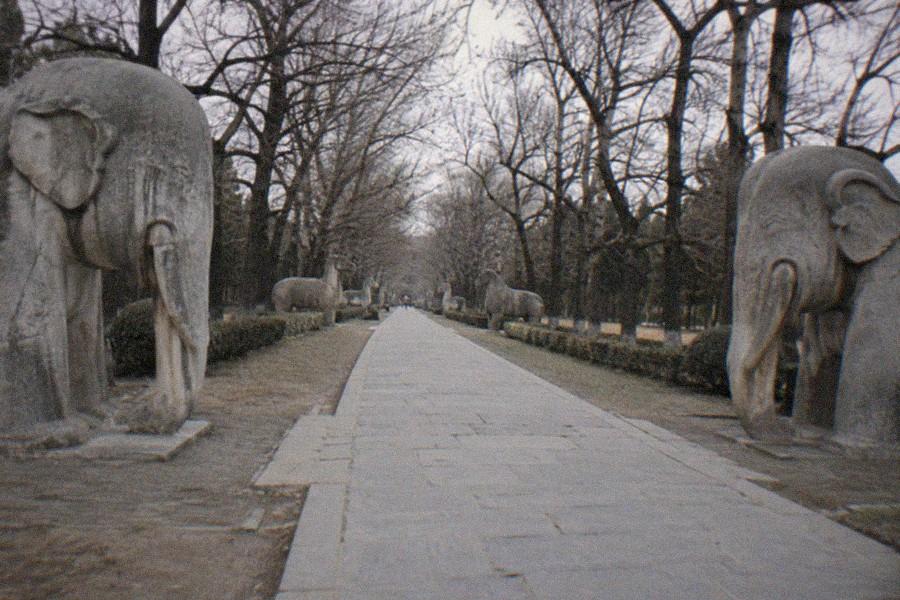
For a visitor this changes what the trip is. You are not choosing among thirteen candidate interiors; you are visiting two open sites and viewing the rest as landscape and architecture. The spirit way, the processional road of stone animals and officials that leads into the valley, is the connective thread, and it is the part of the visit where the thirteen tombs read as a single imperial project. Walk it if your legs allow it, because it is the one stretch where the scale of the whole necropolis, thirteen mounds in one valley, becomes visible.
The closed tombs still reward a glance from the road. Several have restored gate towers and stele pavilions that photograph well from outside, and a driver who knows the valley can point out which mound belongs to which emperor as you pass. But do not build an itinerary around entering any of them, because no ticket exists, and no amount of arriving early changes that. The honest framing is that the valley is a protected landscape with two visitor sites inside it, and both of those sites are covered by the reservation product described above.
Is The Ming Tombs Trip Worth It Without A Guide?
Yes for Dingling and Changling, because both sites are self-explanatory once you know the excavation story, and Changling's in-hall exhibition carries the explanation. A guide adds most value on the spirit way and the drive, where the context of each closed tomb and the Wanli Emperor's long, strange reign otherwise pass by unexplained. The reservation product carries a 4.4 rating across 25 reviews, which suggests most visitors leave satisfied.
The honest case against is that the tombs are quiet, spread out, and short on the spectacle a first-time visitor expects from "imperial Beijing". The case for is that Dingling is genuinely singular: there is no other place in the country where you can descend into a Ming emperor's burial chamber, and the sombre architecture of the vaults is a different register from the palace's red and gold. Travellers who enjoy history read the valley as the dynasty's final chapter and rank the trip highly; travellers chasing photo density sometimes do not.
A middle path works well: book the entry reservation yourself or through a service, read up on the Wanli Emperor beforehand, and put your guiding budget into transport. The Wanli Emperor reigned for decades, spent long stretches refusing to appear before his ministers, and was buried with two empresses in the chamber you can now walk through; knowing that turns the coffin platform from a slab of marble into the end of a story. The 3-day Beijing museum itinerary places the tombs in a fuller route if you are building a whole visit around them.
How Does A Ming Tombs Visit Compare With The Other Imperial Sites?
The Ming Tombs are the city's most contemplative imperial site, where the Forbidden City is its most crowded and the Summer Palace its most pleasant. All three belong to the same dynasty-and-empire story: the Yongle Emperor who chose the tomb valley also built the Forbidden City. If you have seen the palace and want its sequel, the tombs are it; if you have not, see the palace first.
Practically, the three differ sharply in effort. The Forbidden City is central, demands a reservation exactly 7 days ahead at 20:00, and sells no same-day tickets, with a reservation service listed from $7 and a 4.5 rating across 655 reviews. The Summer Palace is a half-day park visit with inner halls that close on Mondays, a reservation service from $14, and a 4.7 rating across 1,144 reviews, the strongest of the three. The Ming Tombs are a half-day drive with the quietest crowds of the lot, from $20 for the reservation service. The 2025 ticketing report covering the Changping sites is worth a read before you commit to the drive.
The comparison also decides itself by season. In the height of summer the Summer Palace's lake breeze beats the tombs' exposed terraces; in deep winter the underground palace at Dingling is the warmest imperial interior in the city, which is a genuine argument for off-season visiting. Crowds follow the same logic in reverse: the Forbidden City is packed in every season, the Summer Palace busy on fine weekends, and the tombs rarely feel full at all. If tranquillity is what you want from imperial Beijing, the valley delivers it more reliably than either palace.
Common Questions About The Ming Tombs
Which Ming Tomb Can You Actually Go Inside?
Dingling is the only tomb whose underground burial palace is open, and Changling is the only one with open above-ground halls. The other eleven tombs in the valley are sealed and can only be viewed from the outside.
How much are tickets to Dingling and Changling?
Dingling is CNY 60 at the door in peak season and Changling is CNY 45. A reservation is required for both, booked through the Changping Wenlü Group WeChat mini-program, and a third-party reservation service covers the pair from $20.
Can you visit the Ming Tombs without a tour?
Yes, if you can handle the booking and the transport. The reservation mini-program has no polished English interface, and the valley is about 50 kilometres from central Beijing, so most independent visitors hire a car or driver for the half-day.
Is Dingling's underground palace worth seeing?
It is the only Ming burial chamber anywhere that visitors can enter, and the vaulted architecture and stone gates are genuine, but the original treasures are in museums rather than in situ. Go for the architecture and the history, not for gold.
How long should you spend at the Ming Tombs?
Allow 60 to 90 minutes at each open tomb plus time on the spirit way, so about half a day on site. With well over an hour of driving each way from central Beijing, the whole trip is a full morning or afternoon.
Are the Ming Tombs a museum?
Not strictly. The valley is an imperial necropolis, though Dingling functions like a site museum with excavated material displayed, and Changling's Ling'en Hall houses a proper exhibition on the tombs and the excavation.