Lama Temple (Yonghegong) Tickets
from $10 per person, live price on the listing
Check Price & Availability →Opens the official listing with live dates and prices. Book there; nothing is charged on this site.
- Area
- Dongcheng
- Theme
- Imperial Beijing
The Hall of Infinite Compassion at the Lama Temple holds a sandalwood Buddha statue carved from a single trunk, so tall that part of it extends below the floor of the building built around it. This is the heart of Yonghegong, a working Tibetan Buddhist monastery in central Beijing that began life in 1694 as the residence of a Qing prince. When that prince became the Yongzheng Emperor, his home was converted to imperial temple status, and its courtyards still combine palace architecture with monastic life. Incense smoke drifts across five main halls along a north-south axis, worshippers prostrate on cushions, and the complex remains one of the largest and most important Tibetan Buddhist sites in China.
What Is The Lama Temple (Yonghegong)?
The Lama Temple is a functioning Tibetan Buddhist monastery in Beijing's Dongcheng District, built in 1694 as the residence of Prince Yong before he became the Yongzheng Emperor. It is one of the largest Tibetan Buddhist temple complexes in China and the only one in central Beijing where monks still conduct daily services. Its address is 12 Yonghegong Street, Dongcheng District.
Yonghegong's history explains its unusual architecture. Because it began as a princely residence rather than a purpose-built temple, its layout follows the conventions of an imperial mansion: five main courtyards arranged along a central axis, entered from the south and rising toward the north. When the Yongzheng Emperor died in 1735, his coffin rested here, and the complex's glazed tiles were upgraded to the imperial yellow otherwise reserved for the emperor's own palaces. His son, the Qianlong Emperor, formally converted the residence into a lamasery in 1744, staffing it with Mongolian and Tibetan monks.
The temple played a genuine political role in the Qing dynasty's management of its Inner Asian frontiers, and it retained religious continuity through the twentieth century that few Chinese temples matched. Today it is both an active monastery and a heavily visited heritage site, which shapes the visitor experience in specific ways: the halls smell of incense rather than dust, monks move through the courtyards, and many of the people around you are there to worship, not sightsee.
The complex sits on the same north-south axis as several other imperial landmarks. Visitors planning a broader itinerary often pair it with The Palace Museum (Forbidden City), which shares the Qing imperial story from the palace side, or with Temple of Heaven, the other great surviving ritual complex of the same dynasty.
How Much Do Tickets Cost?
Admission to the Lama Temple is CNY 25 per adult at the venue, and entry is not free: this is a paid religious site. A third-party reservation product is available from $10 USD, which is a booking service that arranges your timed entry rather than the venue's own door price. The two figures are different transactions and should not be compared directly.
The door price is charged in Chinese yuan at the venue itself. The third-party product is priced in US dollars and covers the reservation service, which is useful for visitors who cannot or prefer not to navigate the Chinese-language booking channels themselves. If you would rather have someone handle the timed-entry reservation, check availability on the listing before finalizing your dates.
| Item | Details |
|---|---|
| Venue admission (at the door) | CNY 25 |
| Third-party reservation product | From $10 USD |
| Reservation required? | Yes, timed entry |
| Booking window | Opens 7 days ahead |
| Visitor rating (product) | 4.5 from 158 reviews |
The venue's own visitor information, including current notices, is published on its official channel at https://www.yonghegong.cn/2021-03/13/content_77298999.htm. Note that the official site does not carry an English version, so visitors who do not read Chinese may find the third-party reservation route simpler.
Compared with other paid imperial sites in the city, the Lama Temple sits at the accessible end of the scale. Prince Gong's Mansion charges CNY 40 for its Qing-era residence and gardens, and the Forbidden City's peak-season admission is higher again. None of these are free, and all of them now run on advance reservation systems.
How Does The Reservation System Work?
Yes, a reservation is required, and the booking window opens 7 days ahead of your visit date with timed entry slots. The temple's weekly closed day is not published in the verified material for this venue, so do not assume a Monday closure the way you would at most Beijing museums. The exact time of day at which slots release is not published either.
This matters more here than at almost any other site in this guide, because the Lama Temple is one of Beijing's most visited religious venues and timed slots on popular days can fill quickly. The practical approach is to book as close to the 7-day mark as your plans allow. If your dates are fixed, set a reminder seven days out and reserve then rather than waiting.
The reservation channel is the temple's WeChat mini-program, which handles visitor and worshipper services. Foreign visitors can book through the mini-program using a passport, and there is also an on-site option where a passport can be presented at the venue. That said, relying on the on-site route during busy periods is a gamble: the timed-entry system exists precisely to cap the flow of people through a working monastery, and same-day availability is not guaranteed.
A few practical points about timed entry at Yonghegong. Your slot is tied to your identity document, so bring the same passport you booked with. Arrive within your assigned window rather than early, because the forecourt and security line can back up at peak times. And treat the site as what it is: an active place of worship where photography of worshippers without consent, and touching of ritual objects, are both inappropriate.
This reservation-first pattern is now the norm across Beijing's major sites. The Forbidden City books 7 days ahead at a fixed evening release time, Prince Gong's Mansion opens 10 days ahead, and free museums such as the National Museum of China run mandatory real-name reservations with their own windows. The difference at the Lama Temple is that the closed day and the daily release time are not published, which removes two planning anchors you might rely on elsewhere.
What Will You See Inside?
The Lama Temple's five main halls run along a single north-south axis, and the visit is a straight walk through them: the Hall of the Heavenly Kings, the Hall of Harmony, the Hall of Everlasting Protection, the Hall of the Wheel of the Law, and the Hall of Infinite Compassion. The last holds the complex's most famous object, an 18-metre sandalwood Buddha carved from a single tree trunk.
Begin at the Zhaotai Gate and the Hall of the Heavenly Kings, where the Maitreya Buddha sits back-to-back with a Wei Tuo figure facing north. The Hall of Harmony beyond it holds three bronze Buddhas representing past, present and future, flanked by eighteen arhats. The Hall of Everlasting Protection is smaller and more intimate; it was originally the residence's living quarters and later held memorial tablets, which is why its scale differs from the ceremonial halls.
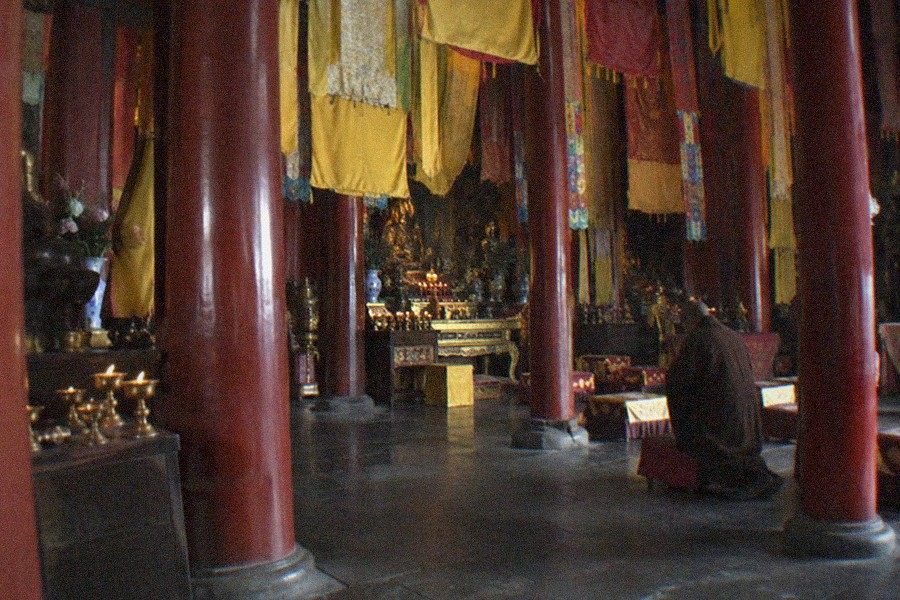
The Hall of the Wheel of the Law is the monastic heart of the complex, where services take place and where a bronze statue of Tsongkhapa, founder of the Gelug school of Tibetan Buddhism, sits before a striking five-hundred-arhat hill made of wood, metal and porcelain. The Hall of Infinite Compassion completes the axis at the north end, and its sandalwood Buddha is the record-setting carving the temple is best known for; the statue is so tall that a portion of the trunk extends below the level of the floor.
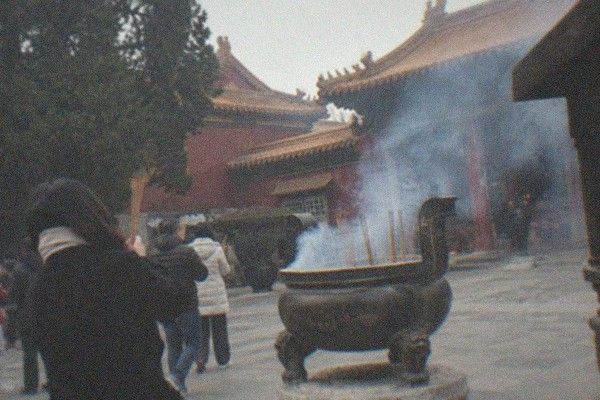
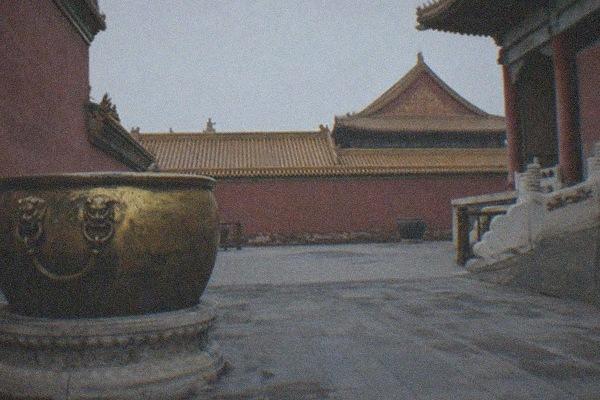
Around the axis, side buildings hold protective deity halls, a printing workshop historically connected to the temple's production of Tibetan Buddhist texts, and the bronze and stone details that reward slow looking: the glazed yellow tiles, the enormous bronze cauldron in the second courtyard, and the stone stele carved in the four languages of the Qing empire. The incense burners in the main courtyards are in near-constant use, and the scent is part of the visit as much as the architecture.
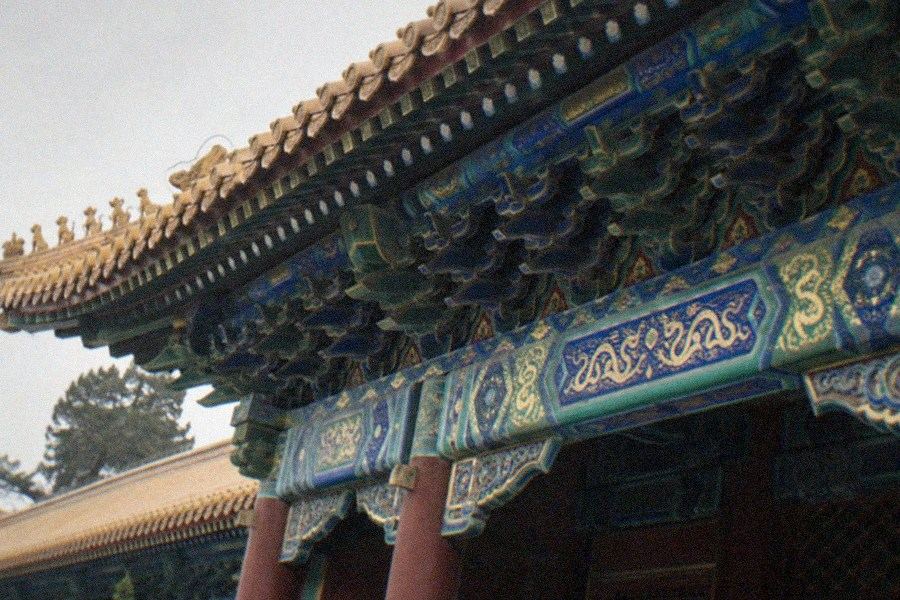
Visitors with an interest in imperial religion often continue the theme elsewhere in the city. The Confucius Temple and Imperial College Museum sits a short walk west along Guozijian Street, and the Temple of Heaven covers the state ritual side of the same dynasty.
How Do You Get There?
The Lama Temple is served by Yonghegong Station on Beijing Subway Lines 2 and 5, which sits directly beside the temple complex on Yonghegong Street in Dongcheng District. The temple's central location means it is also reachable on foot or by bus from much of the old city, and the subway is the most reliable option.
Line 5 runs north-south through the site's namesake station, connecting the Lama Temple directly to the areas around the Forbidden City and the Drum Tower. Line 2, the loop line that circles the old city wall alignment, brings you here from Beijing Railway Station or the Qianmen area without a transfer. For current line maps, fare details and station information, the Beijing Subway's official site at https://www.bjsubway.com/ is the authoritative reference.
Exit the station and the temple forecourt is a short walk away; the main entrance faces Yonghegong Street, which runs north from the intersection. Security screening operates at the entrance, so allow a few extra minutes when a queue has formed. Because entry is timed, build the screening line into your slot rather than arriving at the last minute of your window.
A useful walking itinerary exists here: the Confucius Temple and the Guozijian lie west of the Lama Temple along Guozijian Street, and the Drum and Bell Towers are within reasonable walking distance to the northwest. Visitors combining the Lama Temple with the Forbidden City should note that the two are a few subway stops apart on Line 5 with a short connection, making a same-day imperial itinerary practical if both reservations are secured in advance.
How Long Should You Allow And What Else Should You Know?
Allow roughly 1.5 to 2 hours for a full walk through the five halls and side courtyards, longer if you want to observe services or linger in the Hall of the Wheel of the Law. The visit is a single linear axis, so there is no way to shortcut it, and the temple's timed-entry system exists to keep the courtyards from overcrowding.
| Fact | Details |
|---|---|
| Area | Dongcheng District |
| Address | 12 Yonghegong Street, Dongcheng District, Beijing |
| Nearest subway station | Yonghegong Station (Lines 2 and 5) |
| Reservation required | Yes, timed entry |
| Reservation window | Opens 7 days ahead |
| Time to allow | 1.5 to 2 hours |
A few closing notes for the visit. The temple is an active monastery, so dress modestly and keep your voice low in the halls. Incense is sold at the entrance area and its use is central to the site's function, but you are under no obligation to participate. Photography of the architecture is generally tolerated, but photographing worshippers at prayer without their consent is not appropriate anywhere, and some halls restrict photography of specific sacred objects, so watch for signage.
Because the closed day is not published for this venue, plan around your reservation rather than a weekly calendar. If your first-choice date is unavailable when the 7-day window opens, nearby alternatives with confirmed Monday closures include the Confucius Temple and Imperial College Museum, and the Forbidden City, both of which can anchor a Dongcheng day if Yonghegong slots have filled.
Questions People Ask
Do I need a reservation to visit the Lama Temple?
Yes. Entry runs on a timed reservation system, and the booking window opens 7 days ahead of your visit date. Foreign visitors can book through the temple's WeChat mini-program using a passport, or present a passport on site, though same-day availability is not guaranteed at this busy working monastery.
How much does it cost to enter the Lama Temple?
Admission is CNY 25 per adult at the venue. A third-party reservation product is also available from $10 USD; that is a separate booking-service transaction, not the venue's door price. The two figures should not be compared or converted.
Is the Lama Temple closed on Mondays?
The temple's weekly closed day is not published in the verified material for this venue, so do not assume the Monday closure that applies to most Beijing museums. Plan around your timed reservation instead, and book as soon as the 7-day window opens to secure your preferred date.
Can a foreign passport be used to book?
Yes. Foreign visitors can reserve through the temple's WeChat mini-program using a passport, and there is also an on-site option where a passport can be presented at the venue. Bring the same passport you booked with, since the timed slot is tied to your identity document.
What is the most famous thing to see inside?
The Hall of Infinite Compassion at the north end of the axis holds the temple's best-known object: an 18-metre Buddha carved from a single sandalwood tree trunk, so tall that part of it extends below the floor. The five halls along the axis, from the Hall of the Heavenly Kings northward, make up the full visit.
How do I get to the Lama Temple by subway?
Yonghegong Station on Beijing Subway Lines 2 and 5 sits directly beside the temple on Yonghegong Street in Dongcheng District. Line 5 connects it to the areas around the Forbidden City and Drum Tower; current maps and fares are on the Beijing Subway's official site.
How long should I plan for a visit?
Allow 1.5 to 2 hours to walk the full axis of five halls and the side courtyards, longer if you want to observe services in the Hall of the Wheel of the Law. The layout is linear, so there is no shortcut, and security screening at the entrance can add time at peak periods.
Is the Lama Temple suitable to combine with other sights?
Yes. The Confucius Temple and Imperial College Museum lie a short walk west along Guozijian Street, the Drum and Bell Towers are within walking distance to the northwest, and the Forbidden City is a few subway stops away on Line 5. Secure reservations for each site in advance, since all of them require booking.
Other Imperial Museums Worth A Look
The Palace Museum (Forbidden City)
Dongcheng
from $7 per person, live price on the listing Check availability →