The Palace Museum (Forbidden City)
Dongcheng
from $7 per person, live price on the listing Check availability →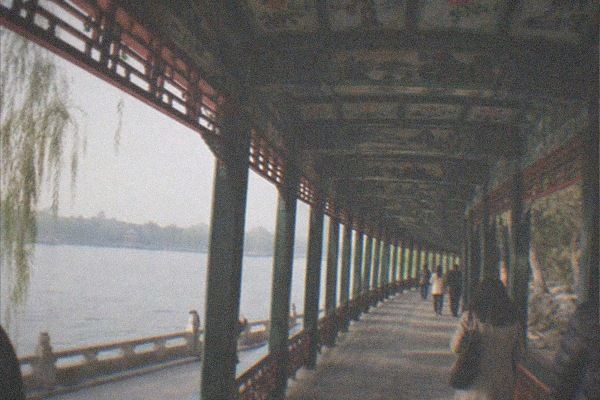
from $14 per person, live price on the listing
Check Price & Availability →Opens the official listing with live dates and prices. Book there; nothing is charged on this site.
The Long Corridor at the Summer Palace runs 728 metres along the northern shore of Kunming Lake, its 14,000 painted panels turning a lakeside walk into a gallery of classical scenes. Above it, the Tower of Buddhist Incense climbs the slope of Longevity Hill in three tiers of red columns and glazed tile, the composition that Empress Dowager Cixi rebuilt with naval funds in the late 19th century. This is the largest and best-preserved imperial garden in China, laid out around water, and it rewards a slow half-day rather than a rushed hour. Entry is not free, a real-name reservation is required, and the inner halls close on Mondays, so the planning matters as much as the visit.
The Summer Palace in Beijing's Haidian District is the largest surviving imperial garden in China, a UNESCO World Heritage Site built around Kunming Lake and Longevity Hill. It was the summer retreat and later the effective seat of Qing court life, and its halls, temples, bridges and corridors survive as a complete landscape ensemble rather than scattered ruins.
The garden's history reaches back to the 12th century, but the site visitors see today owes its character to two Qing projects: the Qianlong-era expansion of the 1750s and the Cixi-era rebuilding of the 1880s and 1890s, after Anglo-French forces destroyed the earlier complex in 1860. The reconstruction was famously funded in part by money earmarked for the imperial navy, which is why a marble boat sits permanently moored at the lake's northwestern shore.
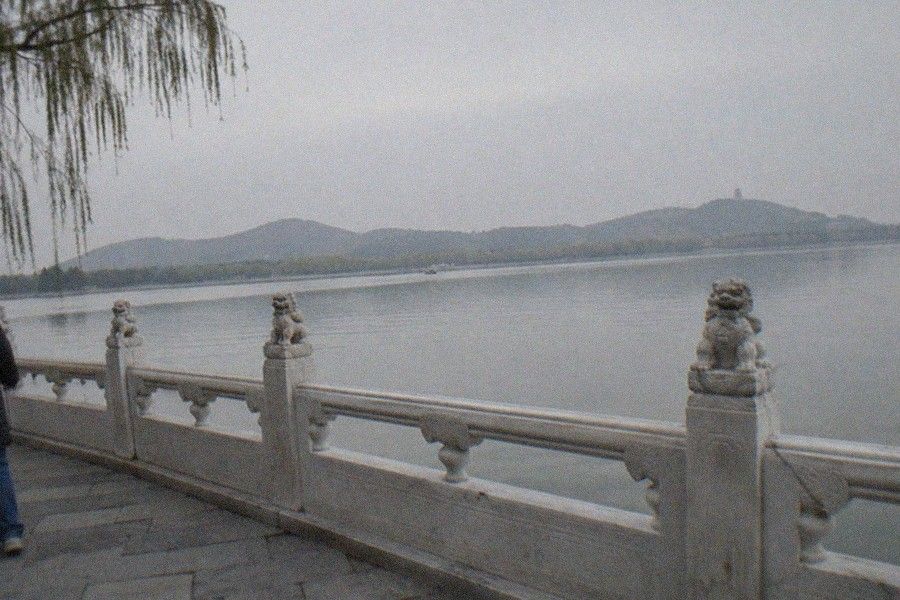
The core of a visit is the sequence along the lake's northern edge: the Long Corridor with its painted panels, the Hall of Dispelling Clouds, and the climb up to the Tower of Buddhist Incense, which gives the classic view over the water to the Seventeen-Arch Bridge. West of the main axis, the Back Lakes area is quieter, with the Suzhou Market Street canal and the Garden of Harmonious Interests, a compact garden-within-a-garden modeled on a Jiangnan estate. The venue's own site at summerpalace.net.cn carries an English version with current notices on hall openings.
Visitors coming from the city centre should understand the scale. The park covers roughly 290 hectares, three-quarters of it water, so a loop of the main sights involves several kilometres of walking. Comfortable shoes and a willingness to climb matter more than at compact central-Beijing venues like Prince Gong’s Mansion.
The gate admission to the Summer Palace is CNY 30 for an adult entrance ticket, which covers the park grounds including the Long Corridor, the lakeshore and the bridges. Some inner attractions, including the Tower of Buddhist Incense and the Suzhou Market Street, carry separate charges on top of the entrance ticket. A combined through-ticket covering entrance plus the main inner sites is also sold.
What this means practically: the CNY 30 entrance ticket alone already buys you the full landscape experience, and many visitors find it sufficient for a first visit. The add-on sites are worth it if you want to climb the tower for the view or walk the canal street, and the combined ticket saves money over buying each add-on separately at the gate.
| Ticket | Price |
|---|---|
| Adult entrance ticket (park grounds) | CNY 30 |
| Inner-attraction add-ons (Tower of Buddhist Incense, Suzhou Market Street and others) | Separate charges on top of entrance ticket |
| Combined through-ticket (entrance plus main inner sites) | Sold at the gate and official channels |
For visitors who prefer to arrange entry in English before travelling, a booking service is available from $14, which handles the real-name reservation under your passport details; check availability on the listing if you want that route. The listing carries a 4.7 rating across 1,144 reviews, making it one of the most-reviewed Beijing products this site carries. Whatever route you choose, bring the passport you registered with: entry is matched to it at the gate.
Concession pricing exists for children, students and seniors at the gate, and the Beijing Museum Pass is a separate option worth knowing about: the 2026 edition covers roughly 140 venues at CNY 120 and admits two people across the year. Check whether the Summer Palace's entrance ticket is among its free or discounted entries before relying on it for this specific site.
Yes. A real-name reservation is required for Summer Palace entry, made through the official WeChat mini-program or authorised platforms, with passport registration for foreign visitors. How many days ahead the booking window opens is not published, so treat availability as uncertain until you have a confirmed slot and book as early as your plans allow.
This is the single most important planning fact for the visit, and it is where many international visitors come unstuck. Beijing's attractions run on real-name ticketing: the reservation is tied to a specific document, usually a passport for foreign visitors, and the person who enters must be the person whose ID is on the ticket. You cannot transfer a booking to a travel companion or buy a spare slot speculatively.
Two routes exist. The first is the official WeChat mini-program, which is where the venue's own tickets are released; it works with passport registration, though the interface is in Chinese and some visitors find it fiddly without WeChat Pay set up. The second is an English-language booking service, which makes the official reservation under your passport on your behalf and is the practical choice if you do not use WeChat. Both routes end at the same real-name ticket; neither is a skip-the-line product in any other sense.
Because the window is not published, the safe pattern is to lock in your date as soon as your itinerary firms up, and to be flexible about which day you assign to the Summer Palace if you are travelling in peak season or over a Chinese public holiday, when demand across all Beijing attractions spikes. If your first-choice day is unavailable, shifting by one day is usually easier than changing your whole itinerary.
For comparison, the reservation mechanics here are similar to those at The Palace Museum (Forbidden City) and Lama Temple (Yonghegong): same real-name logic, same passport matching at the gate, different booking windows. Reading one venue's system prepares you for the others.
The park grounds of the Summer Palace are open daily, but the inner halls, including the Tower of Buddhist Incense, close on Mondays except public holidays. If you arrive on a Monday you can still walk the lake, the Long Corridor and the bridges, but you will not get inside the paid halls or climb the tower.
This split is the most common planning mistake at this site. Visitors who read "closed Monday" assume the whole venue is shut and skip it; visitors who read nothing arrive on a Monday expecting the tower view and find the doors locked. The truth is in between: the landscape is always there, the interiors are not, on Mondays.
The exception matters too. On statutory Chinese public holidays that fall on a Monday, the inner halls generally open as usual, because holiday demand overrides the weekly maintenance closure. If your trip overlaps a Chinese holiday week, do not assume the Monday rule applies; if it does not, the Monday rule is firm.
Season also shapes the visit. The willows and lotus of summer, the frozen lake of winter and the autumn colour on Longevity Hill each give a very different park, and the lake itself changes character: in warm months small boats operate on Kunming Lake, while in deep winter the water can freeze hard enough that the shoreline takes on a completely different atmosphere. None of this affects the ticket or the reservation, only what you see when you get there.
The Summer Palace is at 19 Xinjiangongmen Road, Haidian District, in Beijing's northwest, roughly an hour from the city centre depending on traffic. The most reliable approach is the Beijing Subway, and current line, station and fare information is on the operator's site at bjsubway.com; taxis and ride-hailing are straightforward but slower at peak times.
By Metro, the ride from central Beijing involves a transfer or two depending on your starting line, and the walk from station to gate is short. The subway is the mode to trust on weekdays around rush hour, when the roads to Haidian can crawl; the trains are crowded but predictable, and the fare is a fraction of a taxi's. Buy a Yikatong transport card or use the QR-code ticketing in the Metro's app, both of which work for foreign visitors.
By car or taxi, the trip from Dongcheng or the Forbidden City area takes roughly 40 to 60 minutes without traffic and considerably longer with it. Parking exists near the gates but fills early on weekends and holidays, and this site has no verified figure for the parking charge, so plan to pay at the lot rather than budgeting a specific amount. Ride-hailing drop-offs work well for arrival; for the return trip, the pickup zones near the main gates get congested at closing time, so walking a few minutes away from the gate before requesting a car saves time.
Cycling is a genuine option in the warmer months: the roads along the canal and through Haidian are flatter than central Beijing's hutongs, and shared bikes can be left near the gates. On foot inside, expect several kilometres; there are shuttle boats across Kunming Lake in season, which cut the walking substantially and are worth the fare for the water-level view of Longevity Hill alone.
Allow at least half a day for the Summer Palace, and a full morning or afternoon beats a midday stop. Enter through the main gate, walk the Long Corridor east to west, climb to the Tower of Buddhist Incense, then descend to the lakeshore and decide whether to add the Back Lakes, Suzhou Market Street or a boat crossing. Arriving early gives you the corridor before the tour groups thicken.
| Fact | Detail |
|---|---|
| Area | Haidian District, northwest Beijing |
| Address | 19 Xinjiangongmen Road, Haidian District, Beijing |
| Closed day | Inner halls (including the Tower of Buddhist Incense) close Monday, except public holidays; park grounds open daily |
| Reservation | Required, real-name, passport registration; booking window not published |
| Time to allow | Half a day minimum; a full morning or afternoon is ideal |
A good sequence: enter at the northeast, take the Long Corridor west with the lake on your left, climb the tower stairs while your legs are fresh, then choose between the ferry across to the South Lake Island and the Seventeen-Arch Bridge, or the quieter western loop past the Marble Boat into the Back Lakes and the Garden of Harmonious Interests. Doing both loops is a full day; picking one is a comfortable half.
Pairing the Summer Palace with other Haidian sites works well because they sit close together. The Old Summer Palace (Yuanmingyuan) ruins lie a short distance to the northeast and make a natural contrast: one garden rebuilt, one left as a ruin. The Great Bell Temple Ancient Bell Museum and the National Library area are also in the district. Do not try to pair it with a Dongcheng venue like the Forbidden City on the same day; the crossing eats the afternoon.
Who suits this site: visitors who enjoy landscape, walking and photography over dense collections of objects. The Summer Palace is a garden with buildings, not a gallery with vitrines, so travellers who want artifact-heavy museums may prefer central-Beijing venues, while anyone who wants the single most impressive imperial landscape in the city should put this first. Elderly visitors and small children manage the lakeshore flat well but struggle with the tower climb; the boat is the friendliest way to cover distance.
Finally, the practical checklist: book the real-name reservation early because the window is not published, carry the registered passport, avoid Monday if the inner halls matter to you, and check the venue's own English pages at summerpalace.net.cn before travelling for any temporary hall closures or seasonal notices.
The adult entrance ticket is CNY 30 at the gate, covering the park grounds including the Long Corridor and lakeshore. Inner attractions such as the Tower of Buddhist Incense carry separate charges, and a combined through-ticket covering entrance plus the main inner sites is also sold. An English-language booking service is available from $14.
Yes. Entry requires a real-name reservation made through the official WeChat mini-program or authorised platforms, with passport registration for foreign visitors. How many days ahead the booking window opens is not published, so book as early as your plans allow and be flexible on the date.
The park grounds are open daily, but the inner halls, including the Tower of Buddhist Incense, close on Mondays except public holidays. On a Monday you can still walk the lake, corridor and bridges, but not enter the paid halls or climb the tower.
Yes. The reservation channels accept passport registration, and the passport used at booking must be the same document presented at the gate, since Beijing attractions use real-name ticketing matched to the individual visitor.
Allow at least half a day. A comfortable visit covers the Long Corridor, the climb to the Tower of Buddhist Incense and either the lakeshore loop or the Back Lakes area; doing both loops plus Suzhou Market Street is a full day.
The venue is at 19 Xinjiangongmen Road in Haidian District, roughly an hour from the city centre. The Beijing Subway is the most reliable mode, with current line and fare details on bjsubway.com; taxis work but are slower at peak times, and gate-area parking fills early on weekends.
The flat lakeshore and Long Corridor suit all ages, but the climb to the Tower of Buddhist Incense is steep. The seasonal boat across Kunming Lake is the easiest way to cover distance and gives a good view of Longevity Hill from the water.
Other Haidian sites sit close by, notably the Old Summer Palace ruins to the northeast, which make a strong contrast with the rebuilt garden. Avoid pairing it with central-Dongcheng venues like the Forbidden City on the same day, as the cross-city trip consumes too much time.
Dongcheng
from $7 per person, live price on the listing Check availability →
Dongcheng
from $10 per person, live price on the listing Check availability →