How Many Rooms Are In The Forbidden City?
The Forbidden City room count explained: the 9,999 legend, the 8,707 survey figure, what a jian actually is, and how to plan a visit around the halls that are open today.
How Many Rooms Are In The Forbidden City?
The traditional answer is 9,999 and a half rooms, a legend borrowed from the Jade Emperor's heavenly palace, which was said to have 10,000. The figure most often cited from an actual structural survey is 8,707 bays. The Palace Museum publishes no official count of its own, so both numbers circulate freely, and the honest answer depends entirely on what you count as a room.
The half-room story is the one told at the gate. The earthly emperor, so the tale goes, could not match the heavenly emperor's 10,000 rooms, so his palace stopped half a bay short. Guides usually place that half room at the eastern end of a corridor, sometimes pointing to a sloping ledge or a narrow slot that does not fit the standard grid. It is a good story, and like most good stories it survives because it is easy to remember on a walk.
The survey number is drier but more useful. When the palace complex was measured bay by bay, the count that came back was 8,707. A bay, called a jian in Chinese, is the space between two columns, and it is the unit the whole palace was built in, planned in, and to this day counted in. That is why two honest counts can differ by more than a thousand: one counts bays, another counts enclosed rooms, a third counts halls, and none of them is wrong so much as measuring a different thing.
Visitors planning a real day inside the walls should care less about the total and more about the fraction they can actually walk through. The palace holds the largest concentration of ancient wooden architecture in the country, spread across roughly 72 hectares of halls, courtyards, gates and gardens. Even at a brisk pace you will see a few hundred of those spaces, not thousands. If the room question is what brought you here, the practical follow-up is how to get inside at all, and the three imperial sites below are the ones most visitors pair together.
What Does A &Quot;room" Even Mean In A Palace Built In Bays?
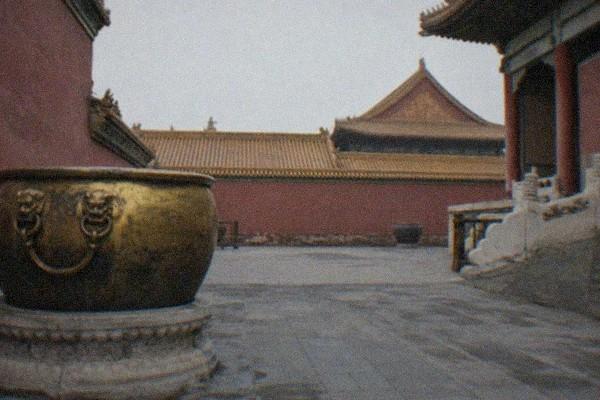
Chinese palace architecture counts spaces in jian, the bay between two columns, not in Western-style rooms. One hall can hold many bays, a corridor can hold dozens, and a gate can count as one bay or nine. This is why the Forbidden City's room count varies by over a thousand depending on who is counting, and why any single number is a simplification of a modular building system.
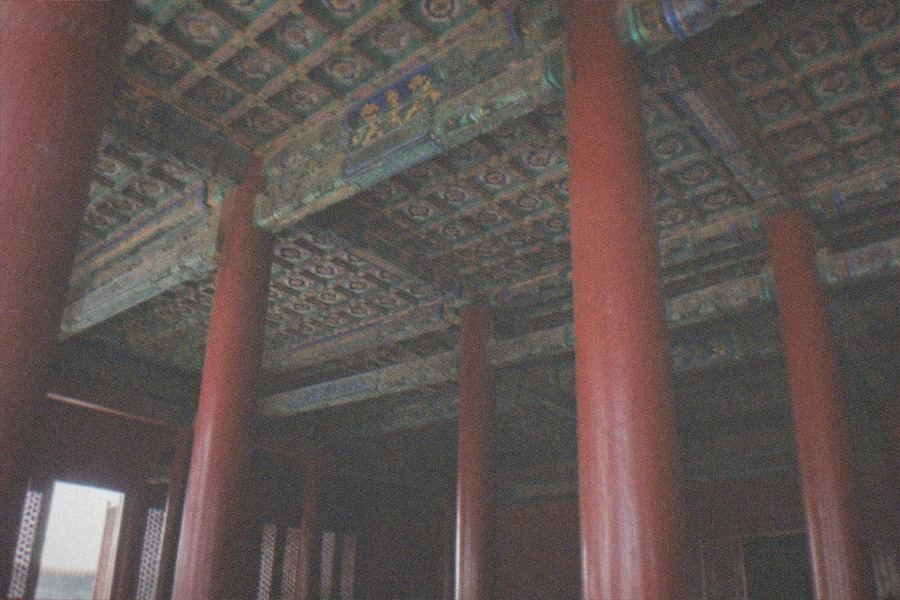
The jian is the atom of traditional Chinese construction. A building's frame is a grid of columns, and the space between any two adjacent columns is one bay. A grand hall on the central axis might be eleven bays wide, the maximum permitted under Ming sumptuary rules and reserved for the emperor's own throne halls. A side chamber might be three bays. A long corridor could run to dozens of bays without ever being a "room" in the sense a hotel guest would recognize.
Count the bays and you get one total. Count only enclosed, weather-tight chambers and you get a smaller one. Count halls as single units regardless of width and you get a much smaller figure still, sometimes quoted in the low hundreds for the major buildings alone. None of these methods is cheating. They are just different answers to different questions, and the palace was never designed around the Western idea of a fixed room at all.
The modular system is also why the palace could be built so fast. The core of the complex went up in about fourteen years in the early fifteenth century, because standardized bays mean standardized timber, standardized bracket sets and crews that could repeat the same joinery hall after hall. The emperor who commissioned it moved his court in before the final polish was done, and later dynasties rebuilt burned halls on the same grid for the next five centuries.
So when someone asks the room question, the most accurate short answer is that the palace has 8,707 bays by the standard survey count, arranged in a hierarchy from the eleven-bay throne halls down to single-bay gatehouses. The 9,999 figure is folklore layered on top of a real and very disciplined counting system. If you are curious how the palace got its name in the first place, the story behind the Forbidden City's name explains the "forbidden" part, which had everything to do with who was allowed through those gates.
Booking the visit itself is the part that trips people up, because the palace does not sell same-day tickets and there is no counter at the gate.
Why Does The Legend Say 9,999 And A Half?
The legend holds that the Jade Emperor's heavenly palace has 10,000 rooms, and the earthly emperor, as the Son of Heaven, had to stop one half-bay short at 9,999.5. It is a piece of cosmological etiquette rather than architecture, and no survey has ever supported the number. Its persistence says more about how the palace was marketed as a symbol than how it was measured.
Chinese imperial building was governed by numerology long before it was governed by floor plans. Nine was the emperor's digit, the largest single number, and it appears throughout the complex in the rows of door studs, the nine-by-five bay proportions of the chief halls, and the nine dragons of the principal screens. A count of 9,999 rooms slots neatly into that system, which is exactly why the story feels true even when the measuring tape disagrees.
The half room is the punchline that makes the legend retellable. Various versions place it under a staircase, behind a wall, or in a transition space at the edge of a courtyard, and guides have pointed to different spots over the decades. The detail serves a narrative purpose: the emperor bows to heaven by falling short, and visitors get a concrete spot to hunt for. It is harmless, and it is not history.
What complicates things is that the legend has been repeated in print so often that it sometimes appears in otherwise sober guidebooks, stripped of the word "legend." A reader who never hears the caveat walks away believing the palace was deliberately built 9,999.5 rooms strong, and then repeats it. The structural record does not show a palace planned to that figure. It shows a palace planned in bays, gates and courtyards, with the numbers added to the story later.
There is a lesson here for anyone planning a trip. The Forbidden City rewards visitors who separate the symbol from the schedule. The symbol is a palace of near-mythic size; the schedule is a real place with a 20:00 booking release seven days ahead, a Monday closure except statutory holidays, and an official statement that it has not authorized any third-party institutions or individuals to act as ticket agents. The third-party reservation products sold in English book the official ticket under your passport details and refund if the official quota sells out first. Both facts belong together, and the museum itself puts them side by side on its own visit pages.
How Was The 8,707 Figure Counted?
The 8,707 figure comes from a structural survey that counted bays rather than rooms, tallying every column-bounded space across the walls, gates, halls and corridors of the complex. It is the number repeated by most careful sources, but the Palace Museum does not publish it as an official count, so it should be read as the best available measurement rather than a certified statistic.
A survey of this scale is not a matter of walking around with a clipboard. The complex holds dozens of courtyards and hundreds of buildings, some rebuilt several times after fires, and the count has to decide how to treat corridors, verandas, gate towers, covered walkways and the garden pavilions. Each of those judgments moves the total. The 8,707 number earned its currency because it was done systematically, bay by bay, on the buildings as they stood, rather than assembled from Ming-era documents that describe palaces long since rebuilt.
The gap between 8,707 and the legend's 9,999 is not a scandal, it is a rounding history. Court records, restoration reports and storytelling each preserved different totals, and the folk figure had the advantage of being quotable. The survey figure had the disadvantage of requiring an explanation of what a bay is, which is why it lost the popularity contest even though it is the defensible number.
For a visitor, the counting method matters less than the scale it describes. Even at 8,707 bays, the complex is the largest ancient palace in the world by covered area, and the central axis alone, from the Meridian Gate through the three great halls to the Imperial Garden, passes through the densest run of them. You enter through the Meridian Gate with the passport that matches your reservation, and the first courtyard is wide enough to hold a crowd of thousands with room to spare. The numbers stop feeling abstract about thirty minutes into a visit.
The Beijing municipal government's English portal maintains a museum guide entry for the Palace Museum that covers the official basics, and the museum's own youth-oriented English pages carry the current ticketing rules, including the seven-day advance release and the no-same-day-tickets policy.
How Many Of Those Rooms Can You Actually See?
Only a fraction of the complex is open to visitors on any given day. The central axis halls, the major western and eastern route palaces, the Treasure Gallery and the Clock Gallery form the core of what is accessible, while large stretches remain offices, storage, conservation workshops and unlit structures. A realistic visit covers perhaps a few hundred spaces, not thousands, and the side galleries are worth planning for.
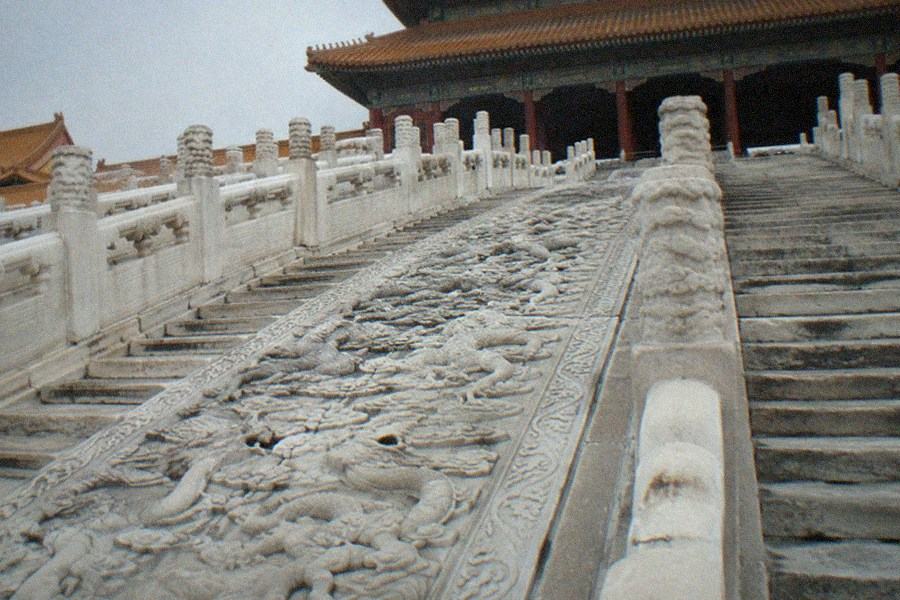
The central axis is the spine of every visit. The Hall of Supreme Harmony and its two companion halls sit on a raised marble terrace, and the sequence from the Meridian Gate to the Imperial Garden is the palace's processional route, built to be walked in order. Off the axis, the western route palaces hold themed exhibitions on court life, ceramics and imperial regalia, and the eastern route leads toward the galleries that most first-time visitors are glad they did not skip.
The two famous paid add-ons sit in the northeast of the complex. The Treasure Gallery, in the Palace of Tranquil Longevity, and the Clock Gallery each charge 10 CNY on top of general admission, and both are covered in detail in the guide to the Treasure Gallery's separate ticket. Timewise, they add real substance to a visit, and the Clock Gallery in particular rewards a slow lap, because the instruments are meant to be seen up close.
What you cannot see is just as much of the story. Behind closed doors are conservation studios, depots for the collection of nearly two million objects, and halls awaiting restoration. The palace is a working museum, not a frozen film set, and the open fraction shifts as buildings rotate through maintenance. Some visitors are disappointed that they cannot enter every hall; most discover that the open set is already more than one day can absorb. If you are weighing the time question seriously, the guide to how much time you need in the Forbidden City breaks the routes down hour by hour.
Getting in is the precondition for any of this, and the reservation service below handles the official ticket under your passport details.
Does The Room Count Change How You Plan A Visit?
Yes, because the complex's size is the single biggest planning variable. The survey count describes a site that takes three to five hours at a comfortable pace, more if you add the side galleries, and the one-way visitor flow through the Meridian Gate means you cannot backtrack cheaply. Visitors who plan a route around the axis and one side route see far more than those who wander.
The palace enforces a northward drift. Entry is through the Meridian Gate on the south side and exit is through the Gate of Divine Prowess in the north, and once you are deep in the complex, going back costs real time and energy. This is where the bay-count stops being trivia and becomes logistics: a site of 8,707 bays, walked in one direction, in a crowd, in whatever weather September or July hands you, is an itinerary decision, not a stroll.
A sensible pattern is the central axis first, one side route second, and the galleries last if your legs are still willing. The Imperial Garden at the north end is the natural finish, small and shaded, and from there the exit feeds you onto Jingshan, which is where the classic overhead view of the golden rooflines comes from. Building the garden into the plan is easy; building the Treasure Gallery in at hour four is the part people regret skipping.
The scale also argues for booking early rather than late. Tickets are released seven days ahead at 20:00 Beijing time, and popular dates sell out. There are no same-day tickets at all, so a visitor who arrives at the gate without a reservation is turned away, full stop. That is the single most expensive mistake in Beijing trip planning, and it is entirely avoidable. The official adult ticket is 60 CNY in peak season, 40 CNY off-peak, and the door price and any third-party service fee are different transactions that should never be compared as though they were the same thing.
How Does The Forbidden City Compare To The Other Imperial Sites?
By room count and covered area the Forbidden City dwarfs every other imperial site in Beijing, but the alternatives are not minor. The Summer Palace rates 4.7 across 1,144 reviews and the Lama Temple rates 4.5 across 158, against the Palace Museum's 4.5 from 655 reviews, and all three require advance reservation. Most visitors with three or more days in Beijing fit in at least two of them.
The comparison matters because a Beijing itinerary is a budget of feet and hours. The table below puts the three headliners side by side on the facts that actually shape a plan: the door price in CNY, what the third-party reservation product costs in dollars, and the booking reality at each.
| Site | Door price | Reservation product from | Rating | Reviews | Booking window | Closed |
|---|---|---|---|---|---|---|
| The Palace Museum (Forbidden City) | CNY 60 | $7 | 4.5 | 655 | 7 days ahead at 20:00 | Monday (except statutory holidays) |
| Summer Palace | CNY 30 | $14 | 4.7 | 1144 | Required, window not published | Inner halls close Monday (except public holidays) |
| Lama Temple (Yonghegong) | CNY 25 | $10 | 4.5 | 158 | 7 days ahead | Not published |
Two honest notes belong with that table. The Lama Temple is a working Tibetan Buddhist temple, not a museum, and the Summer Palace is a park with paid inner halls, not a gallery complex. Neither fact makes them lesser visits; both make them different visits, and the differences are exactly why pairing them works. A morning of throne halls and a garden afternoon at the lake are complementary, not redundant.
The Summer Palace also deserves its own word of warning about scale, because visitors assume a "park" is a light afternoon and then discover a lake district with long walks between the sights. The inner buildings such as the Tower of Buddhist Incense close on Mondays except public holidays, while the park grounds themselves stay open, so a Monday visit there is a garden visit, not an architecture visit. Plan accordingly, and reserve ahead for whichever day you choose.
What Should You Book, And When, To See Any Of It?
Book the Palace Museum the moment your dates firm up: reservations open seven days ahead at 20:00 Beijing time, there are no same-day tickets, and the museum closes Mondays except statutory holidays. A third-party reservation service books the official ticket under your passport details, from $7, and refunds if the official quota sells out first. Bring the matching passport, because that is your ticket at the Meridian Gate.
The mechanics are simple once you know them, and brutal if you do not. Real-name reservation means the ticket is bound to the passport number you book with, and the gate reads that document. No paper ticket, no QR code, just the passport itself. Travelers who book a reservation service supply the same details and present the same document; the service exists to handle the Chinese-language booking flow and the seven-day timing, not to bypass it.
Mondays deserve their own sentence because they ruin more Beijing itineraries than any other single fact. The Palace Museum, the National Museum of China and most municipal museums close on Mondays except statutory holidays, so a Monday in Beijing is a hutong, park and temple day, not a museum day. The Capital Museum is the notable exception with its Tuesday closure, and a handful of walk-up venues keep odd schedules. If your trip includes a Monday, spend it at Jingshan and Beihai looking at the palace rather than inside it.
For anyone turning the room count into a full museum plan, Beijing Museums tracks the reservation windows, closed days and door prices for the whole roster, because in Beijing the museum is very often free or cheap and the booking window is the real barrier. Twenty-two of the thirty-one venues on the site's list require an advance reservation, and only six take genuine walk-ups. Free almost never means walk in.
The three imperial headliners below cover the visits most travelers are actually choosing between, and the closing question of any Beijing plan is usually which two of the three fit the calendar.
Common Questions About The Forbidden City's Rooms
How Many Rooms Are In The Forbidden City?
The traditional legend says 9,999 and a half, modeled on the Jade Emperor's 10,000-room heavenly palace. The figure most often cited from a structural survey is 8,707 bays. The Palace Museum publishes no official count of its own, so the answer depends on whether you want the story or the measurement.
Why is the number 9,999 significant?
Nine was the emperor's number in Chinese court symbolism, appearing in door studs, bay proportions and dragon motifs. A palace one half-bay short of 10,000 let the earthly emperor honor heaven by falling just under it. It is cosmological etiquette, not a building specification.
What is a jian, and why does the count use bays?
A jian is the space between two columns, the basic module of traditional Chinese architecture. Halls, gates, corridors and pavilions are all built as multiples of this unit. Counting bays gives 8,707; counting enclosed rooms or whole halls gives different totals, which is why the room question has more than one defensible answer.
Can you see all the rooms on a visit?
No. Only a fraction of the complex is open on any given day. The central axis, the major side-route palaces and the two paid galleries form the accessible core, while the rest houses offices, storage and conservation workshops. A realistic visit covers a few hundred spaces, not thousands.
Do the Treasure Gallery and Clock Gallery count as extra rooms?
They are part of the same complex but need separate 10 CNY add-on tickets each, on top of general admission. Both sit in the northeast of the palace, and both add substantial time to a visit. Plan them into your route rather than discovering them at hour four.
Does the room count affect how long a visit takes?
Yes. A site of this size, walked one-way from the Meridian Gate to the northern exit, takes three to five hours at a comfortable pace, longer with the galleries. Pick a route before you enter, because backtracking inside the walls costs real time.