Is The Capital Museum Worth Visiting?
An honest verdict on the Capital Museum in Beijing: free entry, no reservation, closed Tuesdays, what the collection covers, and when it beats the National Museum of China.
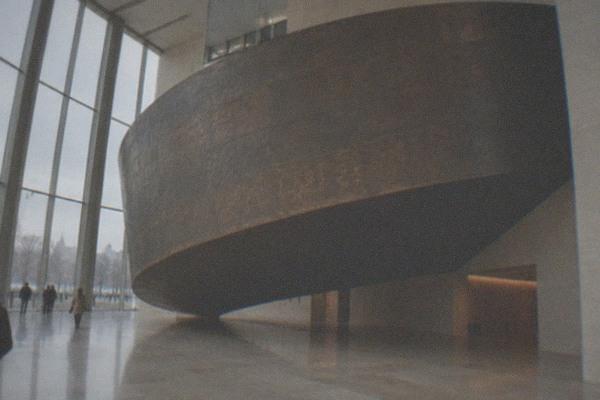
Is The Capital Museum Worth Visiting?
Yes, for most visitors the Capital Museum is worth two to three hours, and it costs nothing. It is one of the few major Beijing museums you can enter without a reservation: admission is free, you walk up with a passport or valid ID, and it closes on Tuesday rather than Monday. Go for Beijing's own story as a city; skip it only if imperial palaces fill your whole agenda.
The Capital Museum stands at 16 Fuxingmenwai Street in Xicheng, and it does something almost no other major museum in Beijing manages: it lets you in without a plan. There is no timed slot, no release time to watch in the evening, no quota that vanishes within minutes of opening. You arrive, you show ID at the north gate, and you walk in. In a city whose museum scene is built around real-name reservation systems, that alone makes the place remarkable.
The collection justifies the walk. This is Beijing's city museum, the institution that tells the capital's own story rather than the story of the nation as a whole, and its permanent exhibitions trace how the city took the shape it has. Where the Forbidden City overwhelms with scale and the National Museum of China overwhelms with scope, the Capital Museum works at a human scale, which is why many returning travelers rank it above both for a relaxed half day.
One thing should be said plainly, early, because it shapes the honest answer: the museum sells no ticket product through any booking service, because there is nothing to sell. Entry is free and no reservation exists to arrange. That means the verdict here is not softened by anything for sale, and the answer is still yes for most visitors. The people who should skip it are those with a single day in the city, or those with no interest at all in how Beijing became Beijing. Everyone else should find an afternoon.
If your Beijing plan does need bookable, reserved experiences around this visit, three nearby venues pair well with it: a free military museum with a tricky booking window, a free national collection that demands a reservation, and a paid Confucian site that books only one day ahead.
What Is Inside The Capital Museum?
The museum tells the story of Beijing itself: how a northern garrison town grew into an imperial capital and then a modern megacity. Permanent exhibitions pair that city history with broader Chinese cultural artifacts, and the material is presented so that a visitor can follow it without a guide. It is a city museum rather than a national one, which is precisely what separates it from the bigger institutions on and around Tiananmen Square.
The permanent exhibitions are the core of a visit. They follow the city's arc, from its early settlement through its centuries as an imperial capital to the megacity of today, told through objects rather than text panels alone. The museum's own materials describe its scope as Beijing history alongside general Chinese cultural artifacts, so expect material on the city's past set against a wider backdrop of Chinese heritage pieces.
What that means in practice is a different kind of museum day. At the Forbidden City the building is the exhibit. At the National Museum of China the sweep is continental and the crowds match it. Here the question is narrower and, for many visitors, more interesting: why did this city, of all the places on the North China Plain, end up as the capital, and what did that do to the people who lived in it? If that question appeals, the museum will hold you longer than you expect.
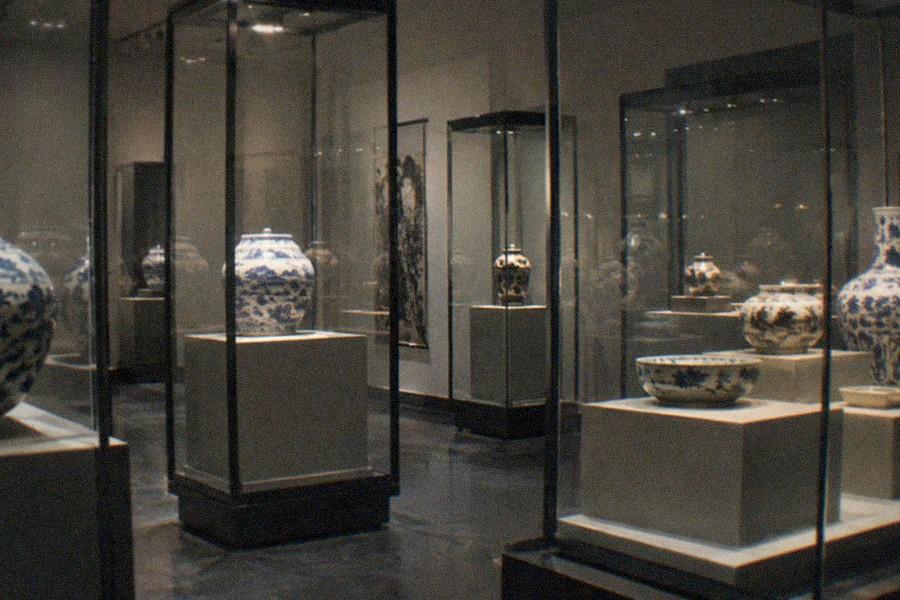
The exhibition program changes through the year, so check the museum's own channels for what is currently on display before you set your expectations. A comfortable visit runs two to three hours, and because there is no entry slot to hit, you can arrive when the day allows rather than when a booking system permits. That flexibility is rarer in Beijing than it should be, and regular visitors come to value it.
Is The Capital Museum Free, And Do You Need A Reservation?
Admission is completely free and no reservation is required. The Capital Museum is one of only six major venues in Beijing that take genuine walk-ups, out of 31 that the city's museum planning usually revolves around. You enter through the north gate after a security check, registering with a valid ID, and a foreign passport is accepted. In a city where 22 venues demand advance real-name booking, this is the easiest major museum to visit on impulse.
Here is the pattern that catches out most first-time visitors to Beijing: free almost never means walk in. The free national museums are frequently the hardest to enter of all, because demand for their timed slots is enormous and the slots release days ahead at fixed hours. The barrier to a Beijing museum is rarely the price. It is the booking window.
The Capital Museum is the standing exception. Entry rules published on the museum's own visit page describe ID-based registration at the north gate, with no advance booking required for general visitors, and a valid passport is accepted for entry. Walk in, register, done.
| Question | Answer at the Capital Museum |
|---|---|
| Admission | Free |
| Reservation | Not required, walk-up entry |
| ID for entry | Valid ID or passport, registered at the north gate |
| Closed day | Tuesday |
| Hours | 9:00 to 20:00, last entry 19:00, under the schedule in force from 18 May to 18 October 2026 |
| District and address | Xicheng, 16 Fuxingmenwai Street |
| Ticket products | None, no booking product exists for this museum |
For context, the six genuine walk-up venues across the city look like this. Two of the others are also free, and the remaining three charge at the door but need no advance slot, which makes them the natural fallbacks when a reservation has slipped past you.
| Venue | Door price | Closed day |
|---|---|---|
| Capital Museum | Free | Tuesday |
| Beijing Grand Canal Museum, Tongzhou | Free | Monday, except national holidays |
| Museum of the War of Chinese People's Resistance Against Japanese Aggression | Free | Monday, except holidays and commemorative days |
| Beijing Ancient Architecture Museum | CNY 15 | Monday, except public holidays |
| Great Bell Temple Ancient Bell Museum | CNY 30 | Monday |
| Guanfu Museum | CNY 100 | Chinese New Year period, with shorter Monday hours |
If free museums are the backbone of your plan, the wider landscape is mapped in the guide to free museums in Beijing, including which free venues still demand a reservation and which do not. One paid shortcut exists for the city as a whole: the 2026 Beijing Museum Pass, launched on 11 November, covers about 140 venues at CNY 120 and admits two people across the year, according to the Beijing government's museum news page. Since the Capital Museum is free anyway, the pass earns its keep on the paid venues in that directory rather than here.
Because the Capital Museum itself sells nothing, there is no booking to make for it. If you would rather lock in a reserved history visit elsewhere in the city, the Military Museum is the closest match in theme.
How Does The Capital Museum Compare To The National Museum Of China?
Both are free, but they are different museums. The National Museum of China sits on Tiananmen Square, covers all of Chinese civilization, requires a timed reservation that opens 7 days ahead at 17:00, and closes on Monday. The Capital Museum sits in Xicheng, covers Beijing as a city, needs no reservation at all, and closes on Tuesday. Choose the National for scale and national treasures; choose the Capital for the city's own story and zero booking friction.
The two names get confused constantly, and the confusion is expensive in planning terms. Visitors who assume they are the same institution show up on the wrong closed day, or arrive at one holding a booking rule that belongs to the other. The National Museum of China is the giant on the east side of Tiananmen Square in Dongcheng, covering the sweep of Chinese civilization; the Capital Museum is the quieter city institution in Xicheng, covering Beijing itself.
The practical differences are stark. The National Museum requires a real-name timed reservation that opens 7 days ahead at 17:00 Beijing time, as published on the National Museum's own reservation page, and its free slots are among the most contested in the city. The Capital Museum asks for nothing beyond an ID at the north gate.
| Capital Museum | National Museum of China | |
|---|---|---|
| Admission | Free | Free |
| Reservation | None, walk up | Required, opens 7 days ahead at 17:00 |
| Closed | Tuesday | Monday, except statutory holidays |
| Focus | Beijing as a city | Chinese civilization nationwide |
| District | Xicheng | Dongcheng, on Tiananmen Square |
| Booking help available | None exists | Reservation service from $4.58 |
For travelers who want the National Museum but not the booking fight, a reservation service from $4.58 exists that handles the official booking for you. It is a service fee on a free ticket, nothing more, and it suits visitors who cannot be watching a release time at 17:00 seven days out.
When Should You Visit, And Is It Really Open On Monday?
Visit on a Monday. That sounds like a joke in Beijing museum planning, but it is the practical answer: the Capital Museum closes on Tuesday, so Monday, the day nearly every other major museum in the city shuts, is a day it runs its full schedule. Hours run 9:00 to 20:00 with last entry at 19:00 under the extended schedule in force from 18 May to 18 October 2026, which gives evening visits a real window.
The Monday rule in Beijing is close to universal. National and municipal museums across the city close on Monday as a near-standard practice, and a visitor who plans a Monday around a closed museum has made the most expensive planning mistake the city offers. The Capital Museum's Tuesday closure flips that rule, which turns the city's deadest museum day into this museum's best argument for itself.
Spend the Monday here, then use the evening well. Under the schedule running from 18 May to 18 October 2026, doors stay open until 20:00 with last entry at 19:00, so a working morning does not cost you the museum. Outside that seasonal window, hours run shorter, and the closed day stays Tuesday.
For the rest of the week's planning, the full list of museums open on Monday in Beijing is the working shortcut, and the Capital Museum belongs at the top of it. Pair it with a walk along Fuxingmenwai or a stop in the Financial Street area and the day takes care of itself.
Is There A Second Capital Museum In Tongzhou?
Yes, the museum now has a second site: the Beijing Grand Canal Museum in Tongzhou, officially its east branch, is a free, walk-up museum out toward the eastern edge of the city. It is a day outing rather than a stop between other sights, and it closes on Monday, the opposite weekly rhythm of the Xicheng original. For visitors with only central-Beijing time, the original building remains the practical choice.
The east branch is one of the more confusing entries in the city's museum landscape, because it carries a completely different name. The Beijing Grand Canal Museum in Tongzhou is the Capital Museum's east branch, covering the canal's history and its role in the city's growth, and it follows the same generous entry policy: free admission, walk-up, no reservation.
The catch is geography. Tongzhou sits at the far eastern edge of Beijing, and the roster classifies the Grand Canal Museum as a day trip rather than a central-city stop. That makes it a different proposition from the Xicheng original, which slots neatly between other Dongcheng and Xicheng sights. If your time is short, see the original; if you have a spare day and an interest in the canal, the full picture is in inside the Beijing Grand Canal Museum.
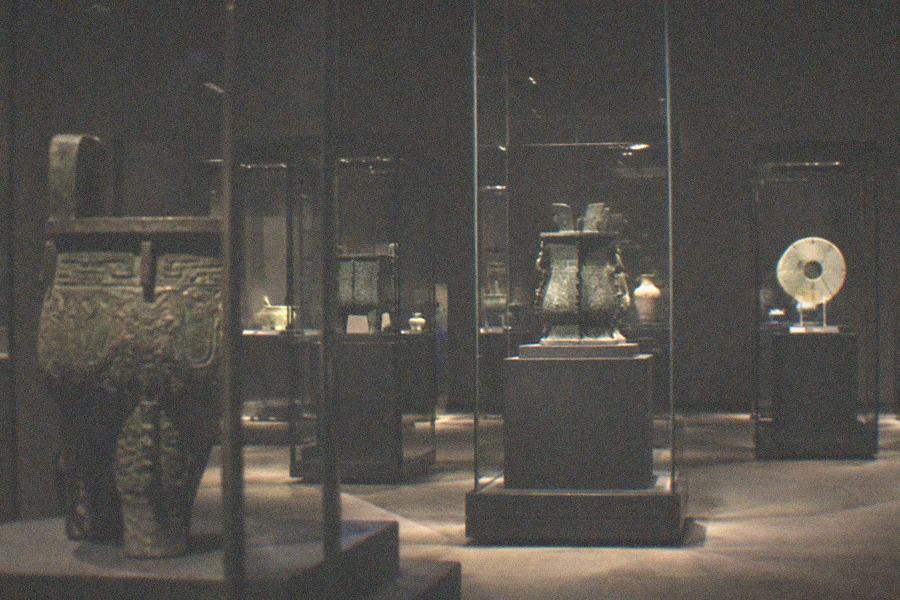
Note the opposite closed days when you plan. The Xicheng original closes on Tuesday; the Tongzhou branch closes on Monday, except national holidays. A visitor who mixes the two up will find one of the two doors shut, so it is worth writing the closed day next to each on your itinerary.
What If You Want A Reserved History Visit Instead?
Since the Capital Museum sells no ticket product of any kind, travelers who want a booked, guaranteed history visit need to look at other venues. The Military Museum of the Chinese People's Revolution is free to enter but releases its reservations 8 days ahead at 8:00, 17:00 and 20:00, and a booking service from $21 manages that window. The National Museum of China and the Confucius Temple and Imperial College round out the bookable options.
The Military Museum of the Chinese People's Revolution, on Fuxing Road in Haidian, is the closest thematic companion to a city-history day. Entry is free, but it follows the reservation model: real-name booking that opens 8 days ahead, with slots releasing at 8:00, 17:00 and 20:00, and a foreign passport is accepted for the registration. It closes on Monday, except statutory holidays. A booking service from $21 exists for visitors who cannot work those release times, and it carries a rating of 4.4 from 10 reviews.
The Confucius Temple and Imperial College Museum makes a different pairing, and an easy one. It sits on Guozijian Street in Dongcheng, a short walk from the Lama Temple, and it is one of the simplest paid bookings in the city: door price CNY 30, reservation opening just 1 day ahead, and closed Monday except public holidays. A booking service from $12 covers it. As a contrast to the free Capital Museum it works well, since the two sit at opposite ends of the booking-difficulty scale while telling overlapping stories about how the city was run.
So Is It Worth Your Time On A Short Beijing Trip?
For a first trip of three days or fewer, the Capital Museum is a strong third or fourth choice, behind the Forbidden City and one national collection, precisely because it costs nothing and books nothing. For a longer stay or a return visit it moves up the list: free, lighter on tour groups than the palace, and open on Monday when almost everything else central is closed.
The verdict lands differently depending on the itinerary. On a tight first visit, the palace, the National Museum if you can book it, and the hutong neighborhoods will fill the days before this museum gets a look-in, and that is a defensible order. On a second visit, or a trip with a Monday in it, the calculation changes: the Capital Museum is the venue that costs you nothing, asks nothing in advance, and still delivers a coherent story of the city you are standing in.
The planning work that makes days like this easy is mostly about booking windows, and the venue-by-venue detail is laid out across Beijing Museums for every major museum in the city. Know which venues release slots seven days out, which release a day out, and which take walk-ups, and the week arranges itself.
If you are building the rest of the week around this visit, these are the three bookable history experiences that pair with it best.
Common Questions About The Capital Museum
Is The Capital Museum Worth Visiting?
Yes, for most travelers. Admission is free, no reservation is required, and the permanent exhibitions tell Beijing's own city story at a manageable scale. It is open on Monday, when most major museums in the city close, and it shuts on Tuesday instead. Skip it only on the tightest one-day itineraries.
Is the Capital Museum free?
Yes. General admission is free, and the museum sells no ticket product of any kind through booking services. You register with a valid ID or passport at the north gate and enter.
Do you need a reservation for the Capital Museum?
No. The Capital Museum is one of only six major venues in Beijing that take genuine walk-up entry. This is unusual: 22 of the 31 major venues in the city require an advance real-name reservation, including several that are also free.
What day is the Capital Museum closed?
Tuesday. This is the reverse of the near-universal Beijing rule, under which museums close on Monday. Under the schedule in force from 18 May to 18 October 2026, hours run 9:00 to 20:00 with last entry at 19:00.
Can foreign visitors walk into the Capital Museum?
Yes. A valid passport is accepted for the ID-based registration at the north gate, and no advance booking is needed. This makes it one of the easiest major museums in Beijing for foreign visitors on a spontaneous schedule.
Is the Capital Museum the same as the National Museum of China?
No. The National Museum of China is on Tiananmen Square in Dongcheng, covers Chinese civilization nationwide, requires a timed reservation opening 7 days ahead at 17:00, and closes on Monday. The Capital Museum is in Xicheng, covers Beijing as a city, takes walk-ups, and closes on Tuesday.