What Does A Temple Of Heaven Through-Ticket Include?
A plain answer to what the Temple of Heaven through-ticket covers, what it costs, how the reservation window works, and what closes on Mondays.
The Temple of Heaven sells one combined ticket that covers its paid inner sites, and that single transaction is what most visitors mean when they ask about a "through-ticket." It is a straightforward deal on paper: one price, one reservation, access to the monuments inside the park boundary. The complications sit around it. The ticket is reservation-only, the booking window opens seven days ahead, and the paid halls close on Mondays even though the park grounds themselves stay open every day. Getting the ticket right matters more than getting the itinerary right, because a visitor who shows up on a Monday with a through-ticket can still walk the park but will find the famous halls locked.
What Does A Temple Of Heaven Through-Ticket Include?
A Temple of Heaven through-ticket includes entry to the park and to its paid inner sites in one purchase: the Hall of Prayer for Good Harvests, the Imperial Vault of Heaven, the Circular Mound Altar and the connecting raised walkway, plus the smaller imperial structures around them. It does not include food, guided commentary or any separate exhibition add-ons, and it is only valid on the reserved date.
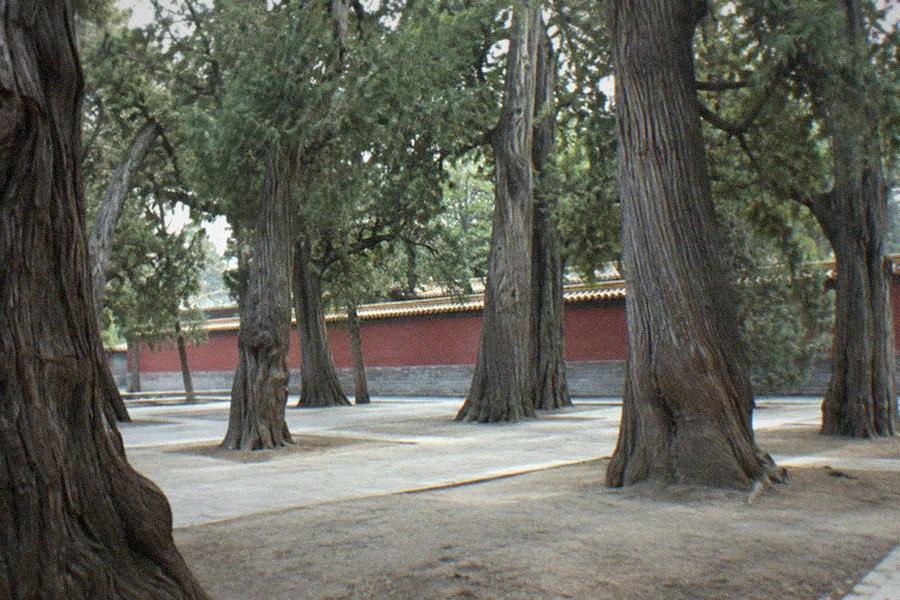
The Temple of Heaven is not one building but a walled park in Dongcheng District, and the through-ticket is what lets you past the turnstiles of the individual monuments inside it. The park itself is the frame: old cypress groves, wide stone causeways and the Danbi Bridge, the raised walkway that runs north to south through the whole axis. Locals use the outer park for tai chi, dancing and chess in the mornings, and that street life is free of the inner sites and worth seeing in its own right.
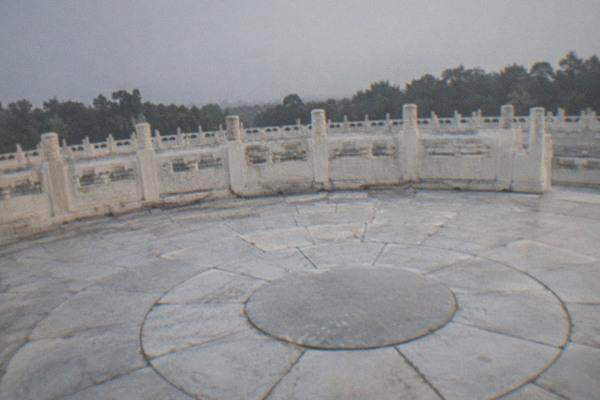
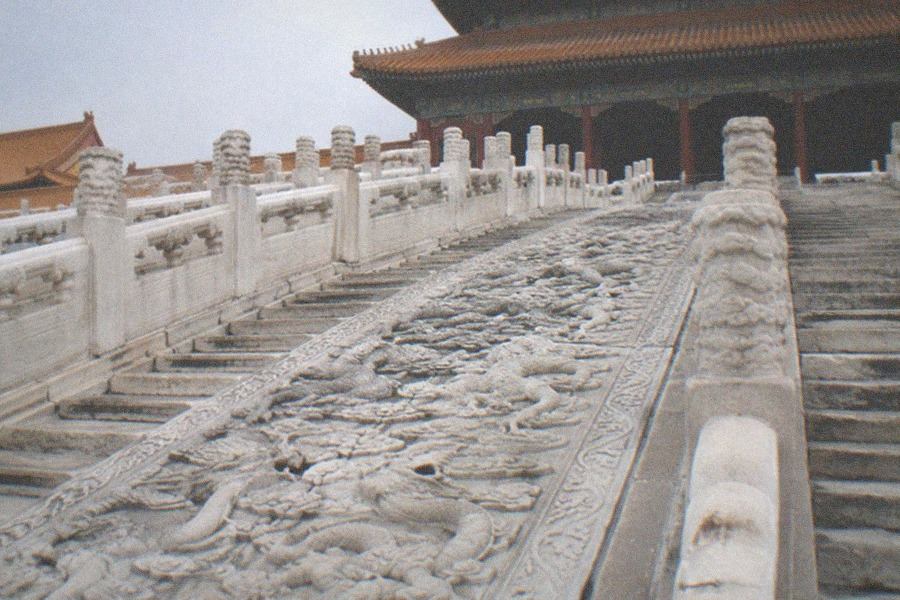
The inner sites are the reason the ticket exists. The Hall of Prayer for Good Harvests, the triple-gabled blue-roofed wooden tower on the park's northern axis, is the postcard building, a structure built without steel nails and resting on a three-tiered marble terrace. The Imperial Vault of Heaven sits between it and the southern end, a smaller single-gilded hall surrounded by the Echo Wall, a circular wall famous for carrying a whisper between people standing at opposite points. At the south end, the Circular Mound Altar is a bare, three-tiered round platform of white marble where the winter solstice sacrifices took place, and its center stone is the acoustic heart of the park.
One thing the through-ticket is not: a museum ticket. The site is an imperial ceremonial complex, a place of ritual architecture rather than gallery halls, and it should be described plainly as such. There is no collection of objects to walk through, no display cases, no label text. What you are buying is access to architecture and landscape, and the experience is closer to visiting a great temple or an archaeological park than to an afternoon in a gallery. Visitors who want object-rich history nearby are better served by the Palace Museum's own ticketing rules, which cover a genuine museum with galleries and treasures.
How Much Does The Through-Ticket Cost, And How Do You Reserve It?
The through-ticket costs CNY 34 at the door, and it must be reserved in advance: the booking window opens seven days ahead, and there is no affiliate booking product for this venue, so the official channel is the only route. The park is open daily, but the paid halls close on Monday except statutory holidays, so the reservation date matters as much as the booking itself.
The price is the easy part. CNY 34 is the door figure for the combined ticket, and it is the number to plan around. What makes the Temple of Heaven different from most attractions of its stature in Beijing is that no third-party reservation product exists for it anywhere: the five booking platforms this site's research probed all came back empty for this venue. That means the official channel, the venue's own reservation system, is the only way in, and a foreign visitor needs to work that channel directly rather than paying a service to do it.
The reservation opens seven days ahead of the visit date. In practice this rewards visitors who know their itinerary a week out and punishes the spontaneous. Beijing's wider museum ecosystem works the same way, a pattern documented across the city's official venue pages, including the Beijing government's English museum listings. The difference at the Temple of Heaven is that the outer park remains open to walkers on any day, so a failed reservation is a disappointment rather than a total loss.
| Detail | What applies at the Temple of Heaven |
|---|---|
| Door price (through-ticket) | CNY 34 |
| Reservation | Required, opens 7 days ahead |
| Booking route | Official channel only, no third-party product exists |
| Park grounds | Open daily |
| Paid inner halls | Closed Monday, except statutory holidays |
| District | Dongcheng, central Beijing |
The honest planning note is about Monday. The park gates stay open, the cypress groves stay open, the morning dancers stay. The paid halls do not. A Monday visit with a through-ticket in hand means walking the grounds and looking at closed doors, which is a real experience but not the one most people paid for. Anyone building a Beijing itinerary around a Monday should read up on which Beijing museums stay open on Mondays before locking the day plan.
Which Parts Can You Actually Walk Into, And Which Do You Only See From Outside?
The through-ticket admits you inside the fenced compounds of the three major monuments: you can enter the Hall of Prayer for Good Harvests, step inside the Imperial Vault of Heaven compound with its Echo Wall, and walk the full Circular Mound Altar platform. Some halls are barrier-free interiors you walk through, while others are viewed from thresholds and terraces where the interior is roped, so "entry" means the compound, not always the room.
The distinction matters because many visitors expect to wander freely inside each hall. In practice the great halls on this site are protected structures, and visitor flow through them is managed. The Hall of Prayer for Good Harvests admits visitors into its ground level, where the gilded dragon caisson above the central throne table is visible from below, and the interior details, the 28 massive pillars and the painted ceiling, are seen from within rather than from behind glass. The Imperial Vault of Heaven houses the spirit tablets that were paraded to the altar during ceremonies, and its compound is where the Echo Wall does its trick.
The Circular Mound Altar is the most open of the three. It is a platform, not a building, so the through-ticket buys you the stairs: you climb the three marble tiers and stand where the emperor stood during the winter sacrifice, on the plain round heartstone at the center. The acoustics there are part of the design, a deliberate construction so that a voice at the center carried in ceremony. Around these anchors sit smaller structures, gates and side halls, included in the same ticket and usually quiet.
The through-ticket covers all of this in one price. There is no separate add-on gallery, no special-exhibition surcharge, nothing layered on top. That makes it one of the simpler ticket structures in Beijing, where several other imperial sites split their pricing across park entry, inner halls and special galleries. Anyone comparing the two models should look at what a Summer Palace through-ticket includes, because that park works on a similar combined logic with more moving parts.
Is The Temple Of Heaven Actually A Museum?
No, the Temple of Heaven is not a museum in the strict sense, and it should not be planned as one. It is a surviving imperial ceremonial complex, a UNESCO-listed ritual site where the architecture itself is the exhibit. There are no gallery halls, no permanent object collections and no display labels, so visitors expecting an indoor museum experience should adjust expectations before booking.
This matters for itinerary planning more than it might seem. Beijing's attraction landscape mixes true museums, like the Palace Museum with its Treasure Gallery and Gallery of Clocks, with imperial parks and temple complexes that get marketed alongside them. The Temple of Heaven belongs firmly in the second group. The Palace Museum, by contrast, is a genuine museum as well as a palace, and its official pages describe both its architecture and its collections, as seen on the Palace Museum's own site. Lumping the two together leads to disappointment in one direction or the other.
What the Temple of Heaven offers instead of collections is intact ritual geography. The northern hall, the central vault and the southern altar were laid out on one straight axis on purpose, embodying a cosmology where the round meets the square and heaven meets earth. Walking the axis from end to end, which the through-ticket fully permits, is the closest thing to reading the site's label text. The park's designers built the narrative into the ground, and the ticket simply lets you follow it.
For visitors who want the object-rich version of imperial Beijing after seeing the architecture, the honest pairing is a museum stop elsewhere in the day. The site's own coverage of Beijing's history museums lays out the options that do have display cases, from the National Museum of China on Tiananmen Square to the Capital Museum further west. The Temple of Heaven supplies the stage set; those museums supply the props.
When Is Everything Open, And What Does The Monday Closure Really Mean?
The park grounds are open every day of the week, but the paid inner sites close on Mondays except statutory holidays, so a Monday through-ticket buys you the landscape and not the halls. The reservation window opens seven days ahead, which means Monday availability, or the lack of it, is visible a full week before your visit.
The Monday rule is the single most expensive planning mistake in Beijing, and this site states it everywhere because it is true everywhere. Chinese national and municipal museums close on Monday as a near-universal convention, and the Temple of Heaven's paid halls follow it even though the surrounding park does not. The practical reading: do not put the Temple of Heaven's inner sites on a Monday, and do not put any other major Beijing museum on that Monday either, because the whole ecosystem tends to shut together. The exceptions are statutory holidays, when Monday closures lift across the city. Everything else covered here is indexed on Beijing Museums.
The seven-day booking window interacts with this in a useful way. Because reservations open a week out, a traveler finalizing plans can see immediately whether a Monday visit would be a halls-open or halls-closed day, and can reshuffle the itinerary before committing. That is the quiet advantage of Beijing's reservation culture: the calendar enforces itself, and the booking system tells you the answer before you travel.
There is a genuine strategy for Mondays, and it is not "skip the park." The outer park stays open, the morning local life is at its best before mid-morning, and the grounds themselves, the cypress groves and the long causeway, are free of the turnstile queues that build inside. A Monday visit to the park without the halls is a legitimate plan for a photographer or a runner. It is just not the plan a through-ticket was designed for.
How Much Time Does A Visit Take, And What Route Works Best?
Plan on two to four hours for a full through-ticket visit: the north-to-south axis walk with all three inner sites takes about two hours at a steady pace, and adding the side halls, the cypress groves and a rest stop pushes it toward four. Enter from the north gate, see the Hall of Prayer for Good Harvests first, then walk the Danbi Bridge south to the vault and the mound, finishing at the south gate.
The north-to-south route is the axis itself, and it has a practical logic beyond the symbolism. The Hall of Prayer for Good Harvests sits at the northern end, and most visitors want it early, both for energy and for photographs before the crowds thicken. From there the Danbi Bridge, the long raised causeway, carries you south past the grounds where the ceremonial processions assembled. The Imperial Vault of Heaven and its Echo Wall come next, and the Circular Mound Altar ends the walk at the southern wall, where the south gate offers a clean exit.
Timing within the day matters as much as the route. Early morning is the park at its most alive: the outer groves fill with locals practicing tai chi, playing instruments and socializing, a street-theater layer of Beijing life that is entirely free and entirely absent by early afternoon. The inner sites fill later, especially the Hall of Prayer for Good Harvests, where the terrace becomes a camera scrum by late morning. A reservation for the first entry slot gives you both: the local morning in the groves and the halls before the peak.
Visitors pairing the Temple of Heaven with a second site should budget the whole half-day honestly. The park sits in Dongcheng, central Beijing, close to the Forbidden City's axis, so the natural pairing is a morning at the Temple of Heaven and an afternoon further north. Anyone planning that kind of compressed imperial day will find the 3-day Beijing museum itinerary a better template than a single-day squeeze, because the reservation windows, not the distances, are what constrain the schedule.
How Does The Through-Ticket Compare With Other Beijing Imperial Sites?
The Temple of Heaven's CNY 34 through-ticket is one of the simpler structures among Beijing's imperial sites: one price, one reservation, no add-on galleries. The Summer Palace and the Forbidden City both layer their pricing, splitting park or base entry from inner halls and special galleries, so the comparison is less about cost and more about how many separate decisions each site forces before you can walk in.
The contrast is easiest to see in a table, because the sites genuinely differ in structure rather than just in price. The Forbidden City charges its base admission and then sells the Treasure Gallery and the Gallery of Clocks as separate paid add-ons inside. The Summer Palace separates its park entry from its inner-boat and hall sites. The Temple of Heaven keeps everything in one transaction, which is friendlier to a first-time visitor and less friendly to anyone hoping to cherry-pick.
| Site | Door price | Ticket structure | Reservation |
|---|---|---|---|
| Temple of Heaven | CNY 34 | Single through-ticket, no add-ons | Required, 7 days ahead |
| Forbidden City (Palace Museum) | CNY 60 | Base ticket plus paid gallery add-ons | Required, 7 days ahead at 20:00 |
| Summer Palace | CNY 30 | Park entry separate from inner hall sites | Required, window not published |
| Lama Temple | CNY 25 | Single admission | Required, 7 days ahead |
The deeper point is that all four are reservation venues, and none of them sell same-day tickets at a window in the way travelers over forty grew up expecting. The Palace Museum states this openly, warning that it has authorized no third-party ticket agents and sells no same-day tickets at all, a policy published on its official pages. The Temple of Heaven's system is less famous but works on the same logic: book ahead, bring the passport the reservation is tied to, and accept that the quota, not the queue, decides who gets in.
For visitors building a multi-site imperial itinerary, the practical advice is to book in reverse order of scarcity. The Forbidden City's window opens at 20:00 seven days out and its popular dates sell out, so it anchors the calendar. The Temple of Heaven and the Lama Temple fill the days around it. The Summer Palace is the most flexible of the four and rewards a half-day rather than a rushed hour, and its reservation product from $14 is the one place in this comparison where a third-party booking service exists to smooth the friction.
What Do Visitors Actually Say About The Through-Ticket Experience?
Visitor sentiment on the Temple of Heaven is consistently strong on the architecture and the park atmosphere, and the common complaints are about crowding at the Hall of Prayer for Good Harvests and the Monday hall closure catching people out. The through-ticket itself draws little criticism, because one price for the whole axis is seen as fair value for what is arguably Beijing's most beautiful single building.
The praise concentrates on two things. The Hall of Prayer for Good Harvests is the structure most first-time visitors describe as the visual high point of a Beijing trip, the blue triple roof against the sky photographing better than almost anything else in the city. The second is the park's living layer, the morning activities in the groves, which visitors repeatedly describe as the part they did not expect and remembered longest. Both are covered by the same ticket, which is why the combined price reads as generous.
The complaints are logistical rather than substantive. Crowds at the northern hall in late morning are the most common gripe, and the fix is the early entry slot. The Monday closure is the other, and it lands hardest on visitors who booked a through-ticket before checking the closed day, walked into the park on a Monday and found the compounds locked. The park itself still delights on a Monday, but the ticket's value collapses without the halls, and no refund logic softens that.
The third recurring note is about the Echo Wall specifically: it works best with two people and patience, and in a crowd the effect dissolves into ambient noise. Visitors who test it at opening time report the cleanest results. None of these complaints touch the ticket structure itself, which is the quiet recommendation: when the price is simple and the reservation is the only friction, the experience carries the review.
Is The Through-Ticket Worth It Compared With Just Walking The Park?
For most visitors, yes: the through-ticket is worth it because the three paid inner sites are the entire point of the complex, and the free park alone is a pleasant walk but not the monument. The one honest exception is a Monday, when the park without the halls is the only option and a free morning among the cypresses is the better plan than a locked-door disappointment.
The value question is really a Monday question, plus a taste question. On any day the halls are open, the CNY 34 combined price buys the axis, the interiors and the altar platform, and there is no cheaper route to any of them. The park's free layer, the groves and the causeway views from outside the fences, is genuinely enjoyable, but the fences exist, and the difference between seeing the Hall of Prayer for Good Harvests from a distance and standing under its caisson is the difference between a park and a World Heritage site.
The taste exception is real, though. A traveler with no interest in imperial ritual architecture, someone who wants street life and people-watching over monuments, gets most of the park's value without the ticket. The morning activity in the outer groves costs nothing, moves nothing and closes nothing. That visitor should keep the CNY 34 and spend longer among the dancers.
For everyone else, the sequencing advice is simple. Reserve the through-ticket for a non-Monday, take the first slot of the day, walk the axis north to south, and give the park's free layer the hour before your entry time. That plan extracts everything the ticket covers and everything the park gives away, in the right order. It is the plan this site recommends without hesitation, and the reservation calendar makes it easy to execute a week in advance.
The same logic applies to the Forbidden City, which pairs naturally with this park on a two-site imperial day. Its base ticket is CNY 60 at the door, its reservation window opens at 20:00 seven days ahead, and its popular dates sell out, so it deserves the earlier booking decision of the two.
That pairing, Temple of Heaven in the morning and the Forbidden City in the afternoon, is the classic compressed imperial day, and both halves reward the same discipline: book on the day the window opens, bring the passport, and refuse the temptation to improvise. The trio below covers the three imperial sites that carry third-party reservation products, for travelers who would rather hand that booking work to a service than fight the windows themselves.
Common Questions About The Temple Of Heaven Through-Ticket
What Does A Temple Of Heaven Through-Ticket Include?
A through-ticket includes entry to the park and its paid inner sites in one purchase: the Hall of Prayer for Good Harvests, the Imperial Vault of Heaven with its Echo Wall, the Circular Mound Altar, and the smaller imperial structures along the axis. It covers no food, no guided commentary and no separate exhibition add-ons, and it is valid only on the reserved date.
How much does the Temple of Heaven through-ticket cost?
The door price is CNY 34 for the combined ticket. It must be reserved in advance through the official channel, with the booking window opening seven days ahead, and there is no third-party booking product for this venue.
Is the Temple of Heaven open on Mondays?
The park grounds are open every day, but the paid inner halls close on Mondays except statutory holidays. A Monday visit means the groves and causeways but locked halls, so plan the through-ticket for another day.
Is the Temple of Heaven a museum?
No, not strictly. It is an imperial ceremonial complex with ritual architecture rather than gallery halls or object collections. The experience is closer to a heritage park walk than to a museum visit.
Can you go inside the Hall of Prayer for Good Harvests?
Yes, the through-ticket admits you into the hall's ground level and onto its marble terrace. Some interiors on the site are roped for protection, so entry means the compound and, in the great halls, the main floor rather than every room.
How long does a through-ticket visit take?
Plan on two to four hours. The north-to-south axis walk with all three inner sites takes about two hours at a steady pace, and the park's groves and rest stops add the rest.