What Is Left To See At The Old Summer Palace?
A plain answer to what survives at Yuanmingyuan: the Dashuifa ruins, the Western mansions, the lakes and the few restored halls, plus ticket, reservation and planning facts.
What Is Left To See At The Old Summer Palace?
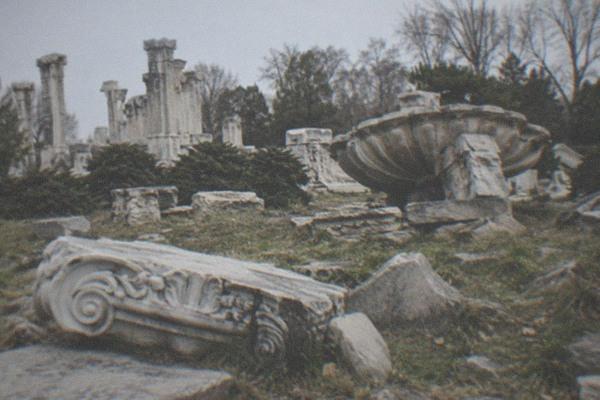
What is left is mostly ruins and parkland: the carved stone skeletons of the Western mansions, the famous Dashuifa colonnade, a partly restored labyrinth, extensive lakes and planted hills, and a small number of rebuilt traditional halls in the eastern gardens. The site is enormous, quiet, and deliberately preserved as a memorial rather than reconstructed as a palace.
The Old Summer Palace, known in Chinese as Yuanmingyuan, was never a single building. It was a vast complex of gardens, lakes, palaces and miniature landscapes built and expanded over generations of Qing emperors, and it functioned as an imperial residence where the court spent much of the year. Its destruction during the Second Opium War, when Anglo-French forces looted and then burned the complex, removed almost all of the timber architecture in a matter of days. Stone and water survived the fire in ways that wood could not, and that imbalance shapes everything a visitor now encounters.
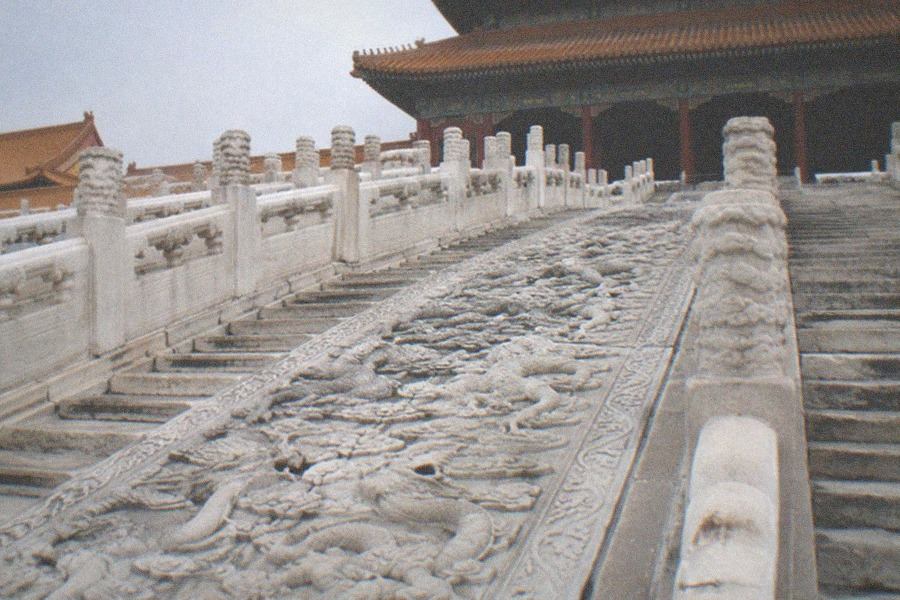
The parts people photograph are the stone ones. The Western Mansions district, a cluster of European-style palaces designed in the eighteenth century with the help of Jesuit artists at the Qing court, was built from carved granite and marble rather than the timber-and-tile construction used everywhere else on the site. Fire destroys timber; it blackens and topples stone. So the district's facades, balustrades and ornamental carvings stayed standing after everything around them burned, and they remain the site's defining image today: empty colonnades and sculpted fragments standing on grass, instantly recognizable even to visitors who know nothing of the history.
Everything else you can see at the site is a mix of preserved ruin, restored structure, and re-landscaped park. The complex is big enough that it is usually described as three joined gardens, and the experience of walking it is closer to a long rural ramble between lakes than a museum crawl. For anyone weighing it against the city's indoor collections, the three day Beijing museum itinerary places it in context with the palace and garden sites that do have museum-grade interiors.
How Much Of The Old Summer Palace Survived The Destruction?
Almost none of the original buildings survived, and the timber palaces are gone entirely. What remains falls into three groups: the fire-resistant stone shells of the Western Mansions, the earthworks and water systems of the gardens themselves, and a small number of halls rebuilt or restored in later decades. The ruins you see are the minority of the site, standing in for the majority that was lost.
The fire was thorough. The palaces, galleries, libraries and chapels of the complex were overwhelmingly timber constructions with tile roofs, and once the looting was finished the buildings were put to the torch over several days. Structures of that kind do not leave picturesque ruins; they leave ash, cracked foundation platforms, and the odd stone plinth. Visitors sometimes arrive expecting a Chinese Parthenon and instead find that the most intact-looking things on the ground are the European-style stone facades, precisely because they were built in the one non-timber tradition on the site.
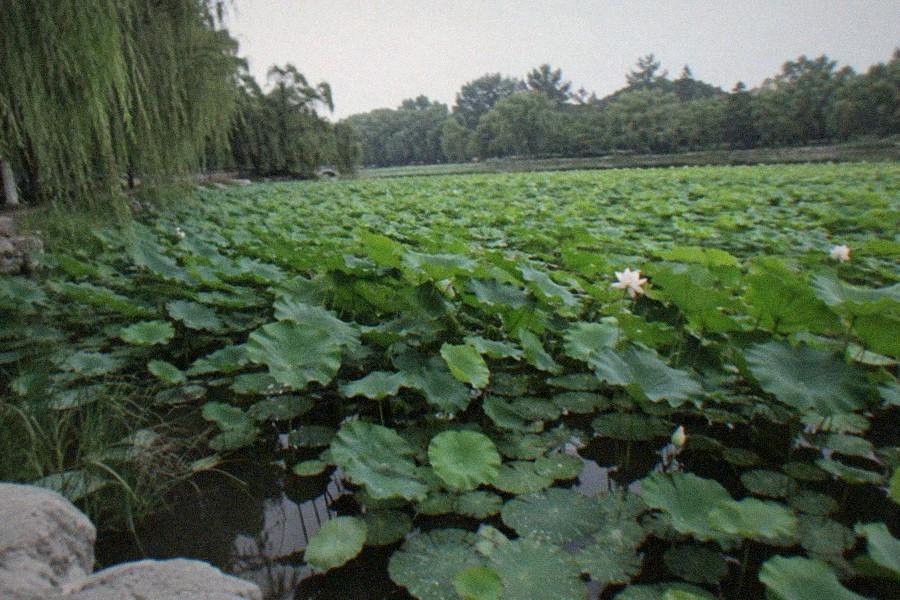
The gardens themselves survived better than the buildings. The lakes, channels, islands, artificial hills and tree plantings that made up the garden's structure could be burned over but not erased, and the site's later life as a park grew out of that surviving landscape. Much of a modern visit is spent walking this recovered scenery, which is genuinely beautiful and much quieter than the reconstructed imperial gardens elsewhere in Beijing.
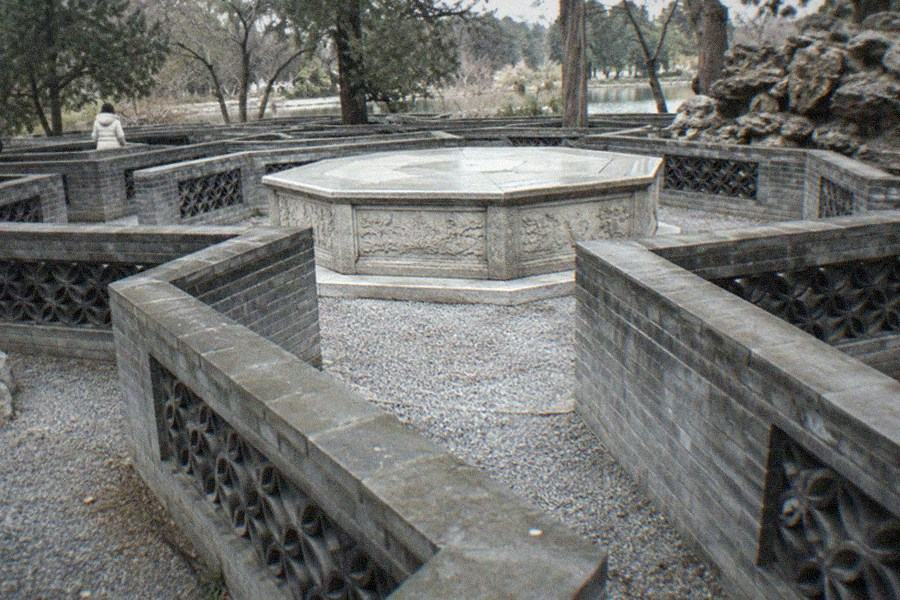
A few structures have been rebuilt or restored since, and the site's managers have made deliberate choices about what to leave as ruin and what to renew. The most visited restored piece is the Huanghuazhen, the flower-and-mirror labyrinth in the Changchun Garden, replanted in its original footprint so that visitors can walk the maze as the court once did. The contrast between that rebuilt maze and the untouched stone ruins a short walk away is, in effect, the site's curatorial argument: some things can be brought back, and some are kept broken on purpose.
The table below summarizes what a visitor actually encounters, area by area, and what state each part is in.
| Area of the site | What you see today | Condition |
|---|---|---|
| Western Mansions (Xiyanglou) | Carved stone facades, arches and balustrades of European-style palaces | Ruins, preserved as found |
| Dashuifa (Great Fountain) | Monumental carved stone screen and colonnade | Ruins, the site's focal point |
| Huanghuazhen labyrinth | Restored hedge maze in its original footprint | Rebuilt, walkable |
| Central and eastern gardens | Lakes, islands, artificial hills and tree plantings | Recovered parkland |
| Traditional halls in the east | A small number of rebuilt or restored halls | Restored structures |
What Are The Western Mansions And Dashuifa?
The Western Mansions, or Xiyanglou, are the remains of a group of European-style palaces built in the Changchun Garden in the eighteenth century, designed with Jesuit court artists for the Qianlong Emperor. Dashuifa, the Great Fountain, is their best-known fragment: a monumental carved stone facade and colonnade that once fronted elaborate waterworks. Today it is the single most photographed ruin on the site.
The district is the anomaly at the heart of the Old Summer Palace. Where the rest of the complex was built in Chinese garden traditions, this corner was a deliberate experiment in European baroque architecture, executed in carved stone by Chinese craftsmen working from designs influenced by Giuseppe Castiglione and other Jesuits serving at the Qing court. It was ornamental and theatrical, a place for the emperor to stroll among fountains and trompe-l'oeil perspectives, and it included some of the most technically ambitious water features of their era.
Because these buildings were stone, the fire toppled rather than vaporized them. What stands now are facades, arches and balustrades stripped of their roofs and interiors, scattered across a lawn in roughly their original positions. Dashuifa is the centerpiece: a broad screen of carved stonework with a central archway and flanking columns, built as the architectural backdrop to the fountain basin. The bronze animal-head water spouts that once ringed the larger fountain are long gone, part of the wider dispersal of the site's movable treasures.
The district rewards slow looking. The carvings are dense with detail, shells and garlands and Western architectural ornament executed with Chinese precision, and the buildings' footprints are laid out clearly enough that you can read the plan of the whole ensemble as you walk it. Arrive early and you may have the colonnades almost to yourself, which is not something you can say about many famous sights in this city.
Is The Old Summer Palace A Museum?
It is not, strictly, a museum. The Old Summer Palace is a ruins park: an outdoor heritage site of lakes, gardens and architectural remains, with no collection of artifacts on display inside a purpose-built gallery. A small exhibition presence exists on the site, but the experience is a park visit, not a museum visit, and you should plan for walking outdoors rather than exhibitions.
This matters for planning. The site's official listing on the Beijing tourism register describes it as a scenic attraction, and its pricing, opening arrangements and reservation rules are those of a park rather than a cultural institution. If your day in Beijing is built around indoor collections, this is the opposite kind of visit: several hours on foot, largely unpaved paths, weather-dependent, and with the interpretation carried by the landscape itself rather than by labeled displays.
It also matters for expectations. A museum can be visited in any season and mostly any weather; a ruins park is at its best in late spring, summer greenery and autumn, and at its most austere in winter, when the bare trees make the ruins read more starkly. Some visitors love that stripped-down winter version. Families should note the contrast with the city's hands-on collections covered in the guide to Beijing museums with kids, since young children generally get more from an interactive museum than from an hour of carved stonework.
The site's memorial function is the third thing that separates it from a museum. The ruins are preserved partly as a monument to the destruction itself, a national memory site as much as a tourist attraction, and the tone around the Western Mansions is quieter and more solemn than the picnic atmosphere on the lake paths. Reading a little history before you go changes the visit considerably.
How Much Does It Cost And How Do You Get In?
Entry costs CNY 10 at the door, and an advance reservation is required; the reservation window is not published, so book as early as your plans allow. A third-party reservation service is listed from $8, which books the official entry under your passport details. The site is in Haidian district, on Qinghua West Road, and closes on a day that is not published, so confirm before you travel.
The price is one of the lowest of any major imperial site in Beijing, which surprises visitors who expect the capital's headline heritage to carry headline prices. The CNY 10 door price buys the park and the ruins; it is the venue's own charge, paid for the official entry, and it should not be confused with the third-party product price, which is a different transaction for a booking service rather than a ticket markup. The two figures describe different things and are never interchangeable.
The reservation requirement is the practical barrier. Like most major sites in this city, the Old Summer Palace uses real-name advance booking, and the research record does not show a published window for when slots open, which means the safe strategy is to reserve as far ahead as your itinerary allows rather than gambling on a last-minute slot. Foreign visitors booking through a reservation service supply passport details at booking, and the resulting entry is tied to that passport, so bring the original document on the day. The practical mechanics of Beijing's real-name system are covered in detail in how to book Beijing museum tickets.
Getting there is straightforward. The site sits in Haidian, adjacent to Peking and Tsinghua universities, and the surrounding district is one of the easiest parts of Beijing to reach by subway or taxi from the northwest of the city. Allow the better part of half a day if you want to walk more than one of the three gardens; the site is far larger than the postcard ruins suggest, and the distances between the western ruins, the central lakes and the eastern halls add up quickly.
How Long Should You Spend, And What Is The Best Route?
Plan on three to four hours for a substantive visit that covers the Western Mansions, Dashuifa, the restored labyrinth and the central lake scenery, or a full half-day if you want to walk all three gardens. The efficient route starts at the southern entrance near the ruins, works through the Western Mansions and Dashuifa first, then loops through the lakes and the restored eastern areas before you tire.
The single biggest planning error is treating the site as a quick photo stop. The famous ruins occupy one corner of a much larger park, and visitors who beeline to Dashuifa, take the standard photograph and leave will have seen perhaps a tenth of what the site offers. The lakes and hills in the central and eastern gardens are where the complex's scale becomes legible, and they are where the site stops feeling like a monument and starts feeling like a landscape.
Season and time of day shape the visit more than at an indoor attraction. Early morning light on the carved stone is the best photographic condition and comes with the thinnest crowds; midday summer visits are hot and exposed on the open lawns around the ruins; late autumn colors across the lake paths are widely considered the site's most beautiful period. There is relatively little shade near the Western Mansions themselves, so water, sun protection and comfortable shoes matter more here than at any of the city's indoor museums.
Practical amenities exist but are spread out, in keeping with a large park. Plan food either before arrival or after leaving, treat the walk between areas as part of the experience rather than dead time, and if you are combining the site with another garden visit in the same day, keep the Old Summer Palace for the morning and finish somewhere with more seating and shelter.
How Does The Old Summer Palace Compare With The Summer Palace?
They are separate sites a short distance apart in Haidian, and they offer opposite experiences: the Summer Palace is a fully preserved and restored imperial garden with painted halls, a lake for boating and the Long Corridor, while the Old Summer Palace is a quieter ruins park built around what was destroyed. Entry differs too, with the Summer Palace at CNY 30 at the door and a reservation service listed from $14, rated 4.7 across 1,144 reviews.
The pairing is natural because the two parks were historically linked: the Summer Palace, Yiheyuan, was expanded as the Qing court's principal garden residence after the destruction of Yuanmingyuan, and in a sense one site's history begins where the other's was broken. Geographically they sit close together in the same district, so many visitors do both in one day, which is feasible but makes for a lot of walking.
Choose the Summer Palace if you want completeness: intact architecture, the Long Corridor, the marble boat, the tower climb and the boat rides on Kunming Lake, all described in detail in what a Summer Palace through ticket includes. Choose the Old Summer Palace if you want space, silence and history with an edge to it. The ruins have an emotional register that the restored garden next door deliberately does not, and on a weekday morning in autumn you can walk its lakes for an hour and share them with a fraction of the crowd.
| Old Summer Palace (Yuanmingyuan) | Summer Palace (Yiheyuan) | |
|---|---|---|
| Door price | CNY 10 | CNY 30 |
| Reservation service listed from | $8 | $14 |
| Reservation required | Yes, window not published | Yes, window not published |
| Rating | None published for this product | 4.7 across 1,144 reviews |
| Closed day | Not published | Inner halls close Monday except public holidays; park open daily |
| Character of the visit | Ruins park, memorial landscape | Fully preserved imperial garden |
Doing both on consecutive days, or splitting a single day between the Summer Palace in the morning and the Old Summer Palace's western ruins in the late afternoon, is the pattern that suits most first-time visitors. The contrast between a garden that survived and a garden that did not is the whole point of seeing them together, and it is a pairing that no other district in Beijing can offer. For a fuller sense of how the capital's imperial sites stack up against its indoor collections, Beijing Museums covers the whole roster, from free galleries to the palace itself.
Common Questions About The Old Summer Palace
What Is Left To See At The Old Summer Palace?
Stone ruins of the Western Mansions and the Dashuifa colonnade, the restored Huanghuazhen labyrinth, wide lakes and garden landscapes across three joined gardens, and a small number of rebuilt traditional halls. Most of the original timber architecture was destroyed during the Second Opium War and is gone, so the visit is a park-and-ruins experience rather than a palace tour.
Is the Old Summer Palace worth visiting?
For most visitors with half a day in Haidian, yes. It is not strictly a museum and offers no gallery collection, but the carved stone ruins, the scale of the gardens and the site's memorial atmosphere make it one of the most distinctive heritage visits in Beijing, and at CNY 10 at the door it is also one of the least expensive.
Do you need a reservation for the Old Summer Palace?
Yes. An advance real-name reservation is required, and the booking window is not published, so reserve as early as your plans allow. A third-party reservation service is listed from $8 and books the official entry under your passport details; bring the original passport on the day.
How long do you need at the Old Summer Palace?
Three to four hours covers the Western Mansions, Dashuifa, the labyrinth and the central lake scenery. Walking all three gardens comfortably takes a full half-day. The site is much larger than the famous ruins alone, so do not plan it as a brief photo stop.
What day is the Old Summer Palace closed?
The closed day is not published in the verified record, so confirm the current schedule on the official channel before you travel. This is also a park visit, largely outdoors, so check the weather alongside the calendar.
Is the Old Summer Palace the same as the Summer Palace?
No. They are separate parks in the same district. The Summer Palace is a fully preserved and restored imperial garden with painted halls and the Long Corridor, entry at CNY 30 at the door and a reservation service from $14. The Old Summer Palace is the quieter ruins park memorializing what was destroyed.