How To Book Beijing Museum Tickets: The Real-Name Reservation System
Beijing sold its museum tickets through WeChat mini-programs and official websites long before most cities had online booking, and the system has only tightened. Understanding the reservation windows, the release times and the passport rules is the difference between seeing the Forbidden City and reading about it.
Short answer
Beijing museum tickets are booked through each venue's official WeChat mini-program or website under a real-name system tied to your passport. Windows open between 1 and 10 days ahead depending on the venue, at fixed release times like 20:00 for the Palace Museum and 17:00 for the National Museum. Entry is often free, but 22 of 31 major venues still require a reservation.
How To Book Beijing Museum Tickets: The Real-Name Reservation System
Beijing's museum ticketing runs on a real-name reservation system, which means every ticket is bound to a specific identification document and cannot be transferred, resold or bought anonymously. That single design choice explains almost everything a visitor finds confusing: why tickets appear seven days before your visit and not before, why a free museum can still turn you away at the door, and why a screenshot of someone else's booking is worthless. This guide walks through the system as it actually operates in 2026, venue by venue, window by window.
The short version is this. You book through the venue's official channel, usually a WeChat mini-program or an official website, using your passport number. Each venue releases its slots a fixed number of days ahead, often at a precise hour of the evening. Twenty-two of the thirty-one major museums and heritage sites covered on Beijing Museums require this advance reservation, and only six take genuine walk-ups. Free admission almost never means walk-in entry, and treating it as if it does is the single most expensive planning mistake in the city.
How Does The Real-Name Reservation System Work?
Every ticket in Beijing's museum system is issued against a named identity document, booked in advance through an official channel, and checked against that same document at the gate. There is no anonymous ticket, no transferable ticket and, at most venues, no same-day counter. The system exists to control crowd flow at sites whose demand far exceeds their daily quota, and it applies equally to Chinese citizens and foreign visitors.
The mechanics are simpler than they sound. When you reserve, you enter your name and document number, for foreign visitors that is your passport number. The booking generates a timed entry slot tied to that document. At the gate, security scans your passport or ID and matches it to the slot. If the document does not match the booking, entry is refused, and the booking cannot simply be handed to a friend.
What trips visitors up is not the matching but the timing. Each venue opens its booking window a fixed number of days before the visit date, and slots for popular dates can be gone within minutes of release. The Palace Museum opens seven days ahead at 20:00 Beijing time. The National Museum of China opens seven days ahead at 17:00. The National Natural History Museum opens only three days ahead at 11:00, and the Confucius Temple and Imperial College Museum opens just one day ahead. There is no central portal: each museum runs its own channel, so a week in Beijing can mean five separate bookings at five separate times of day.
A few practical consequences follow from the design. You must carry the same passport you booked with, not a photocopy and not a different document. Your itinerary has to be locked in before the earliest window opens, because changing your date after booking usually means canceling and re-booking into whatever is left. And you should treat the release times as appointments: set an alarm for 19:55, have the mini-program open, and be ready to submit the moment the slots appear.
The system also explains why scalpers are a documented problem rather than a rumor. High demand plus real-name matching creates a market for people who will book under your details for a fee, and the museums have responded with explicit public warnings. The Palace Museum states on its official site that it has not authorized any third-party institutions or individuals to act as ticket agents, and that warning matters when you decide how to book.
How Do You Make A Forbidden City Reservation?
The Palace Museum releases tickets seven days before your visit date at 20:00 Beijing time, through its official WeChat mini-program or its official ticketing website, under the passport details of every visitor. There are no same-day tickets at all, no on-site counter and no fallback window for foreigners. Peak-season admission is CNY 60 at the door, and popular dates sell out within minutes of release.
Start with the timing, because everything else depends on it. At 20:00, seven days ahead, the quota for your date goes live. If you are booking for a Saturday in peak season, assume the slots will be thin within ten minutes and gone within the hour. The museum's own guidance is unambiguous: all visitors must make a real-name reservation in advance, and the Palace Museum does not sell same-day tickets. Plan to be online at 19:55 with your passport in hand.
The booking itself takes a few minutes once slots are visible. You select the date and session, enter each visitor's name and passport number exactly as printed in the document, and pay through the mini-program. Foreign passports are accepted in the official channels; the fields expect the machine-readable characters of the document, so transcribe carefully. A mismatch between the booked number and the passport you present at the Meridian Gate means refused entry, and there is no desk where the problem can be fixed on the spot.
Two paid add-ons exist inside the complex: the Treasure Gallery and the Clock Gallery, each CNY 10 on top of general admission. These are booked through the same channel and are worth reserving in the same session, because their quotas are smaller than the main gate's and they sell out on popular dates too. If the galleries matter to you, see the breakdown in what the Forbidden City Treasure Gallery separate ticket covers before you book.
The Palace Museum closes on Mondays except statutory holidays, and its daily quota is capped, though the cap figure itself is not officially published. Popular dates sell out, and that is all any visitor needs to know: book the moment the window opens or accept that the date may be gone.
If the 20:00 release feels like a gamble on a trip you have already paid for, a reservation service is the middle path. You supply passport details at booking, the provider books the official ticket under those details when the window opens, and you enter with your own passport exactly as if you had booked it yourself. The Palace Museum's warning about unauthorized agents applies to anyone reselling admission, and the honest services do not claim to hold inventory: they book the official ticket on your behalf and refund if the official quota sells out first. The listing for the Forbidden City reservation service starts from $7, which is the service fee, not the ticket price; the door price remains CNY 60. Check availability through the operator's live listing if you want the booking handled for you.
What If The Official Forbidden City Slots Are Sold Out?
When the official quota for a date is exhausted, that date is closed, and no third party can open it. Your options narrow to three: book a different date, keep checking for released slots as other visitors cancel, or use a reservation service that attempts the booking under your passport details and refunds you if the quota is gone. No route produces a ticket for a sold-out date.
The first option is the reliable one. The seven-day window means a date that looks impossible today may be bookable tomorrow evening at 20:00, and midweek dates are dramatically easier than weekends. If your itinerary has any flex, move the Forbidden City to a Tuesday or Wednesday and keep the weekend for parks, which do not close on Mondays.
The second option is watching for cancellations. Visitors cancel when plans change, and those slots return to the pool. There is no published schedule for returns; they appear in the mini-program as they are released, so checking periodically through the day can pay off. This is a genuine strategy for a date that is merely tight rather than gone.
The third option is the reservation service described above. Its honest mechanics matter here: the provider attempts the official booking under your passport details when the window opens, and if the quota sells out before your order is filled, the order is canceled and refunded. That is a real risk on peak dates, and the reputable listings say so plainly rather than promising entry. Anyone promising a guaranteed ticket to a sold-out date is promising something the system does not allow.
The same logic applies across the imperial sites. The Summer Palace and the Lama Temple also run on mandatory reservations, though their windows are less besieged than the Palace Museum's. For a fuller comparison of how the three biggest imperial sites handle booking, the three-day Beijing museum itinerary sequences them so that no two reservation windows collide.
Which Free Museums Still Require A Reservation?
Six major Beijing museums are genuinely free, and most of them still require an advance real-name reservation. The National Museum of China opens its window seven days ahead at 17:00, the National Art Museum seven days ahead at 16:00, and the National Natural History Museum three days ahead at 11:00. Free means no admission charge, not no booking.
The National Museum of China is the case study. Admission costs nothing, but the reservation is mandatory, the window opens seven days ahead at 17:00, and demand is heavy enough that holiday dates disappear quickly. Foreign visitors book through the museum's official channels using passport details. The museum's own visit guidance sets out the real-name rules, and the practical takeaway is that a free ticket behaves exactly like a paid one: same window, same quota, same sell-outs.
The National Art Museum of China follows the same pattern with a daily visitor limit around 6,000 and a window opening seven days ahead at 16:00. The National Natural History Museum is tighter still, releasing only three days ahead at 11:00, which catches families planning weekend dinosaur visits off guard. The China National Film Museum requires a reservation through its WeChat account, with the window not published. The Capital Museum and the Beijing Grand Canal Museum are the exceptions: both are free with walk-up entry, no reservation needed, though the Capital Museum closes on Tuesdays rather than Mondays.
| Free museum | Reservation | Window opens | Closed |
|---|---|---|---|
| National Museum of China | Required | 7 days ahead at 17:00 | Monday (except statutory holidays) |
| National Art Museum of China | Required | 7 days ahead at 16:00 | Monday (except statutory holidays) |
| National Natural History Museum | Required | 3 days ahead at 11:00 | Monday (except statutory holidays) |
| China National Film Museum | Required | Window not published | Monday (except holidays) |
| Capital Museum | Walk-up | No reservation needed | Tuesday |
| Beijing Grand Canal Museum | Walk-up | No reservation needed | Monday (except national holidays) |
For the full free list with addresses and themes, see free museums in Beijing. The pattern to internalize is that free venues use the reservation system precisely because they are popular; the price is zero, but the quota is not.
Do Any Beijing Museums Still Take Walk-Ups?
Six venues in the roster take genuine walk-up entry with no advance booking: the Capital Museum, the Beijing Grand Canal Museum, the Guanfu Museum, the Beijing Ancient Architecture Museum, the Great Bell Temple Ancient Bell Museum and the Museum of the War of Chinese People's Resistance Against Japanese Aggression. Everywhere else, a reservation is either mandatory or strongly the norm.
The walk-up list is worth knowing because it is your pressure valve. If a reservation fell through or a date sold out, these venues will let you in on the day with your passport at the door. The Capital Museum, free and closed Tuesdays, is the most central of them. The Ancient Architecture Museum inside the Temple of Agriculture costs CNY 15 at the door, the Great Bell Temple Ancient Bell Museum CNY 30, and the private Guanfu Museum CNY 100, which is the highest door price in the roster and buys access to one of the country's best private antiquities collections.
Everything else reserves. The specialist museums, the Railway Museum's Dongjiao Exhibition Hall, the Auto Museum, the Poly Art Museum, the Geological Museum and the Paleozoological Museum all sit in the reservation camp, with windows from one to seven days ahead. The Planetarium and the Ancient Observatory, which share an administration, open five days ahead. Prince Gong's Mansion is the outlier with the longest window in the roster: ten days ahead at 20:00, a sign of how heavy its demand is relative to its size.
| Reservation window | Venues |
|---|---|
| 10 days ahead, 20:00 | Prince Gong's Mansion |
| 8 days ahead, 08:00 / 17:00 / 20:00 | Military Museum |
| 7 days ahead, fixed evening times | Palace Museum, National Museum, Science and Technology Museum, National Art Museum, Zhoukoudian, Lama Temple, Temple of Heaven, Auto Museum, Geological Museum |
| 5 to 6 days ahead | Beijing Planetarium, Ancient Observatory, Paleozoological Museum |
| 1 to 3 days ahead | Confucius Temple and Imperial College, Natural History Museum |
| Walk-up, no reservation | Capital Museum, Grand Canal Museum, Guanfu, Ancient Architecture Museum, Great Bell Temple, Anti-Japanese War Museum |
Note that some imperial sites beyond the museums, the Summer Palace among them, also require reservations with windows that are not published in advance. The Summer Palace reservation service starts from $14 if you would rather not chase the window yourself; check availability on the operator's live listing. Its inner halls, such as the Tower of Buddhist Incense, close on Mondays like the museums do.
Does A Foreign Passport Work In The Booking Channels?
Yes, at the venues where the research confirmed it: the Palace Museum, the National Museum of China, the National Art Museum, the Military Museum, Prince Gong's Mansion, the Lama Temple and several others all accept a foreign passport for real-name reservation. Where confirmation was not possible, say nothing rather than guessing, and in practice a passport booked in the official channel is checked at the gate against the same document.
The passport is not a workaround for the system, it is the system's input. You enter the passport number at booking and present the physical passport at entry. The two must match character for character. The common failure mode is a transcription error in the booking, one wrong digit in a nine-character passport number, which produces a booking the gate system will not recognize. Transcribe slowly, and photograph the passport page you worked from in case you need to check later.
Payment is the other friction point for foreigners. The official channels are built around WeChat Pay and Alipay, and both now accept foreign cards after the payment changes rolled out in recent years, which has made the official route far more workable than it was. Linking a foreign card to WeChat Pay before you arrive in China removes the last common obstacle. The mini-programs themselves load inside WeChat without a Chinese phone number, though registering WeChat with a foreign number and then adding a payment method is the sequence that works.
One caution belongs here rather than anywhere else. Systems that require a Chinese mobile number or a Chinese bank card do exist in the wider ticketing landscape, and they can block a foreigner without a local contact. The official museum channels are not among them at the venues named above, but a healthy rule is to complete at least one booking before you land in China, while you still have easy recourse to your own bank and a stable connection, rather than attempting your first reservation from a hotel lobby at 19:55.
How Do You Plan A Week Around The Monday Closures?
Most Beijing museums close on Mondays, with statutory holidays the exception, so a Monday in the itinerary should be a park day, a 798 day or a trip to one of the few venues that stays open. The Capital Museum closes Tuesday instead, the Planetarium and Ancient Observatory close Tuesday, and the Poly Art Museum closes Sunday. Build the week around these fixed rest days before booking anything.
Monday is the near-universal closure day for Chinese national and municipal museums, and the roster confirms it venue by venue. The Palace Museum, the National Museum, the Science and Technology Museum, the Auto Museum, the Confucius Temple, Prince Gong's Mansion, Zhoukoudian and the Natural History Museum all close Monday except statutory holidays. The exceptions are real but narrow: the Capital Museum closes Tuesday, the Planetarium and the Ancient Observatory close Tuesday, and the Poly Art Museum closes Sunday and statutory holidays, which makes it a rare Sunday-morning-only option.
The practical planning move is to fix Monday first. The parks stay open: the Temple of Heaven park is open daily with only its paid halls closing Monday, and the Summer Palace's grounds remain accessible while its inner halls close. The 798 Art Zone does not close as a district, though individual galleries, including UCCA, commonly close Monday and vary by exhibition. A Monday built around the Temple of Heaven's park, a walk through the hutongs, or the Lama Temple, whose closure day is not published and which should be confirmed on its official channel before you go, is a Monday that cannot be ruined by a locked door. The museums open on Monday guide lists every confirmed exception.
| Closure pattern | Venues |
|---|---|
| Monday, except statutory holidays | Palace Museum, National Museum, Science and Technology Museum, Military Museum, National Art Museum, Natural History Museum, Auto Museum, Geological Museum, Confucius Temple, Prince Gong's Mansion, Zhoukoudian, Ancient Architecture Museum, Temple of Heaven paid halls |
| Monday, no holiday exception stated | Paleozoological Museum, Great Bell Temple Museum |
| Tuesday | Capital Museum, Beijing Planetarium, Ancient Observatory |
| Sunday and statutory holidays | Poly Art Museum |
| Not published | Lama Temple, Old Summer Palace, Ming Tombs |
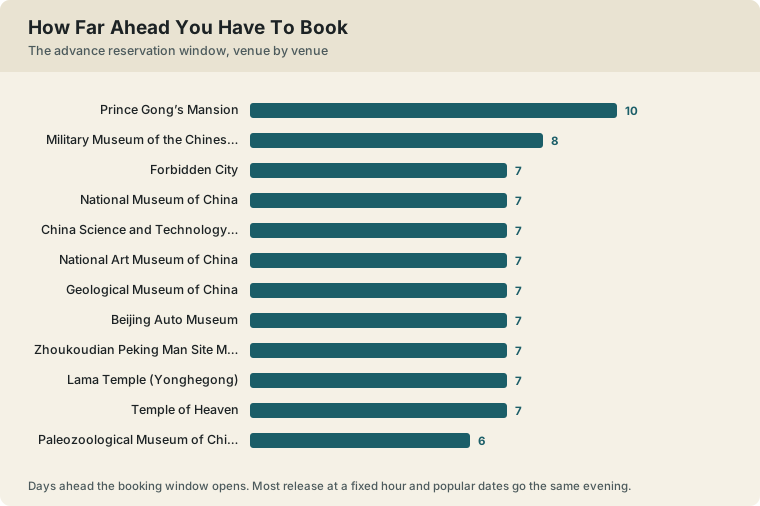
The chart above is the whole system in one view: the Palace Museum and Prince Gong's Mansion demand the longest runway, the Natural History Museum gives you the least notice, and most venues release in the 16:00 to 20:00 window when workers are free to book. If you are staying a week, book in order of window length: Prince Gong's Mansion first, then the seven-day venues, then the short-window sites.
What Does A Booking Service Actually Buy You?
A booking service does not sell a ticket that bypasses the official system; it books the official ticket inside the system, under your passport details, on your behalf, and charges a service fee for the attempt. If the official quota sells out before your order is filled, the order is refunded. The Palace Museum's own warning against unauthorized agents stands alongside this, and both facts are true at once.
This pairing is the most misunderstood corner of Beijing ticketing, so it deserves a plain statement. The Palace Museum publishes, in writing, that it has not authorized any third-party institutions or individuals to act as ticket agents, and that visitors should book through its official mini-program and website to avoid financial loss. The reservation services this site links are not agents holding allocated inventory; they submit your details into the same official channel you would use yourself, at the moment the window opens, and their listings describe themselves exactly that way. The service fee, from $7 for the Forbidden City, buys speed, a booking made at 20:00 sharp while you are at dinner, and an English interface, not privileged access.
The refund condition is the honest part of the arrangement. When the official quota for a date is exhausted, the service cannot manufacture a ticket, and the order is canceled with your money returned. Any listing that promises guaranteed entry to a sold-out date is describing something the real-name system does not permit. The Lama Temple reservation service, from $10, works the same way against that temple's seven-day window; check availability on the live listing if a temple visit is fixed in your plans.
Whether to use a service or the official channel is a genuine choice with a real trade-off, not a trick question. The official channel costs the door price in CNY and nothing more, and it works with a foreign passport at the venues named earlier in this guide. The service costs a fee on top and removes the 20:00 alarm, the mini-program navigation in Chinese and the risk that you mistype a passport number under time pressure. For a single visit with a flexible date, book it yourself. For a fixed itinerary around a national holiday, or for a family with several passport numbers to enter at speed, the fee is cheap insurance.
One final distinction protects your budget. The door price is what the venue charges in CNY: CNY 60 for the Palace Museum, CNY 30 for the Science and Technology Museum, CNY 25 for the Lama Temple. The from-$ price on a booking service is what that listing charges in USD for the service. They are different transactions and are never interchangeable, so do not compare them or treat one as a conversion of the other. The venue gets its door price either way; the service gets its fee for the booking work.
Common Questions About Booking Beijing Museum Tickets
How far in advance can you book Beijing museum tickets?
It depends on the venue. Prince Gong's Mansion opens ten days ahead at 20:00, the Palace Museum and most national museums seven days ahead at fixed evening times, the Planetarium and Ancient Observatory five days ahead, and the Natural History Museum just three days ahead at 11:00. The Confucius Temple and Imperial College Museum opens only one day ahead. Book in order of window length once your dates are fixed.
Can a foreigner book Beijing museum tickets with a passport?
Yes, at the venues where this is confirmed: the Palace Museum, the National Museum of China, the National Art Museum, the Military Museum, Prince Gong's Mansion and the Lama Temple all accept foreign passports for real-name reservation. Enter the passport number exactly as printed and carry the same physical passport to the gate, since the two must match for entry.
Do free Beijing museums still need a reservation?
Mostly yes. The National Museum of China, the National Art Museum and the Natural History Museum are all free with mandatory advance reservations. Only the Capital Museum, the Beijing Grand Canal Museum and a handful of smaller venues take genuine walk-ups. Free means no admission charge, not no booking.
What happens if Forbidden City tickets are sold out?
The date is closed and no third party can reopen it. Your options are to pick another date, watch the official channel for canceled slots returning to the pool, or use a reservation service that attempts the official booking under your passport details and refunds you if the quota is gone. Nobody can sell you a ticket to a sold-out date.
Why do so many Beijing museums close on Monday?
Monday closure is the standard rest day for Chinese national and municipal museums, with statutory holidays the usual exception. The Capital Museum closes Tuesday instead, as do the Planetarium and the Ancient Observatory, and the Poly Art Museum closes Sunday. Plan Mondays around parks and the few confirmed Monday-open venues.
Is a third-party booking service a scam?
The honest services are not, but the distinction matters. They do not resell allocated tickets; they book the official ticket inside the official system under your passport details and refund if the quota sells out first. The Palace Museum's published warning against unauthorized ticket agents is accurate and stands alongside this. Avoid anything promising guaranteed entry to a sold-out date.