Beijing Museums Map: What Sits Next To What
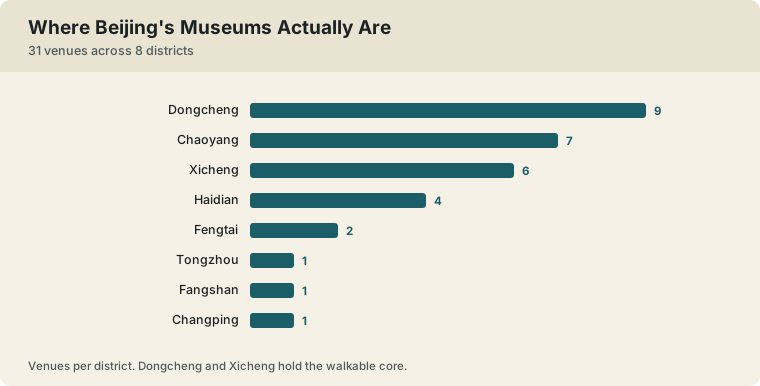
Beijing's 31 major museums are not scattered evenly across the capital. They bunch into six clusters, and the cluster you pick matters more than the museums you pick, because the booking windows and the Monday closures do the real planning for you.
Short answer
Beijing's museums cluster into six zones: the Dongcheng imperial core around the Forbidden City, the Xicheng science corridor, Chaoyang's art and film northeast, Haidian's imperial gardens, and the day-trip districts of Fangshan, Changping and Tongzhou. 22 of 31 venues require an advance real-name reservation, and most close on Monday, so geography and closed days together decide the route.
Beijing Museums Map: What Sits Next To What
Beijing runs its museums on a simple geographic logic that almost no first-time visitor is told: the imperial sites anchor the center, the science museums line up along one street in Xicheng, the art and film venues pool in Chaoyang's northeast, and the big garden parks stretch west into Haidian. Everything else worth the trip, the Peking Man site, the Ming Tombs, the Grand Canal Museum, sits outside the ring roads entirely. A traveler who books the Forbidden City for Monday morning and the National Museum for Monday afternoon has made the single most expensive planning mistake in the city, because both are shut, and no map drawn on a hotel napkin will fix it.
This guide walks the city cluster by cluster, the way the venues actually sit on the ground, and folds in the two constraints that quietly override geography: 22 of the 31 major venues require an advance real-name reservation, and the Monday closure is close to a municipal law. The three day museum itinerary builds day-by-day routes on top of this same map, so the two pages work as a pair.
Which Museums Cluster Around The Forbidden City?
The Dongcheng core holds the Palace Museum, the National Museum of China, the Lama Temple, the Confucius Temple and Imperial College, the Temple of Heaven and the Beijing Ancient Observatory, all inside a district you can cross in under half an hour by subway. Six of the city's most-visited venues sit here, and every one of them either charges admission or requires a reservation, so the cluster rewards planning more than any other.
Start with the anchor. The Palace Museum, the Forbidden City, sits at the exact center of the map and of the city's grid. Its adult ticket is CNY 60 at the door, sold only through the official WeChat mini-program or website, with the booking window opening seven days ahead at 20:00 Beijing time. There are no same-day tickets at all, a policy the museum states plainly on its own visit page. The museum also states in writing that it has not authorized any third-party institutions or individuals to act as ticket agents; the third-party reservation products linked on this site book the official ticket under the passport details you supply, and refund if the official quota sells out first. Both facts belong together, because a reader deserves to know exactly what a purchased product is and is not.
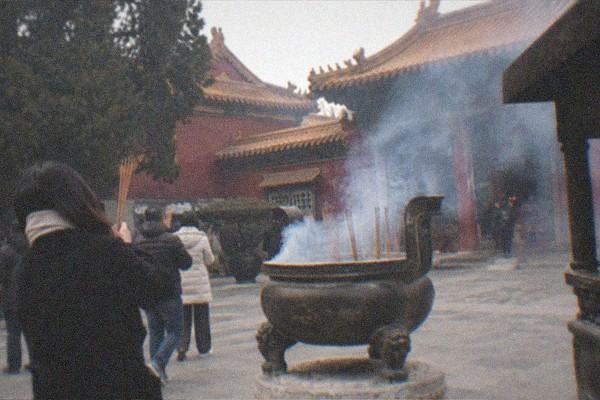
Directly south across Chang'an Avenue sits the National Museum of China, free with a mandatory timed reservation that opens seven days ahead at 17:00. East along the same axis, the Lama Temple charges CNY 25 at the door with a seven-day booking window, and it is a working Tibetan Buddhist temple rather than a museum in the strict sense, though its halls and incense courts earn it a place on any Dongcheng route. The Confucius Temple and Imperial College Museum, CNY 30 at the door with a one-day-ahead window, sits a short walk north of the Lama Temple, which makes the pair the most walkable combination in the entire city. The Temple of Heaven anchors the district's south, CNY 34 at the door, park open daily while the paid halls close Monday.
The cluster's density is the point. A visitor can stand at Jingshan, the hill just north of the Forbidden City's north exit, and see the whole morning's geography in one turn: the palace roofs below, the Drum Tower to the northeast, the white dagoba of Beihai to the west.
| Venue | Door price | Booking window | Closed |
|---|---|---|---|
| The Palace Museum (Forbidden City) | CNY 60 | 7 days ahead at 20:00 | Monday (except statutory holidays) |
| National Museum of China | Free | 7 days ahead at 17:00 | Monday (except statutory holidays) |
| Lama Temple (Yonghegong) | CNY 25 | 7 days ahead | Not published |
| Confucius Temple and Imperial College | CNY 30 | 1 day ahead | Monday (except public holidays) |
| Temple of Heaven | CNY 34 | 7 days ahead | Paid halls close Monday |
| Beijing Ancient Observatory | CNY 20 | 5 days ahead | Tuesday (except national holidays) |
The one wrinkle inside this cluster is the Ancient Observatory, which closes Tuesday, not Monday. It is run alongside the Beijing Planetarium across town, so the two share a closed day, and a traveler who assumes every Beijing museum shuts Monday will arrive at a locked gate on the one day the rest of the district is open. Pair the observatory with a Monday instead, when its gate is open and nearly everything else in Dongcheng is dark.
Because the Forbidden City anchors this cluster and anchors most Beijing itineraries, the reservation products around it deserve a look side by side. The trio below covers the palace itself plus the two other imperial anchors a traveler is most likely to combine with it.
What Lines Up Along The Xicheng Science Corridor?
Xicheng packs the Capital Museum, the Beijing Planetarium, the Paleozoological Museum, the Geological Museum, the Beijing Ancient Architecture Museum and Prince Gong's Mansion into one compact district, and four of the six sit along or near the same stretch between Fuxingmen and Xizhimen. It is the only cluster in Beijing where a science-minded visitor can walk between three museums in a single afternoon.
The Planetarium and the Paleozoological Museum sit across the street from each other on Xizhimenwai Street, a fact that surprises visitors who assume the natural history museums are one institution. They are not, and the difference between the paleozoological museum and the natural history museum is a common planning question: the Paleozoological Museum in Xicheng charges CNY 20 at the door with a six-day reservation window, while the National Natural History Museum sits in Dongcheng, is free, and opens its window just three days ahead at 11:00. The Planetarium beside it closes Tuesday, the Paleozoological Museum closes Monday, so the two buildings facing each other across the street are never both open on the same Monday or Tuesday.
South of them, the Capital Museum on Fuxingmenwai Street is free with walk-up entry, one of the rare Beijing venues where "free" genuinely means walk in. Its closed day is Tuesday, an adjustment the museum made for the 2026 season, which breaks the Monday pattern and makes it the perfect Monday substitute when the rest of the city goes dark. The museum's own visit page carries the current entry rules. The Geological Museum of China, CNY 15 with a seven-day window, sits nearby off Xisi, though its booking channel is unreachable outside mainland China, which pushes most foreign visitors toward walk-in-adjacent venues or third-party help.
Prince Gong's Mansion anchors the corridor's north end at the Shichahai lakes, CNY 40 at the door with the longest booking window of any central venue: ten days ahead, releasing at 20:00. The question of whether the mansion is worth the visit comes up often, and the geographic answer is that it pairs naturally with the lakes and the hutongs rather than with the science museums, even though the map puts them in the same district.
| Xicheng venue | Door price | Reservation | Closed |
|---|---|---|---|
| Capital Museum | Free | Walk-up | Tuesday |
| Beijing Planetarium | Not published | 5 days ahead | Tuesday (except holidays) |
| Paleozoological Museum of China | CNY 20 | 6 days ahead | Monday |
| Geological Museum of China | CNY 15 | 7 days ahead | Monday (except statutory holidays) |
| Beijing Ancient Architecture Museum | CNY 15 | Walk-up | Monday (except public holidays) |
| Prince Gong's Mansion | CNY 40 | 10 days ahead at 20:00 | Monday (except public holidays) |
The corridor's quiet star is the Beijing Ancient Architecture Museum inside the Xiannongtan altar grounds, CNY 15 with walk-up entry. Almost nobody plans for it, which is exactly why it works: the halls hold the city's best scale models of historic buildings, and the crowd pressure that defines the imperial core never reaches it.
If the Forbidden City is already on your list, the reservation service below handles the official booking under your passport details, with a refund if the quota sells out first.
Where Do Chaoyang's Art And Film Museums Sit?
Chaoyang's northeast corner holds the 798 Art Zone with the UCCA Center for Contemporary Art, the China National Film Museum, the China Railway Museum's Dongjiao Exhibition Hall and the Guanfu Museum, four venues that pair into two sensible half-days rather than one rushed circuit. The district's museums are farther apart than Dongcheng's, so the subway legs matter here more than the walking.
The 798 Art Zone is the anchor, a former electronics factory complex turned gallery district, and UCCA is its institutional heart, requiring a reservation with a window the venue does not publish. The 798 art district guide covers the zone in depth; for mapping purposes, treat 798 as a half-day minimum and expect exhibition-dependent closures, commonly Mondays. The Red Brick Art Museum sits east of 798, CNY 120 at the door, the highest single admission in this guide's roster, and its garden-and-gallery pairing makes it a destination rather than a stopover.
The China National Film Museum sits well south of 798 near Caochangdi, free with a required reservation whose window is not published, closed Monday except holidays. The Railway Museum's Dongjiao Exhibition Hall, CNY 20, sits closer to the city's east side and holds the locomotive hall most visitors come for; it closes Monday except statutory holidays. The Guanfu Museum, the private antiquities collection founded by Ma Weidu, sits near 798 at Dashanzi, CNY 100 at the door with genuine walk-up entry, one of the six true walk-ups in the city, closed only over the Chinese New Year period with shorter Monday hours.
The practical read on Chaoyang: cluster 798, UCCA, the Red Brick Museum and Guanfu into one day, since they all sit in the same northeast pocket, and give the Film Museum its own morning paired with something on the route back into town. The Beijing Folklore Museum at Dongyue Temple, CNY 10, sits on Chaoyang's west side near the Central Axis and closes Monday like most of the city, which makes it a convenient add-on to a Dongcheng day rather than a Chaoyang one, despite the district line on the map.
How Do The Haidian Imperial Sites Line Up?
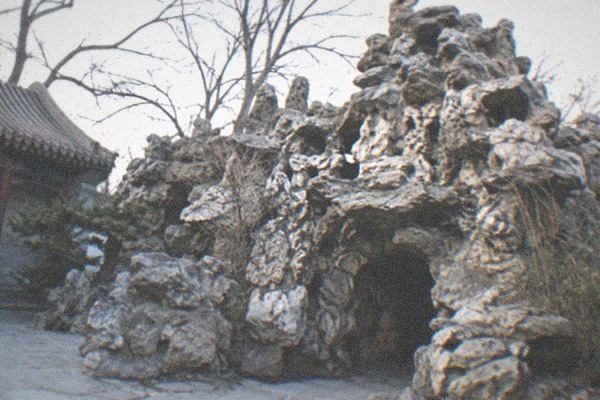
Haidian's northwest holds the Summer Palace, the Old Summer Palace and the Great Bell Temple Museum in a rough line, with the Military Museum sitting far to the district's southeast edge, so Haidian is really two clusters that share a district name. The garden parks are the city's biggest time commitments: the Summer Palace alone justifies a half day, and its inner halls close Monday while the park itself stays open.
The Summer Palace, CNY 30 at the door with a required reservation, is not strictly a museum, and this guide says so plainly: it is an imperial garden whose inner halls, including the Tower of Buddhist Incense, function as exhibition spaces, and those paid halls close Monday except public holidays. The Old Summer Palace, Yuanmingyuan, sits a short distance northeast, CNY 10 at the door, its ruins park requiring a reservation whose window is not published. The two palaces pair naturally on one day, and the guide to what remains at the Old Summer Palace covers what the ruins actually hold.
The Great Bell Temple Ancient Bell Museum sits east of the gardens near the North Third Ring Road, CNY 30 with walk-up entry, closed Monday. It is one of the city's quiet specialist museums, a temple compound holding centuries of cast bells including the enormous Yongle bell, and its walk-up status makes it the reliable fallback when reservation-based venues have sold out.
The Military Museum of the Chinese People's Revolution sits on Fuxing Road in Haidian's southeast, free with a reservation that opens eight days ahead and releases slots at 08:00, 17:00 and 20:00, an unusual three-release pattern. It closes Monday except statutory holidays. Geographically it belongs with the Xicheng corridor more than with the gardens: it sits on the same east-west axis as the Capital Museum, and the two pair well on a day when the reservation timing works.
Because the Summer Palace is the second-most-booked venue on this site after the Forbidden City, and because its reservation window is not published, many travelers pair a reservation product for the gardens with a self-booked palace ticket. The Summer Palace product below covers that case.
Which Museums Sit Outside The Center, And Are They Worth The Trip?
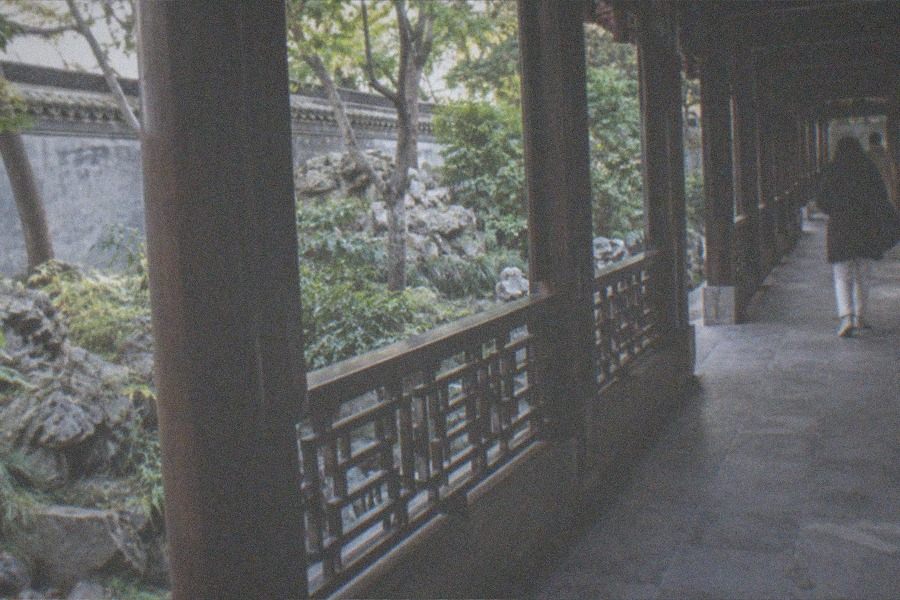
Three day-trip venues sit outside central Beijing: the Zhoukoudian Peking Man Site Museum in Fangshan southwest, the Ming Tombs in Changping north, and the Beijing Grand Canal Museum in Tongzhou east. Each needs a half day door to door, and only the Grand Canal Museum is free, with the other two charging CNY 30 and CNY 60 at the door respectively.
Zhoukoudian, the UNESCO-listed Peking Man cave site, sits about 50 kilometers southwest of the center in Fangshan. Its museum charges CNY 30 at the door with a reservation window opening seven days ahead at 17:00, closed Monday except national holidays. The verdict on whether Zhoukoudian is worth it depends mostly on your tolerance for transit: the site rewards visitors with a genuine paleoanthropology interest, and it never has the Forbidden City's crowds.
The Ming Tombs, Dingling's underground palace and Changling, sit in Changping on the road towards the Great Wall at Badaling, which makes them the classic pairing with a Wall day. The joint admission runs CNY 60 at the door with a required reservation whose window is not published. The tombs are imperial sites rather than museums in the strict sense, and the guide to which Ming tomb you can go inside covers the Dingling-versus-Changling choice. The Beijing government's own museum pages carry the official listing details for the greater-Beijing venues.
The Beijing Grand Canal Museum, the Capital Museum's east branch in Tongzhou, is free with walk-up entry, closed Monday except national holidays. It sits in the new canal-side cultural district, and its free, no-reservation status makes it the lowest-friction day trip on the map. The day trip museums guide lays out the transit options for all three.
| Day-trip venue | District | Door price | Reservation | Closed |
|---|---|---|---|---|
| Zhoukoudian Peking Man Site Museum | Fangshan | CNY 30 | 7 days ahead at 17:00 | Monday (except national holidays) |
| Ming Tombs: Dingling and Changling | Changping | CNY 60 | Required, window not published | Not published |
| Beijing Grand Canal Museum | Tongzhou | Free | Walk-up | Monday (except national holidays) |
The map logic for day trips is simple: never schedule one on a day when a central-venue reservation has already succeeded. The reservation windows are too short to waste a confirmed Forbidden City slot on a bus to Fangshan. Everything else covered here is indexed on Beijing Museums.
Which Free Museums Can You Actually Walk Into?
Of Beijing's free museums, only the Capital Museum, the Beijing Grand Canal Museum and the Museum of the War of Chinese People's Resistance Against Japanese Aggression take genuine walk-up entry, while the National Museum, the National Art Museum, the Natural History Museum and the Film Museum are free but require an advance reservation. Free in Beijing almost never means walk in, and confusing the two is the most common planning error.
The walk-up trio spans the map: the Capital Museum in Xicheng, the Grand Canal Museum in Tongzhou, and the Anti-Japanese War Museum at Wanping Fortress near the Marco Polo Bridge in Fengtai, closed Monday except holidays and commemorative days. The war museum reopened after renovation and sits inside the restored Wanping walls, which makes the visit a fortress-and-museum combination, and the Marco Polo Bridge verdict piece covers whether the crossing belongs on your route.
The reserved-but-free group is larger and more demanding. The National Museum of China opens its window seven days ahead at 17:00. The National Art Museum of China opens seven days ahead at 16:00. The National Natural History Museum opens just three days ahead at 11:00, the shortest window among the majors, which makes it the hardest free ticket in the city for a traveler who plans late. The China National Film Museum requires a reservation through its WeChat account with an unpublished window. All four close Monday except holidays. The free museums guide carries the full breakdown, including the paid products that exist purely to handle the reservation step for the National Museum, from $4.58, and the Military Museum, from $21.
The geographic insight worth carrying: the walk-up free museums are the ones farthest from the center. The closer a free museum sits to Tiananmen Square, the more likely it is to demand a reservation, because demand concentrates there. Tongzhou and Wanping sit far enough out that the crowd pressure never builds.
How Does The Monday Closure Reshape The Map?
Roughly two dozen of Beijing's 31 major museums close on Monday, with statutory holidays the near-universal exception, so Monday is effectively a citywide reset day on which only the Tuesday-closing venues, the walk-up holdouts and the always-open parks function. A Monday plan built around the Capital Museum, the Ancient Observatory, the Planetarium or Guanfu works; one built around the Forbidden City or the National Museum does not.
The exceptions are what save the day. The Capital Museum closes Tuesday, so it is open Monday. The Beijing Planetarium and the Beijing Ancient Observatory close Tuesday, so both are open Monday. Guanfu Museum keeps shorter Monday hours but stays open. The Temple of Heaven and Summer Palace parks stay open daily, with only their paid inner halls shutting Monday. The Lama Temple's closed day is not published, so check before building a Monday around it. The museums open on Monday guide lists the full working set, and it is a longer list than most visitors expect.
The pattern has a history worth knowing. The Monday closure is a municipal convention, not a national mandate, and individual museums adjust it seasonally: the Capital Museum shifted its closed day from Monday to Tuesday for the 2026 season, and the Confucius Temple and Imperial College restored its Monday closure in September 2025 after a period open seven days. The lesson is not to memorize the list but to check each venue's closed day as the final step of any route.
How Do The Booking Windows Decide Your Route?
The reservation windows range from one day ahead at the Confucius Temple to ten days ahead at Prince Gong's Mansion, with release times scattered from 11:00 to 20:00, so the windows themselves impose an order on the itinerary: book the long-window venues first, the short-window venues last, and never let a short-window booking strand a long-window one.
The mechanics matter as much as the count. The Palace Museum releases at 20:00, seven days out. The National Museum releases at 17:00, seven days out. The Natural History Museum releases at 11:00, just three days out. The Military Museum releases in three daily batches at 08:00, 17:00 and 20:00, eight days out. A traveler who books the Forbidden City for day four and the Natural History Museum for day two has the sequence backwards: the palace ticket needs locking in a week ahead, the natural history ticket only three days ahead, and the order of booking should follow the length of the window, not the order of the trip.
Foreign passports work in the official channels where the research confirmed them, including the Palace Museum's own booking system and the National Museum's mini-program. Where the research did not confirm passport support, this guide says nothing rather than guessing, and the reservation products exist precisely for those gaps: they book the official ticket under your passport details and refund if the quota sells out first.
| Venue | Window opens | Release time | Notes |
|---|---|---|---|
| Prince Gong's Mansion | 10 days ahead | 20:00 | Longest window in the city |
| Military Museum | 8 days ahead | 08:00, 17:00, 20:00 | Three daily releases |
| Palace Museum | 7 days ahead | 20:00 | No same-day tickets at all |
| National Museum of China | 7 days ahead | 17:00 | Free, mandatory reservation |
| National Natural History Museum | 3 days ahead | 11:00 | Shortest window among majors |
| Confucius Temple and Imperial College | 1 day ahead | Not published | Easiest late booking |
| Capital Museum | Walk-up | n/a | Free, no reservation |
The Lama Temple's seven-day window and the Summer Palace's unpublished window both reward early action, and the Lama Temple product below handles the temple's reservation under your passport details.
Putting The Map To Work
The clusters, the closed days and the booking windows fold into one working method: draw the city as six zones, assign each zone a day, check every zone's closed day against the calendar, and book in window order, longest first. The method is unglamorous, and it is exactly what separates the itineraries that run from the ones that stall at a locked gate.
Draw the map as six zones: the Dongcheng imperial core, the Xicheng science corridor, Chaoyang's art northeast, Haidian's two pockets, the Fengtai southwest corner, and the three day-trip districts. Assign each zone a day. Check each zone's closed day against the calendar, moving anything that lands on a Monday into the Tuesday-open set or the walk-up set. Book in window order, longest first, and let the short-window venues fill the gaps in the final week before travel.
The Beijing Museum Pass deserves a final mention on any mapping page: the 2026 edition covers about 140 venues at CNY 120 and admits two people across the year, a non-personalized booklet rather than an app or a card. There is no Beijing CityPASS, and any product sold under that name is not the museum pass. The museum pass guide covers which of the 31 venues on this map the booklet discounts.
If the whole map reduces to one booking, it is the Forbidden City: the anchor of the densest cluster, the longest sell-out risk, and the venue whose official warning and third-party reservation services both deserve to be read before you pay anything.
For the trio of imperial anchors most travelers combine, the selection below puts the palace, the gardens and the temple side by side.
Common Questions About The Beijing Museums Map
Which Beijing museums are closest together?
The Lama Temple and the Confucius Temple and Imperial College sit a few minutes' walk apart in Dongcheng, making them the closest pair on the map. The Beijing Planetarium and the Paleozoological Museum face each other across Xizhimenwai Street in Xicheng. The Forbidden City, National Museum and Temple of Heaven all sit within one subway district of each other.
How many days do I need for Beijing's museums?
Three days covers the core: one for the Dongcheng imperial cluster, one for the Xicheng corridor plus Haidian's gardens, and one for Chaoyang's art district. Day trips to Zhoukoudian, the Ming Tombs or the Grand Canal Museum each add a half day beyond that.
Can I visit Beijing museums without a reservation?
Only six of the 31 major venues take genuine walk-ups, including the Capital Museum, the Grand Canal Museum, the Guanfu Museum, the Ancient Architecture Museum and the Great Bell Temple Museum. The other 22 require an advance real-name reservation, including every free museum near the center.
Are Beijing museums open on Monday?
Most are not. Roughly two dozen of the 31 majors close Monday except statutory holidays. The Monday exceptions include the Capital Museum, the Beijing Planetarium and the Ancient Observatory, which all close Tuesday instead, plus Guanfu Museum on shorter hours and the Temple of Heaven and Summer Palace parks with only their paid halls shut.
Which Beijing museums are free?
Eight venues offer free general admission: the National Museum of China, the Capital Museum, the National Art Museum, the National Natural History Museum, the China National Film Museum, the Grand Canal Museum, the Military Museum and the Anti-Japanese War Museum. Only three of those take walk-ups; the rest require an advance reservation.
Do I need a passport to book Beijing museum tickets?
Yes, every reservation system in the city is real-name, and a foreign passport works in the official channels where the research confirmed it, including the Palace Museum's own booking site. You must carry the same passport you booked with, since entry is matched against it at the gate.