Is The Marco Polo Bridge Worth The Trip From Central Beijing?
An honest look at the Marco Polo Bridge, Wanping Fortress and the Museum of the War of Chinese People's Resistance Against Japanese Aggression: costs, travel time, closures and how to plan the visit.
Is The Marco Polo Bridge Worth The Trip From Central Beijing?
Yes, for anyone with a real interest in modern Chinese history. The bridge is free to walk, the adjoining Wanping Fortress wall is a rare surviving example of Ming military architecture inside the city, and the on-site war museum is free with no reservation required. The site sits about 15 kilometers southwest of Tiananmen Square, roughly an hour by metro, and it marks the exact spot where the Second Sino-Japanese War began on 7 July.
That last fact is the whole reason the site exists in the public imagination. The Marco Polo Bridge, known in Chinese as Lugou Qiao, is not just a pretty old bridge, though it is that too. It is the place where Japanese and Chinese troops exchanged fire in the incident that opened eight years of war. Chinese school groups visit it constantly. Foreign tourists, by contrast, mostly skip it, which means you will rarely share the bridge with crowds of the size you find at the Forbidden City or the Temple of Heaven.
The honest case against going is distance and focus. If your Beijing stay is two or three days and your interests run to imperial architecture, food and the hutong, an hour each way to a somber war memorial is a poor trade. Nothing about the site is playful. The museum inside the fortress is the Museum of the War of Chinese People's Resistance Against Japanese Aggression, and its exhibitions are, unsurprisingly, devoted entirely to that war.
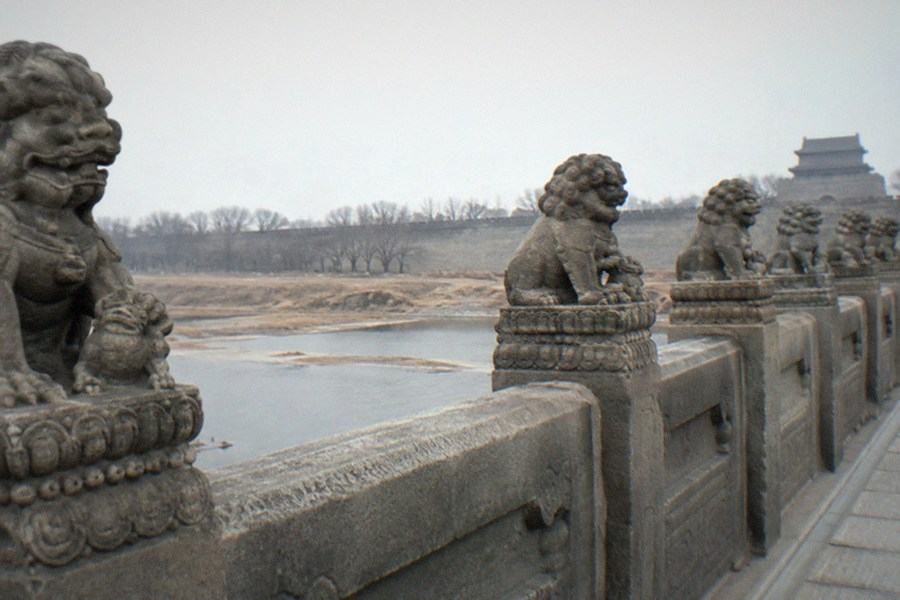
The case for going is stronger than most guidebooks admit. The bridge has hundreds of carved stone lions along its balustrades, no two quite alike, and it is one of the oldest surviving bridges in Beijing. The Wanping Fortress wall that shelters it was built late in the Ming dynasty to guard the capital's southwestern approach. You can walk a stretch of that wall and look down over the bridge and the river. Entry to the fortress area is free, entry to the wall walk costs a few yuan at the gate, and the museum is free as well. For a site of this weight, the cost of a visit is essentially a metro fare.
If modern history is your reason for visiting Beijing at all, this site belongs on your list alongside the National Museum of China and the Military Museum of the Chinese People's Revolution. Those two museums interpret the war in gallery form in central Beijing; the bridge is where it physically started. Many visitors pair all three across two days.
For anyone weighing that pairing, the practical details of the two central museums matter. The Military Museum is free but requires a real-name reservation made up to 8 days ahead, with slots releasing at 08:00, 17:00 and 20:00 Beijing time, and it closes on Mondays except statutory holidays. The National Museum of China is also free, with reservations opening 7 days ahead at 17:00. Both accept a foreign passport in their booking channels. Planning those bookings around a Wanping day is easier than it sounds, because the bridge site needs no booking at all.
What Will You Actually See At The Bridge, The Fortress And The Museum?
Three things, all inside a walkable quarter: the bridge itself with its stone lions, the Ming-era Wanping Fortress wall and its gate towers, and the war museum, which reopened in July 2025 after a full renovation. The museum is free with walk-up entry, closed on Mondays except holidays and commemorative days. The bridge is the visual star; the museum is the reason the site carries national weight.
Start with the bridge. Lugou Qiao was first built during the Jin dynasty and rebuilt in stone under later dynasties. Its balustrades carry hundreds of lion sculptures, and local tradition holds that you can never count them the same way twice because so many carry smaller lions hidden in their manes and paws. The Yongding River beneath it is often nearly dry, which changes the photograph but not the composition. At dawn and late afternoon the stone glows, and in good light the bridge is one of the most photogenic historic structures in the entire municipality.
The bridge earned its Western name from Marco Polo, who described it admiringly in his travel account, praising its scale and its marble-like stone. That description is why European maps and guidebooks have called it the Marco Polo Bridge for centuries, while the Chinese name, Lugou Qiao, simply refers to the crossing over the Yongding. Both names refer to exactly one bridge, and the plaque at the site tells the story in Chinese and English.
Wanping Fortress, the walled town at the bridge's eastern end, was built late in the Ming dynasty as a military garrison to defend the capital's southwestern road. Its walls survive in good condition, and you can walk atop a section for a small fee collected at the gate. From the wall you look directly down on the bridge, the riverbed and the museum's grounds. Bullet scars from the wartime fighting are still visible on the wall's stonework, and the site does not hide them. They are part of what makes the place feel different from Beijing's polished imperial parks.
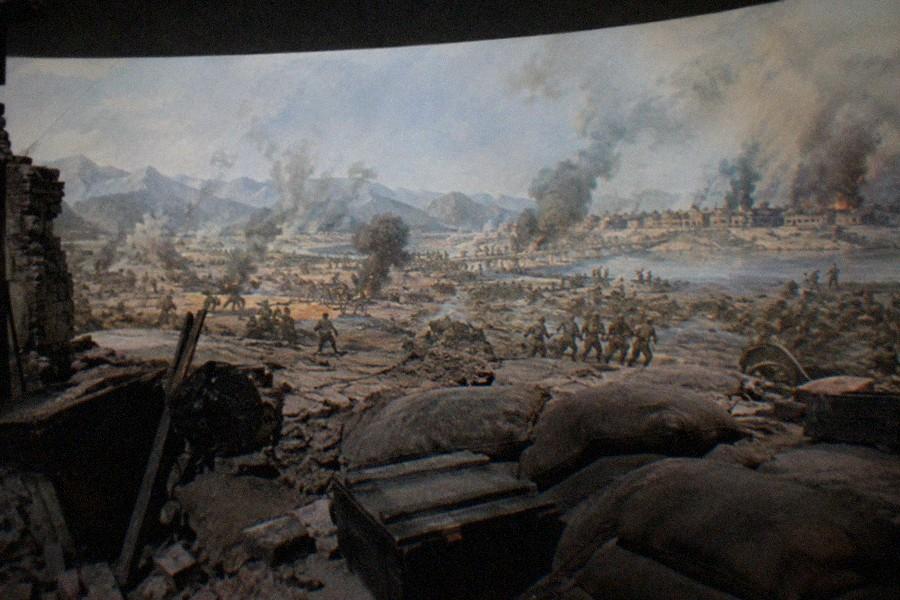
The museum inside the fortress tells the war's story from the bridge incident through to the Japanese surrender, and after its July 2025 reopening the exhibitions were rebuilt and expanded. Admission is free, and general entry requires no reservation: you show a valid ID or passport at the door. One specialist hall, the half-panorama painting hall, does take reservations up to 3 days ahead through the museum's official WeChat account, but skipping it costs you little. The museum's signage is largely in Chinese, with some English captions; the objects, photographs and dioramas communicate plenty even where text does not.
The museum's tone is national and solemn, and it frames the war from the Chinese perspective. That framing is itself part of the visit's value. Understanding how this history is presented in China, on the ground where it began, is something no central Beijing gallery quite delivers.
Because the site is free and reservation-free, it is also one of the few major Beijing history destinations you can decide to visit the same morning. That flexibility is rare in a city where 22 of the 31 major museum venues require advance real-name booking. For more on how that system works, see the guide to how to book Beijing museum tickets.
If you would rather lock in a central Beijing history visit that does need a booking, the Military Museum of the Chinese People's Revolution sits on Fuxing Road in Haidian, directly on Line 1, and its reservation window opens 8 days ahead with releases at 08:00, 17:00 and 20:00. A reservation service can handle that booking under your passport details, which saves you wrestling with a Chinese-language mini-program the night slots open.
How Do You Get To Wanping And The Marco Polo Bridge?
Take Beijing Subway Line 14 to Lugou Qiao station or Line 16 to Wanpingcheng station; both stop within a short walk of the fortress walls, and the ride from central Beijing takes roughly 45 minutes to an hour each way. A taxi or ride-hail costs more and saves little time outside rush hour. There is no need to join a tour, because the site is compact and signposted.
Line 14's Lugou Qiao station is the classic choice: exit toward the bridge and you reach the western end of the crossing within minutes on foot. Line 16's Wanpingcheng station puts you inside the fortress town itself, closer to the museum entrance and the east gate. Either works; if you plan to walk the bridge first and the museum after, arriving from the west and leaving through the fortress is the natural line.
The ride itself is simple but long. From central transfer hubs such as Xidan or Dongzhimen, expect at least one interchange and a total travel time near the top of that 45 to 60 minute range. Rush hour adds crowding but not much extra time, since Line 14 runs through the southwest of the city. Going early in the morning, around opening time, gives you the bridge almost alone, and the light on the stone lions is at its best then anyway.
Taxis are the alternative. A ride from Qianmen costs more than the metro by an order of magnitude and, outside congested periods, shaves perhaps 15 minutes off the journey. In evening rush the metro is usually faster. There is no high-speed rail connection, no airport-style transfer, nothing complicated: this is an ordinary suburban metro trip, which is precisely why the site stays quiet.
Cyclists and runners sometimes follow the riverside roads out from the city's western districts, and the area around the bridge has been landscaped into a park strip along the Yongding. If your hotel is in Fengtai or western Xicheng, the trip is short enough that the question answers itself.
How Much Time Does A Visit Take, And What Does It Cost?
Budget half a day door to door, with about two hours on site: 30 to 40 minutes on the bridge, 20 to 30 minutes on the fortress wall, and an hour or more in the museum. The bridge and the museum are free; the wall walk charges a small gate fee, and the whole outing costs little beyond transport, making it one of the cheapest substantial half-days in Beijing.
The table below lays out the realistic time and cost picture for a visitor coming from the center of the city. Treat the taxi fare as a planning range, not a promise: metered prices move with traffic and time of day.
| Item | Time | Cost |
|---|---|---|
| Metro from central Beijing, one way | 45 to 60 minutes | Around CNY 5 to 7 per ride |
| The bridge and its lions | 30 to 40 minutes | Free |
| Wanping Fortress wall walk | 20 to 30 minutes | Small gate fee, a few yuan |
| War museum, main exhibitions | About an hour, longer for history buffs | Free, walk-up with ID |
| Half-panorama painting hall | 20 to 30 minutes | Reservation up to 3 days ahead via the museum's official WeChat account |
| Taxi from central Beijing, one way | 30 to 50 minutes | Metered; varies with traffic and start point |
Two hours on site is honest for a first visit with normal museum interest. Historians and photographers stretch it to three, because the wall walk rewards lingering and the bridge changes character as the light moves. Families with children move faster, especially if the museum's dense Chinese-language text panels slow the adults more than the kids.
The cost column is the site's quiet selling point. In a city where the Palace Museum charges CNY 60 at the door and even free museums demand a booking fought for a week ahead, Wanping asks for nothing but your passport at the museum door and a few yuan for the wall. Add a metro fare and a simple meal in the fortress town, where small restaurants serve the neighborhood rather than a tourist circuit, and the entire half-day costs less than a single Forbidden City add-on gallery.
When Should You Go, And What Is Closed On Mondays?
Go early on a weekday morning for the best light and the fewest people, and avoid Monday entirely: the war museum closes on Mondays except holidays and commemorative days, and several nearby venues follow the same pattern. The bridge and fortress streets stay accessible, but a Monday visit loses the museum, which is the site's intellectual core.
Monday closures are the near-universal rule across Beijing's national and municipal museums, and Wanping is no exception. The Museum of the War of Chinese People's Resistance Against Japanese Aggression closes on Mondays, with exceptions for public holidays and commemorative days, notably the anniversary period around 7 July, when the site draws official ceremonies and very large crowds. If your trip happens to fall over a national holiday, check the museum's official channel before assuming the Monday rule applies.
Season matters less here than at Beijing's outdoor imperial parks, because the bridge and fortress are compact and the museum is indoors. Summer afternoons are hot on the unshaded wall; winter mornings are biting but photogenic, with low sun raking the stone lions. The half-day format means you can fold the visit into almost any weather window.
The one date with genuine atmosphere is 7 July itself, the anniversary of the bridge incident. Ceremonies, wreath-layings and school groups fill the site on that day and the days around it. It is the most meaningful time to be there and the most crowded; treat it as a trade-off rather than a recommendation.
For anyone structuring a whole trip around which museums shut which day, the site's guide to Beijing museums open on Monday maps the exceptions, and the free museums in Beijing guide lists which free venues need a reservation and which, like this one, take walk-ups.
What Else Can You Pair With A Wanping Trip?
The strongest pairing is the Military Museum of the Chinese People's Revolution in Haidian, which covers the same war's hardware and wider military history, and which sits directly on Line 1 for an easy two-venue day. Within Wanping itself, the fortress town's streets, the wall walk and the riverside park fill out the visit without any further travel.
The Military Museum pairing works because the two sites complement rather than repeat. Wanping gives you the place, the bridge and the opening shots; the Military Museum gives you the tanks, aircraft, small arms and the long arc of Chinese military history, including the war's later years. Its free admission matches Wanping's, though its reservation system does not: you must book up to 8 days ahead, with slots releasing at 08:00, 17:00 and 20:00, and it closes Mondays except statutory holidays. A reservation service can make that booking under your passport details if you would rather not run the mini-program yourself.
A second pairing, for visitors with more time, is the National Museum of China on the east side of Tiananmen Square. Its modern-history galleries contextualize the war within the whole arc of China's 20th century, and it is free with a reservation that opens 7 days ahead at 17:00. Doing Wanping in the morning and the National Museum the following morning, with the Military Museum between them, is a coherent three-day modern-history itinerary.
Inside Wanping itself, do not rush out after the museum. The fortress town is a living neighborhood with a small temple, courtyard housing and quiet lanes that see few foreign visitors. The riverside park along the Yongding is pleasant for a slow walk back toward the metro, and in the evening the bridge is lit. If you have come all this way, an extra 30 minutes walking the town is the difference between a box ticked and a place understood.
Visitors building a wider southwest-Beijing plan can also look at the site's overview of Beijing day trip museums, which covers venues outside the central districts, including Tongzhou's Grand Canal Museum and the Zhoukoudian Peking Man site further west in Fangshan, the same district Wanping sits on the edge of.
Is The Trip Worth It For Different Kinds Of Travelers?
History-focused travelers and photographers: yes, unreservedly, and go at dawn. Families with school-age children: yes, with the museum's Chinese-language panels as the main friction. Travelers on a two-day first visit whose priority is the Forbidden City and the Great Wall: no, save Wanping for a second trip, and spend the hour elsewhere.
The photographer's case barely needs arguing. The bridge at sunrise, the lion sculptures, the wall and the flat riverbed give you a historic Beijing composition that does not exist anywhere in the city center, and the absence of crowds means you can actually shoot it. The light on the stone in the first hour after opening is the site's best daily performance.
The family case is more mixed. Children respond well to the wall walk, the lions and the tanks-and-planes appeal of military hardware, though the hardware is at the Military Museum rather than at Wanping. The war museum's text is dense and mostly Chinese, so younger children will move through it quickly. A Wanping morning plus a Military Museum afternoon is a strong family day, provided the adults handle the bookings.
The short-trip case against is the one to respect. If Beijing gives you only two full days, the imperial core, the Great Wall and one or two headline museums will fill them completely, and an hour each way to a war memorial is time your itinerary genuinely cannot spare. The site rewards a third day, a rainy day, a second visit, or a specific interest in the period. It does not reward a reluctant detour.
One practical note for every traveler: bring your passport. The museum checks ID at the door, the wall walk may ask for it, and the passport is the one document that works everywhere in Beijing's real-name entry systems. The 240-hour visa-free transit scheme makes short visits easy, and museum entry itself works the same way for transit passengers as for everyone else: passport at the door.
For the wider picture of how Beijing's museum scene fits together, including the free-versus-reserved distinction that makes Wanping unusual, Beijing Museums maintains a full set of planning guides.
Common Questions About The Marco Polo Bridge Trip
Is The Marco Polo Bridge Worth The Trip From Central Beijing?
Yes if modern Chinese history, quiet historic sites or photography interest you: the bridge is free to walk, the fortress wall charges only a small fee, and the on-site war museum is free with walk-up entry. No if your visit is short and centered on the imperial highlights, because the round trip takes about two hours of travel time.
Is the Museum of the War of Chinese People's Resistance Against Japanese Aggression free?
Yes, general admission is free and no reservation is required for the main exhibitions; you show a valid ID or passport at the door. The half-panorama painting hall is the exception, taking reservations up to 3 days ahead through the museum's official WeChat account.
What is the closest subway station to the Marco Polo Bridge?
Line 14's Lugou Qiao station serves the western end of the bridge, and Line 16's Wanpingcheng station puts you inside the fortress town near the museum. Both are a short walk from the site.
Is the Marco Polo Bridge site open on Mondays?
The bridge and fortress streets remain accessible, but the war museum closes on Mondays except holidays and commemorative days. Plan your visit for any other day of the week to see the museum.
How long should I spend at the Marco Polo Bridge and Wanping Fortress?
About two hours on site: 30 to 40 minutes on the bridge, 20 to 30 minutes on the wall, and an hour or more in the museum. With travel, budget half a day from central Beijing.
Can you walk across the Marco Polo Bridge?
Yes, the bridge is open to pedestrians and free to cross. Its balustrades carry hundreds of carved stone lions, and it is one of the oldest surviving bridges in Beijing, first built during the Jin dynasty and rebuilt in stone later.