What Can You See At The Great Bell Temple Ancient Bell Museum?
A plain answer to what the Great Bell Temple Ancient Bell Museum in Haidian holds, what it costs, when it is open, and how to plan a visit without a reservation.
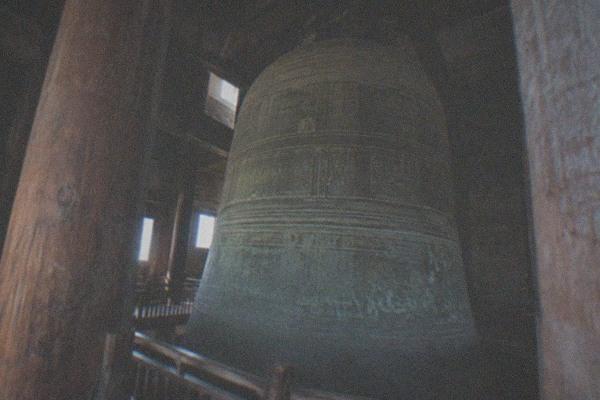
What Can You See At The Great Bell Temple Ancient Bell Museum?
The Great Bell Temple Ancient Bell Museum in Haidian displays ancient Chinese bells inside the preserved halls of a former Buddhist temple, covering the casting, decoration and ritual use of bells across Chinese history. Entry costs CNY 30 at the door, no advance reservation is needed, and the museum closes on Mondays. It is a specialist collection rather than a large general museum.
The museum occupies the site of a temple known in Chinese as Dazhongsi, which translates literally as Great Bell Temple, on the northwestern side of Beijing's Third Ring Road. Where most of the city's museums are housed in purpose-built modern blocks, this one keeps its collection inside historic timber halls, so the buildings and the objects carry the story together. The theme is narrow and the museum is honest about that: this is a place about bells, how they were cast, how they were tuned, and what they meant in religious and civic life.
That narrowness is the appeal. Beijing has more than thirty museums of real consequence, and the big names, the Palace Museum, the National Museum of China, the science museums, all demand advance real-name reservations and often sell out. The Great Bell Temple is one of only six venues in the city's museum roster that take genuine walk-ups. You decide in the morning that you want to go, and you go. In a city where "free" almost never means "walk in", a cheap ticket with no booking window is a small luxury.
The collection spans centuries of Chinese bell casting, from temple bells to the great chimed sets used in ritual music. Displays walk through the technical problem at the heart of the subject: a bronze bell is a single poured casting, and getting it to ring at the intended pitch without cracking was one of the hardest manufacturing challenges premodern metalworkers faced. The museum treats that as engineering history, not just decorative art, which makes it more interesting than the premise suggests.
If you are building a Beijing day around imperial sites rather than specialist collections, the three options below cover the city's most in-demand attractions, all of which do require booking ahead.
For visitors planning a wider museum trip, the practical basics of Beijing's reservation system are explained in the guide to booking Beijing museum tickets, which covers which venues need real-name bookings and when their windows open. It is worth reading before you commit to any itinerary, because the difference between a smooth museum day and a frustrated one in Beijing is almost never the price of a ticket, it is whether you booked inside the correct window.
Where Is The Temple And How Do You Get In?
The museum stands at 31A North Third Ring Road West in Haidian district. Admission is CNY 30 per adult at the door, and no reservation of any kind is required: this is a walk-up venue. The one hard rule is the closed day, Monday, when the museum does not open. There is no third-party ticket product for this museum, so the official channel is the only route.
That last point deserves emphasis because it is unusual. Most Beijing museums that appear in English-language travel shops have some kind of booking product attached. The Great Bell Temple does not: the research for this site probed every major platform and found no affiliate product for it anywhere. What that means practically is that you pay at the entrance like a local, which also means there is no service fee and no markup, just the CNY 30 door price.
The museum's listing on the Beijing Municipal Cultural Heritage Bureau's site at wwj.beijing.gov.cn is the authoritative source for its current status, and the city's official English museum pages at english.beijing.gov.cn cover the wider museum landscape, including closed-day patterns across the city.
Here are the visit basics in one place:
| Detail | Value |
|---|---|
| District | Haidian |
| Address | 31A North Third Ring Road West |
| Door price | CNY 30 |
| Reservation | Not required, walk-up entry |
| Closed day | Monday |
| Ticket route | Museum's own channel only |
Because no booking product exists, there is nothing to buy in advance and nothing to refund. The trade-off is that you carry cash or a working payment method and sort entry on arrival. Foreign visitors should note that the research for this site could not confirm passport specifics for this venue's entry process, so bring your passport anyway, as it is the standard identification a foreigner needs almost everywhere in Beijing. Card acceptance at small museum ticket windows varies, and a backup payment method saves an avoidable walk back to the main road.
If your day in Haidian has room for one big imperial site after the bells, the Summer Palace is the natural add-on, and it is the one attraction in the area where booking ahead genuinely matters.
What Do The Bells Actually Look Like?
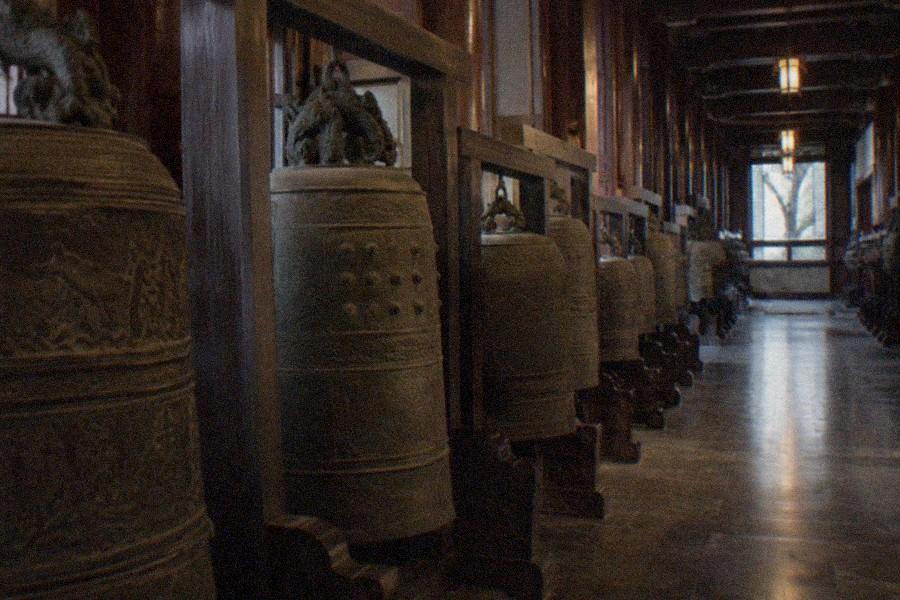
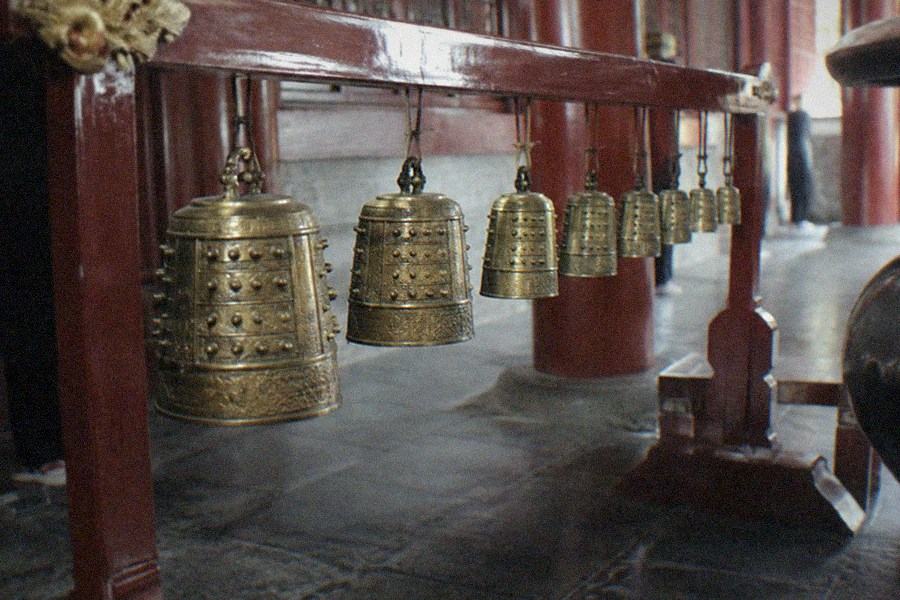
The displays range from small chimed bells the size of a hand to monumental temple bells that take several people to move, all in cast bronze. Many carry inscriptions and relief decoration cast directly into the metal, and the museum shows casting moulds and workshop tools alongside the finished objects. The variety of shapes across dynasties is the visual thread of the collection.
Chinese bell casting produced two broad families of object, and the museum shows both. One is the rounded temple bell, hung mouth-down and struck from outside, the kind that called monks to prayer and marked the hours in cities. The other is the flat-fronted chimed bell, played in tuned sets as a musical instrument in ritual and court contexts. They look like different instruments because they are, and the museum's labelling makes the functional split clear rather than lumping everything together as "old bells".
The inscriptions matter as much as the metal. Temple bells were often cast with Buddhist sutras or donor names running in bands around the body, and the museum displays bells where these texts are still crisp centuries after pouring. For a visitor who cannot read classical Chinese, the visual rhythm of the cast characters is still striking: the inscription turns the bell from a noisemaker into a document, a permanent record of who commissioned it and why.
The engineering story runs through the galleries too. Getting molten bronze into a mould at the right temperature, avoiding gas pockets, and controlling how the metal cools so the bell rings true, these were solved problems by trial and error over many centuries, and the museum shows the workshop side: moulds, pouring tools and cross-sections that explain what a visitor is otherwise just looking at. Even visitors with no background in metallurgy tend to leave with a sense of how difficult these objects were to make. The tuning problem alone is a small marvel: a bell cast a fraction too thick at the rim sounds a different note, and there is no way to fix a bad pour except to start again.
How Long Does A Visit Take, And Who Is It For?
A typical visit runs about one to two hours, since the museum is compact and the halls are arranged in a single loop. It suits visitors with a specific interest in metalwork, music or temple history, and it works well for travelers with a free morning in Haidian. It is a specialist stop, not a full-day destination on its own.
The honest comparison is with Beijing's flagship museums. The National Museum of China can absorb a full day and still leave galleries unseen, and the Palace Museum is a half-day commitment at minimum. The Great Bell Temple is not in that category, and it does not pretend to be. Its value is density: a small site where everything on display relates to one subject, explained in one visit.
Families report mixed results depending on the children. There is nothing interactive in the way the China Science and Technology Museum is built around hands-on exhibits, and younger children can find hall after hall of bronze objects repetitive. Older children with an interest in how things are made often engage with the casting displays. Adults with any curiosity about craft or music history are the core audience, and the courtyards between the halls give restless companions somewhere to sit while the enthusiast finishes a gallery.
One practical note for planning: because the museum closes Monday, and because most of Beijing's major museums also close Monday, a Monday in Beijing is genuinely thin on museum options. The site keeps a dedicated guide to Beijing museums open on Monday for exactly this problem, and the Great Bell Temple belongs on the list of places to save for Tuesday onward.
What Is The Temple Itself Like?
The buildings are restored Qing-era temple halls laid out along a central axis, with the bell displays set inside them. Unlike a modern white-box gallery, the architecture is part of the exhibit: timber frames, courtyards and gate buildings frame the collection. The site is quiet relative to Beijing's headline attractions, and photography is generally relaxed in the halls.
Dazhongsi was a working Buddhist temple before it became a museum, and the layout preserves that logic. You enter through a gate sequence, cross courtyards, and move hall to hall, which gives the visit a walking rhythm that gallery buildings cannot replicate. The scale is human rather than monumental: this is not the Forbidden City's processional vastness, it is a neighborhood temple that happens to hold a national-grade collection of bells.
The contrast with Beijing's imperial sites is worth spelling out. The Lama Temple, a working Tibetan Buddhist complex in Dongcheng, keeps its religious function front and center, with incense, worshippers and a CNY 25 door ticket booked seven days ahead through its own channel. The Great Bell Temple has been secularized into a museum, so the atmosphere is quieter and more scholarly. Visitors who enjoy one often enjoy the other, but they are different experiences, and it helps to know which mood you are after on a given day.
How Does It Fit Into A Haidian Day?
The museum sits in the same northwestern district as the Summer Palace and the Old Summer Palace, which makes it a natural morning stop before an afternoon in the imperial gardens. Pair it with the Summer Palace on any day but Monday, when the Summer Palace's inner halls close. The Old Summer Palace ruins are also nearby, with a CNY 10 door price and its own reservation requirement.
Haidian is Beijing's university and technology district, but its western edge holds the city's great imperial garden landscapes. The practical geometry is simple: the Great Bell Temple is on the Third Ring Road, the Summer Palace is further northwest beyond the Fourth, and a taxi or ride-hail between them takes a modest stretch of time depending on traffic. Doing the bells in the morning and the gardens in the afternoon is a well-shaped day.
The Summer Palace is the anchor. Its ticket sells from $14 through a third-party reservation product, with a 4.7 rating across 1,144 reviews, and entry at the door is CNY 30 with a mandatory reservation whose release window is not published. The park's inner halls, including the Tower of Buddhist Incense, close Monday except public holidays, while the open park itself is daily. If you want the full palace experience, plan the pairing for Tuesday through Sunday and book the Summer Palace ahead; the details of what the through ticket covers are laid out in what a Summer Palace through ticket includes.
The Old Summer Palace, Yuanmingyuan, is the alternative: ruined landscapes and a CNY 10 door price, with a reservation required and its product selling from $8. Some travelers do all three Haidian sites in one long day, though that is ambitious. A calmer plan is two sites, the bells plus one garden, with lunch between. The ruins park rewards slow walking more than any other site in the district, so give it the larger half of your afternoon if you choose it.
For a broader look at how the city's museums cluster by district and theme, the Beijing museums map shows how Haidian's sites connect and where the rest of the roster sits across the city.
Is The Great Bell Temple Worth The Detour?
It is worth the detour for visitors who already have a reason to be in Haidian or a genuine interest in craft, music or temple history, and it is an easy yes for anyone who wants a museum without a booking window. It is not worth crossing the city for if your time is short and your interests lie elsewhere. At CNY 30 with walk-up entry, the cost of being wrong is low.
The site's own publisher, Beijing Museums, treats it as a specialist stop in a roster dominated by imperial headline attractions, and that framing is the fair one. Travelers with three days in Beijing and a first-visit checklist, Forbidden City, Temple of Heaven, Great Wall, should finish that list first. Travelers with a fourth day, or a repeat visit, or a metallurgy or music interest, get more out of this museum than out of a second pass at a blockbuster.
There is also a practical argument that has nothing to do with bells. Beijing's reservation system is the real barrier to museum-going in the city, not prices. A venue where you can decide on the day, arrive, pay CNY 30 and walk in gives your itinerary flexibility that no amount of planning can buy at the Palace Museum, where slots open seven days ahead at 20:00 and popular dates go fast. Keeping one walk-up venue in your back pocket is how you rescue a day when a booking falls through.
For visitors weighing the whole roster, the 3-day Beijing museum itinerary sequences the city's major museums by district and reservation burden, and the guide to free museums in Beijing covers the venues that cost nothing at the door, several of which still require booking.
If Haidian is on your route, the imperial sites below are the ones that need booking ahead of time, unlike the walk-up bell museum.
Common Questions About The Great Bell Temple Ancient Bell Museum
What Can You See At The Great Bell Temple Ancient Bell Museum?
Ancient Chinese bells of every scale, from chimed ritual sets to monumental temple bells, displayed inside the restored halls of a former Buddhist temple in Haidian. The collection covers casting techniques, inscriptions and the ritual role of bells, with workshop tools and moulds shown alongside the finished bronze. Entry is CNY 30 at the door with no reservation, and the museum closes on Monday.
Do you need a reservation for the Great Bell Temple?
No. It is one of only six venues in Beijing's 31-museum roster that take genuine walk-up entry. You pay the CNY 30 door price on arrival with no booking window, no release time and no quota to race against. This is unusual in Beijing, where 22 of the 31 venues require an advance real-name reservation.
What day is the Great Bell Temple closed?
Monday. Like nearly all of Beijing's national and municipal museums, the Great Bell Temple follows the Monday closure rule. Plan your visit for Tuesday through Sunday, and remember that most of the city's other museums close Monday too, so the start of the week is a poor museum day across Beijing generally.
Can you buy Great Bell Temple tickets online?
There is no third-party ticket product for this museum on any major booking platform, and no affiliate listing exists anywhere. The museum's own channel is the only route, and since entry is walk-up with no reservation, the practical answer is that you simply pay CNY 30 at the door when you arrive.
How long should you spend at the Great Bell Temple?
About one to two hours. The museum is compact, with the collection arranged in a single loop through the temple halls, so it fits comfortably into a morning. Many visitors pair it with an afternoon at the Summer Palace elsewhere in Haidian, which is close enough to make a natural two-stop day.
Is the Great Bell Temple good for kids?
It depends on the child. There are no hands-on exhibits of the kind the city's science museums specialize in, and younger children can find hall after hall of bronze objects repetitive. Older children with an interest in how things are made often engage with the casting and moulding displays, and the courtyard setting gives the visit some air between galleries.