Why Is The Beijing Folklore Museum Inside Dongyue Temple?
The Beijing Folklore Museum sits inside a working Daoist temple because the temple itself is the exhibit. Here is how the arrangement works, what entry costs, and how to plan around it.
Why Is The Beijing Folklore Museum Inside Dongyue Temple?
The Beijing Folklore Museum is inside Dongyue Temple because the temple is the primary artifact. The museum is a municipal institution charged with documenting Beijing's folk traditions, and Dongyue Temple, a historic Daoist temple on Chaoyangmenwai Street, embodies those traditions in its halls, its deities and its festival life. Housing the museum here means the collection and its subject sit under one roof.
The short answer is that Beijing's folk culture was never a set of objects sitting in a warehouse. It was temple fairs, deity processions, New Year customs, paper offerings, opera stages and the everyday beliefs of ordinary people in the capital. A museum about that culture needs a building that was part of it. Dongyue Temple was, for centuries, one of the busiest religious and commercial sites in the city east of the old walls. Its temple fair drew crowds, its halls held images of the Daoist pantheon, and its courtyards were where the folk practices of eastern Beijing actually happened.
This arrangement is not unusual in China. Museums are frequently installed inside historic structures, from imperial altars to guild halls, because the building gives the collection a context no gallery wall can. What makes Dongyue Temple distinctive is that the subject and the container are the same thing. The museum does not merely display items about Beijing folk belief. It occupies the very temple where much of that belief was practiced, and the temple's own statuary and layout are treated as part of the display.
The temple sits in Chaoyang District, at 141 Chaoyangmenwai Street, a short walk from the old diplomatic quarter and the modern office towers that now surround it. That contrast is part of the visit. You step off a wide, busy avenue into a walled religious compound, and the scale of the street noise drops the moment you pass the gate. The museum's exhibits on Beijing customs, festival life and traditional trades fill the side halls, while the central axis of the temple remains a religious space devoted to the God of Mount Tai, the Dongyue Great Emperor, whose cult gave the temple its name.
For visitors planning the wider museum circuit, this is also a useful lesson in how Beijing ticketing works. The temple charges CNY 10 at the door, and it is one of the venues where no third-party booking product exists at all, so the museum's own channel is the only way in. That is worth knowing before you build an itinerary, because the venues that do sell reservation products online are the exception, not the rule. The trio below covers three history venues that do offer a booking service, which matters when you are trying to lock down a multi-stop day.
What Dongyue Temple Actually Is?
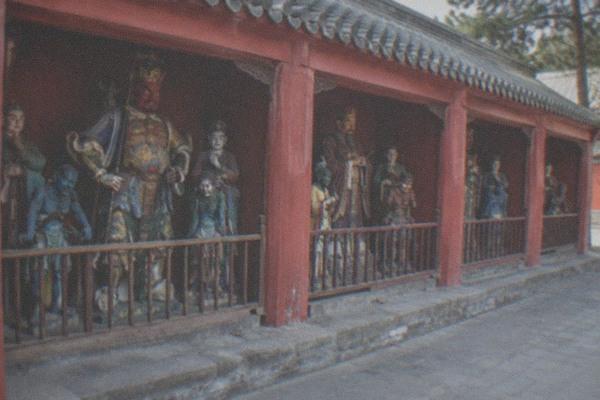
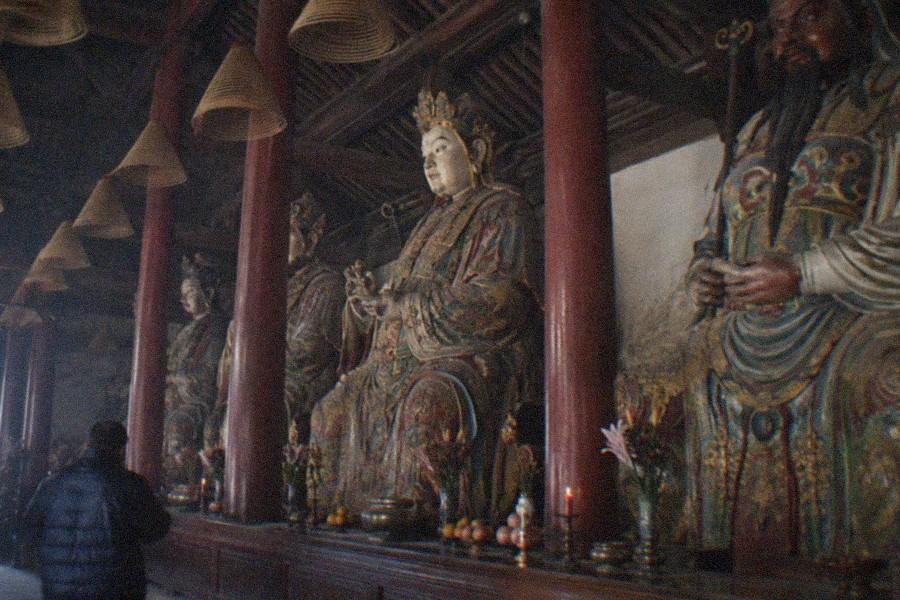
Dongyue Temple is a Daoist temple dedicated to the Dongyue Great Emperor, the God of Mount Tai, who in Chinese folk religion oversees the hierarchy of spirits and the judgment of souls. It was founded to serve that cult in the capital, and its halls, courtyards and rows of deity figures were built to represent the bureaucracies of the underworld as ordinary Beijingers imagined them.
The temple's most famous feature is its dense population of statues. The side halls historically held figures representing the departments of the spirit world: officials in charge of life spans, wealth, rainfall, childbirth, justice and every other domain a praying citizen might petition. Worshippers walked the halls, found the department relevant to their problem, and made offerings there. That is folk religion as an institution, and it is exactly the material a folklore museum studies.
The temple fair tradition matters just as much. Historically, temple fairs were where Beijing's commercial and religious calendars met: incense burning in the morning, market stalls and performance in the courtyards, opera and storytelling on temporary stages. A museum of folklore that sat in a modern building would have to explain all of that with photographs. A museum inside the temple can point out the door and say it happened here. The Beijing municipal authorities placed the Folklore Museum here precisely so that the intangible heritage and its physical setting stay connected.
There is a second, practical layer to the answer. Historic temples in Chinese cities are large compounds that need a use, a custodian and an income stream to survive. Installing a museum gives the compound a stable institutional tenant, professional conservation staff and a public justification for preservation. The temple keeps its religious function on its central axis; the museum fills the flanking halls with interpretive exhibits. The visitor gets both in one CNY 10 ticket, and the building gets a future. Beijing has applied this pairing elsewhere, and the Beijing Daily's 2026 holiday coverage of the site shows the temple and museum operating together as a single destination, with holiday notices issued for the combined complex.
If you are building a history-themed day around this part of the city, the reservation burden is what will shape it. Free museums in Beijing almost never mean walk-in entry, and the biggest ones release their slots on fixed schedules that are easy to miss.
How The Museum Uses The Temple Halls?
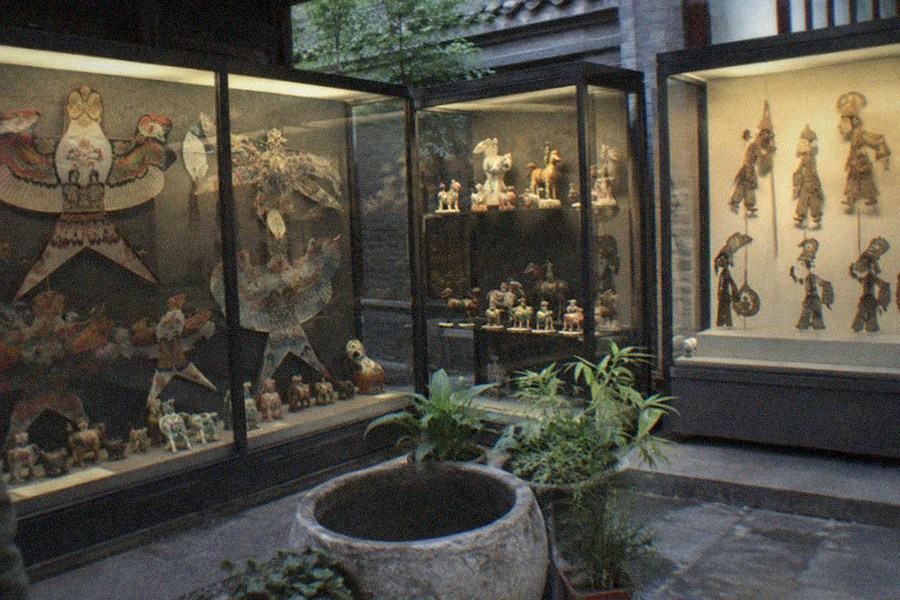
The Folklore Museum fills the temple's side halls and courtyards with exhibits on Beijing's customs: festival calendars, traditional trades, wedding and funeral practices, paper crafts and the imagery of popular religion. The central religious spaces stay religious. So a visit is two experiences in one compound: a Daoist temple you walk through and a museum you read your way through.
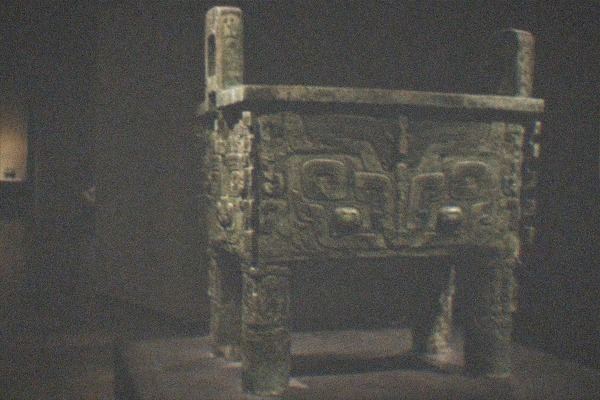
The exhibits lean on the temple's own subject matter. Displays on popular religion explain the deity departments, the offerings and the festival calendar, so the statuary around you becomes an annotated collection rather than a curiosity. Seasonal exhibits track the Beijing year: Spring Festival customs, lantern traditions, Dragon Boat practices, Mid-Autumn family rituals. Craft exhibits cover the trades that served temple life, including paper offerings, figurines and folk printing. The museum also runs programming tied to the traditional calendar, which is when the compound feels most like the living institution it documents.
For a foreign visitor, the pairing has a real advantage: context. Folk religion in China is dense, and deity figures without explanation read as decoration. Here the explanation is adjacent to the thing explained. Give the compound a slow half-day. The temple axis takes under an hour; the museum halls reward patience, and the courtyard between them is a good place to sit and let the two halves settle together.
The surrounding neighborhood rewards a detour. Chaoyangmenwai Street runs east from the old city wall line, and the temple's location on it puts you within reach of the Central Axis sights to the west and the 798 Art Zone to the northeast. If you are planning a broader route, our three day Beijing museum itinerary places the temple in a sequence that balances reserved and walk-up venues, and the Beijing museums map shows how the eastern cluster fits together geographically.
If you want to extend the folk-culture theme, the Confucius Temple and Imperial College Museum on Guozijian Street is the natural companion piece: an imperial-era temple and academy compound that is also a museum, with a door price of CNY 30 and a reservation window that opens just 1 day ahead, the shortest of any venue in the city's history category. A booking service for it starts from $12.
What Does Entry Cost And How Does Booking Work?
Entry to the Dongyue Temple compound, museum included, is CNY 10 at the door, one of the cheapest museum visits in Beijing. No third-party booking product exists for it anywhere, so the museum's own channel is the only route, and the site closes on Mondays except holidays. There is no affiliate ticket to buy, and none is needed.
That honesty is worth stating plainly, because most English-language ticketing pages do not. Dongyue Temple is what this site's roster calls an official-channel-only venue: the museum runs its own reservation and announcement channels, and no booking platform sells an entry product for it. If a page offers to sell you a Dongyue Temple ticket at a markup, treat it with suspicion. The door price is CNY 10, and the transaction happens at the museum. More of these guides are collected on Beijing Museums.
The table below puts the temple in context against other history and culture venues nearby, so you can see the price and booking spread across the cluster. Door prices are what you pay at the venue in CNY; where a third-party reservation product exists, its starting price is listed separately, and the two are different transactions that should never be compared as if they were the same thing.
| Venue | District | Door price | Reservation | Third-party product |
|---|---|---|---|---|
| Beijing Folklore Museum at Dongyue Temple | Chaoyang | CNY 10 | Museum's own channel | None exists |
| Confucius Temple and Imperial College Museum | Dongcheng | CNY 30 | Opens 1 day ahead | From $12 |
| National Museum of China | Dongcheng | Free | Opens 7 days ahead at 17:00 | From $4.58 |
| Military Museum of the Chinese People's Revolution | Haidian | Free | Opens 8 days ahead at 08:00, 17:00, 20:00 | From $21 |
| Capital Museum | Xicheng | Free | Walk-up entry | None, it is free |
Two patterns in that table deserve attention. First, free does not mean easy: the National Museum of China and the Military Museum both cost nothing at the door but require real-name reservations that open on fixed schedules, and the free slots for popular dates go fast. Second, the cheap venues are not the difficult ones. CNY 10 at Dongyue Temple and CNY 30 at the Confucius Temple are small amounts, and the friction there is minimal compared with the free giants, where the reservation window is the real gate.
The Beijing Museum Pass changes the arithmetic if you are visiting many venues. The 2026 edition covers roughly 140 venues at CNY 120 and admits two people across the year, and the official launch announcement describes it as a non-personalized booklet usable by anyone. Check whether the current edition includes Dongyue Temple before counting on it.
What Should You Plan Around Before Visiting?
Plan around three things: the Monday closure, the reservation schedules of everything else on your route, and the fact that Dongyue Temple itself needs no online booking. The temple closes on Mondays except holidays, so pair it with a Monday-open venue if your trip forces a Monday museum day, and book the reserved giants days before you arrive.
The Monday rule is the most expensive mistake in Beijing trip planning. Chinese national and municipal museums close on Monday as a near-universal rule, and Dongyue Temple follows it, with the exception of public holidays. If your itinerary puts a museum-heavy Monday in the middle of your trip, you will spend it walking past closed gates. Our guide to Beijing museums open on Monday lists the exceptions worth building a day around.
The second planning issue is the booking window. Across the 31 venues this site covers, 22 require an advance real-name reservation and only 6 take genuine walk-ups. "Free" almost never means "walk in", and even paid venues like the Palace Museum sell nothing at the gate at all. The windows open at fixed times: 20:00 seven days out for the Palace Museum, 17:00 seven days out for the National Museum of China, 16:00 seven days out for the National Art Museum, 11:00 three days out for the Natural History Museum. Miss the release moment for a popular date and the slots are gone.
The third issue is seasonal. The Folklore Museum's programming follows the traditional calendar, so holiday periods bring both the best programming and the biggest crowds, and the official holiday notices for the site are issued through Beijing Daily channels. A quiet weekday morning in a shoulder month gives you the exhibits to yourself; a Spring Festival visit gives you the compound at its most alive, and shoulder to shoulder with everyone else in the district.
For the reserved venues on your list, decide early which ones you will book yourself and which you would rather hand to a service. The self-booking route costs nothing but requires being online at the release moment, with a passport, on a Chinese platform. The service route costs money but removes the timing risk, and reputable listings describe themselves exactly as reservation services that book the official ticket under your passport details, refundable if the official quota sells out first. Neither route changes what you pay at the door.
The Military Museum illustrates the trade-off well. Entry is free, but its reservation window opens 8 days ahead at three separate times, 08:00, 17:00 and 20:00, and its product rating stands at 4.4 across 10 reviews. A booking service from $21 handles the real-name reservation and the timing for you.
Is The Temple Still A Religious Site While The Museum Operates?
Yes. The central axis of Dongyue Temple remains an active Daoist worship space, with incense, offerings and festival observances, while the museum occupies the flanking halls as exhibition and office space. The two functions coexist by design, and visitors are expected to behave in the religious spaces as they would in any working temple.
This dual status is the most interesting thing about the arrangement, and it is the detail most visitors miss. The museum did not replace the temple's religious life; it was slotted in around it. That is why the visit feels layered: you are inside a functioning religious institution that is also a state-run museum, and each layer explains the other. Respect the worship spaces, keep your voice down on the central axis, and save your questions for the exhibit halls, where the interpretation lives.
It also explains why the museum's subject matter is so specific. A folklore museum in a purpose-built gallery could, in theory, exhibit anything about popular culture. A folklore museum in a working temple is anchored to its site: the deity departments, the offering customs, the fair calendar, the trades that served worshippers. The building disciplines the collection. That is a quiet argument about what museums are for, and it is the reason the answer to this article's question is not just administrative convenience but a genuine curatorial choice.
The same logic appears elsewhere in Beijing's museum landscape, where imperial altars, princely mansions and temple compounds have been converted into museums that interpret the buildings they occupy. The Temple of Heaven is the largest example: not strictly a museum, but a heritage site whose park and paid halls are managed and interpreted much like one, with the park open daily and the paid halls closing Monday except statutory holidays. The pattern is worth recognizing, because it tells you what kind of visit you are getting: not a climate-controlled gallery but a historic site with interpretation attached, and that difference should shape your expectations, your footwear and your schedule.
If this layered, site-as-exhibit approach appeals to you, the trio below pulls together three more history venues in the city, each bookable through a reservation service, each a different slice of the same story.
Common Questions About The Beijing Folklore Museum And Dongyue Temple
Why Is The Beijing Folklore Museum Inside Dongyue Temple?
Because the temple is the primary artifact. The museum documents Beijing's folk culture, and Dongyue Temple embodies that culture in its deity halls, its festival calendar and its history as a temple-fair site. Housing the museum inside the temple keeps the collection and its subject in one place, with the religious spaces on the central axis preserved and the side halls used for exhibits.
How much does it cost to visit?
Entry to the Dongyue Temple compound, which includes the Folklore Museum, is CNY 10 at the door, one of the cheapest museum visits in Beijing. There is no third-party booking product for it, so the museum's own channel is the only route.
When is it closed?
The site closes on Mondays, except public holidays, following the near-universal Monday closure rule for Chinese museums. Plan any museum-heavy Monday around venues that stay open, and check the museum's own announcements for holiday period hours.
Is the temple still religiously active?
Yes. The central axis of Dongyue Temple remains a Daoist worship space dedicated to the Dongyue Great Emperor, while the museum occupies the flanking halls. Visitors should treat the central religious spaces with the same courtesy they would show in any working temple.
Can I book a ticket through a platform?
No booking platform sells an entry product for Dongyue Temple. The door price is CNY 10 and the transaction happens at the venue or through the museum's own channel. Any third party offering marked-up tickets for this site should be treated with suspicion.
How long should I spend there?
A slow half-day covers the temple axis and the museum halls comfortably. The religious spaces take under an hour to walk; the exhibits reward more patience, especially if a seasonal program is running. Pair it with nearby eastern Beijing sights to fill the day.