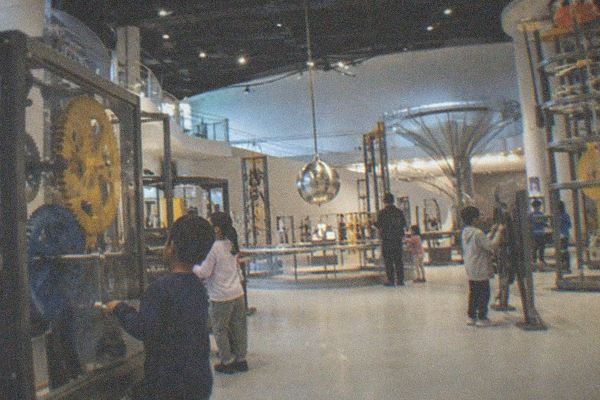
China Science and Technology Museum
Chaoyang
from $21 per person, live price on the listing Check availability →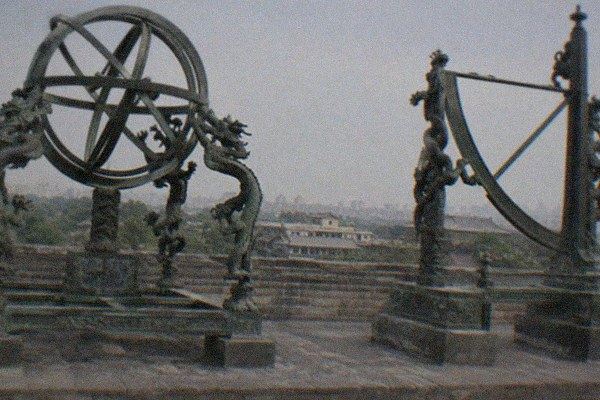
Current admission is on the museum's own ticket page.
Visitor info →Opens the museum's own website. Book on the official site; nothing is charged on this page.
Eight bronze astronomical instruments still stand on the rooftop platform of the Beijing Ancient Observatory, aligned along the top of an old Ming-era tower just east of Jianguomen. The armillary sphere, the quadrant, the celestial globe and the altazimuth were cast in the seventeenth and eighteenth centuries, several of them to designs brought by Jesuit missionaries working for the Qing court, and they are still mounted in the open air where imperial astronomers used them. Below the platform, a brick tower beside the Second Ring Road holds exhibition rooms on Chinese astronomy, timekeeping and the observatory's own 500-year working history. It is a small site with an outsized story, run today under the same management as the Beijing Planetarium, and it sits in Dongcheng a short walk from the Jianguomen intersection.
The Beijing Ancient Observatory is a Ming-dynasty astronomical station, founded in 1442, that kept working as an imperial observatory into the twentieth century, making it one of the longest continuously used astronomical sites in the world. Its rooftop platform carries eight surviving bronze instruments, and its tower and courtyard buildings now operate as a museum of historical astronomy under the administration of the Beijing Planetarium.
The observatory began under the Ming dynasty as the Imperial Astronomical Bureau's observing station, and the Qing court kept it in service after the conquest of 1644. In the late seventeenth century the Kangxi Emperor put the Jesuit astronomer Ferdinand Verbiest in charge of revising the calendar, and Verbiest redesigned several of the instruments on the platform along European lines while keeping Chinese casting techniques and Chinese astronomical traditions alive in the same space. That layered history is what makes the site unusual: a visitor standing on the platform is looking at Chinese bronze workmanship shaped by a collision of two astronomical traditions.
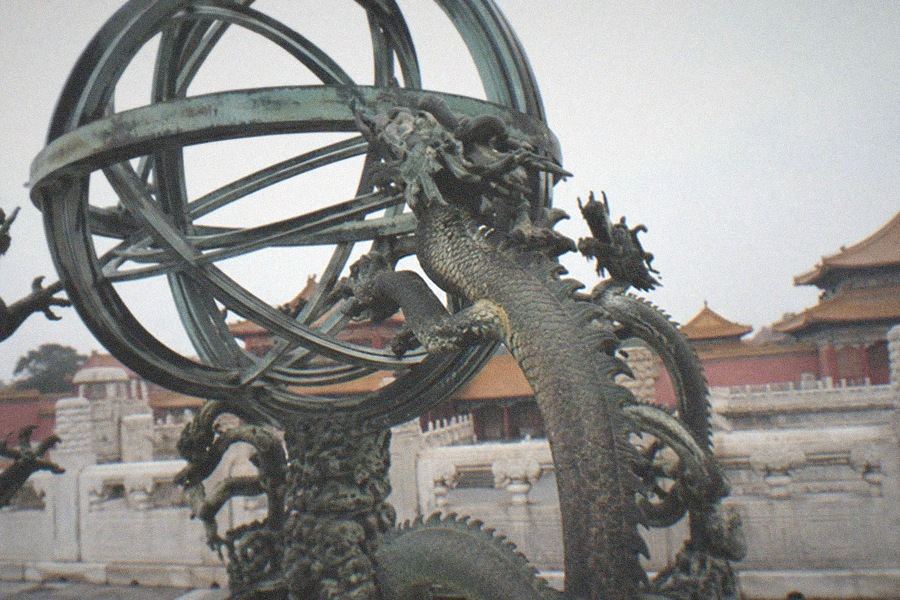
The eight instruments on the platform include an armillary sphere, an equatorial armilla, an ecliptic armilla, a quadrant, a celestial globe, an altazimuth, a sextant and a new-style armillary sphere. Several were looted in 1900 after the Boxer Rising, sent to France and Germany, and returned to China after the First World War, so the set on the platform today is substantially the original one. The names and dates are given in Chinese and English on the platform, and the museum's own site, which carries an English version at https://www.bjp.org.cn/ggxt/, publishes visitor information alongside the Planetarium's own pages.
Because the site is run together with the Beijing Planetarium, its visiting rules follow the Planetarium's system: paid entry, a real-name advance reservation, and a Tuesday closing day. The two institutions make a natural pairing for anyone with an interest in astronomy in Beijing, one covering the modern sky and the other covering the imperial one.
Entry to the Beijing Ancient Observatory costs CNY 20 per adult at the door. It is a paid venue, not a free one, and there is no third-party ticket product for it: booking runs through the venue's own official channel, and the museum's site carries an English version for visitors who need it.
The CNY 20 figure is the venue's own admission price, charged at the site itself. As with every door price on this site, it is quoted in Chinese yuan and should not be compared with the dollar from-prices shown on other Beijing museum pages, which belong to entirely different booking transactions on other platforms. For the Ancient Observatory no such third-party product exists at all, so the official channel is the only route.
| Item | Detail |
|---|---|
| Adult admission | CNY 20 |
| Currency | Chinese yuan (CNY), paid at the venue |
| Free entry | No, this is a paid venue |
| Booking route | Official channel only, at https://www.bjp.org.cn/ggxt/ |
| Reservation required | Yes, in advance |
The reservation itself is made through the observatory's own ticketing channel, which it shares with its parent institution. When you reserve, you are reserving a timed real-name entry, and the CNY 20 admission is paid as part of that process or at the site according to the channel's current flow. The museum's official page at https://www.bjp.org.cn/ggxt/ is the place where the current ticketing steps are laid out, and because that page has an English version, foreign visitors are not left working from Chinese-only instructions.
Yes. The Beijing Ancient Observatory requires an advance real-name reservation, and the booking window opens up to 5 days ahead of the visit date. Walk-up entry is not the intended route, so the reservation has to be in place before you arrive at the hutong gate.
The 5-day window means that on any given day, the dates available to you run from tomorrow out to five days from now. Unlike some Beijing venues, whose slots release at a fixed hour of the afternoon or evening, the observatory's release time is not published, so there is no single moment to sit and refresh for. The practical approach is to reserve as early inside the five-day window as your itinerary allows, and to avoid leaving the booking to the last day, when the quota for a popular date may already be gone.
Real-name reservation is the standard system across Beijing's museums, and the Ancient Observatory follows it: the reservation is tied to an identified visitor rather than being a transferable paper ticket. Whether a foreign passport works in the observatory's own booking channel is not published, so plan for the possibility of needing help from a Chinese-speaking contact if the channel's ID fields reject a passport number. The museum's official site at https://www.bjp.org.cn/ggxt/, which carries an English version, is where the current booking steps and ID requirements are stated, and it is the authoritative place to confirm the process before you commit to a date.
Two planning errors account for most failed visits here, and both are avoidable. The first is turning up on a Tuesday, when the observatory is closed. The second is assuming that a paid ticket can simply be bought on the day: like the great majority of Beijing museums, this venue pairs its admission charge with an advance reservation requirement, and the two are not interchangeable. Visitors comparing venues should note that the same pattern applies across the city's science museums, from the China Science and Technology Museum to the Beijing Planetarium, so the reservation habit is worth building early in any Beijing trip.
The core of a visit is the rooftop platform and its eight bronze instruments, followed by the exhibition rooms inside the tower, which cover Chinese astronomy, imperial timekeeping and the observatory's own history. The site is compact, and its outdoor platform is the part visitors remember longest.
The platform is reached by a stair inside the old brick tower, and it puts you at eye level with the instruments and above the surrounding Jianguomen streetscape. Each instrument has its own function and its own history: the armillary sphere measures positions along the celestial equator using nested rings; the quadrant measures altitudes above the horizon; the celestial globe maps the whole sky on a bronze sphere; and the altazimuth tracks objects across both axes at once. Standing among them, with the Second Ring Road running below, gives the clearest possible picture of what imperial astronomy in Beijing actually looked like, and of how strange it is that this working scientific instrument park survives in the middle of a modern capital.
Inside the tower and the adjoining buildings, the exhibitions trace the observatory's five centuries of continuous use, the Ming founding of the site, the Qing re-equipment of the platform, the Jesuit contributions under Kangxi, and the observatory's later career as a museum. Timekeeping instruments, star maps and reproductions of historical records fill out the story of how the imperial state depended on astronomical observation for its calendar, and why an emperor cared so much about who ran the observatory.
Visitors with a broader interest in Chinese science history can extend the theme across the city. The China Science and Technology Museum covers the modern side in Chaoyang, the Beijing Planetarium covers the contemporary sky in Xicheng, and the Zhoukoudian Peking Man Site Museum carries the story back into deep prehistory in Fangshan. The Ancient Observatory is the smallest and most concentrated of these, and it pairs well with the Planetarium in particular, since the two institutions share a management and a booking family.
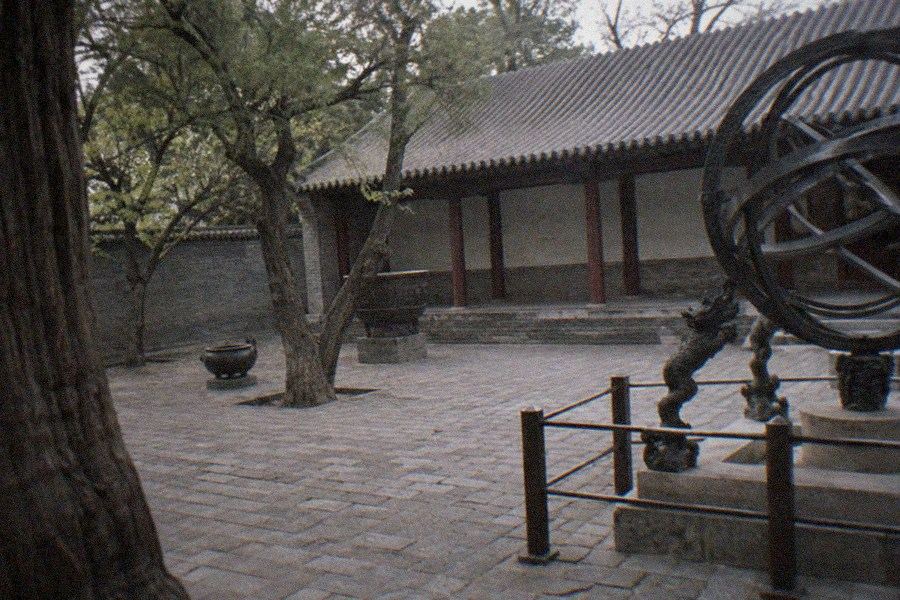
The Beijing Ancient Observatory stands at 2 Dongbiaobei Hutong, Jianguomen, in Dongcheng District, on the east side of the Jianguomen intersection where the Second Ring Road crosses Chang'an Avenue. Its position inside the Second Ring Road puts it within easy reach of central Beijing on foot or by subway.
The address places the observatory in one of the most accessible corners of the old city. Jianguomen is a major interchange on Beijing's east-west axis, and the hutong entrance sits just off the intersection, so the site is straightforward to find even for a first-time visitor: look for the old brick tower rising beside the modern road. Coming from the Forbidden City area or from Wangfujing, the observatory is a short hop east along Chang'an Avenue, and it can be slotted into a Dongcheng day that also takes in the museums further north in the district.
For subway travel, Beijing's network is the practical way to move across the city, and current line maps, station information and fare details are published by the operator at https://www.bjsubway.com/, which is the right reference for planning the route from wherever you are staying. The observatory's own visitor information, including any access notes on the hutong entrance, is published on the museum's official site at https://www.bjp.org.cn/ggxt/, which carries an English version.
Because the observatory sits hard against the Second Ring Road, taxi and ride-hailing drivers generally know the Jianguomen landmark well, and the short approach from the main road means the last stretch of any journey is simple. Cyclists and pedestrians should note that the hutong entrance is modest and easy to walk past, so the tower itself is the best landmark to navigate by.
The Beijing Ancient Observatory is closed on Tuesdays, except national holidays, and open the rest of the week. Entry costs CNY 20, requires an advance real-name reservation made up to 5 days ahead, and there is no third-party booking product: everything runs through the venue's own official channel.
The Tuesday closing day is the single most important planning fact, because it breaks the pattern most visitors assume. Across Beijing, museums overwhelmingly close on Mondays, and travelers who apply that rule here will lose their day: this venue, like its parent the Beijing Planetarium, closes on Tuesday instead, reopening on national holidays that would otherwise be closure days. Anyone building a Dongcheng itinerary around the Forbidden City, which closes Monday, should note that the two closures do not match, so the two sites cannot be stacked on the same weekday off-day.
| Fact | Detail |
|---|---|
| Area | Dongcheng |
| Address | 2 Dongbiaobei Hutong, Jianguomen, Dongcheng District, Beijing |
| Closed day | Tuesday (except national holidays) |
| Reservation required | Yes, advance real-name reservation |
| Reservation window | Opens up to 5 days ahead of the visit date |
| Admission | CNY 20 per adult |
| Booking route | Official channel only, https://www.bjp.org.cn/ggxt/ |
A few final points round out the picture. The observatory is a compact site, so it works as a focused stop rather than an all-day destination; it is not positioned as a day trip out of the city, and it sits comfortably inside a central Beijing day. The museum's official page at https://www.bjp.org.cn/ggxt/ carries an English version, which makes the reservation and visiting rules accessible without translation help. And because the site shares management with the Beijing Planetarium, visitors who enjoy the Ancient Observatory's historical instruments can continue the theme across town, or widen it at the China Science and Technology Museum, whose interactive halls cover the science the Qing astronomers could only have imagined.
Adult admission is CNY 20, paid in Chinese yuan at the venue. This is a paid museum, not a free one, and the price is the venue's own door price. There is no third-party ticket product for the observatory, so the official channel is the only booking route.
Yes. The observatory requires an advance real-name reservation, and walk-up entry is not the intended route. The booking window opens up to 5 days ahead of the visit date, so reserve as early in that window as your plans allow.
It closes on Tuesdays, except national holidays. This is the opposite of the Monday pattern most Beijing museums follow, so check your weekday before you go. The observatory is open the rest of the week.
The release time for the observatory's reservation slots is not published. Only the window is confirmed: booking is possible up to 5 days ahead. Because there is no fixed release hour, the practical move is to reserve as soon as your date falls inside the window.
It stands at 2 Dongbiaobei Hutong, Jianguomen, in Dongcheng District, beside the Jianguomen intersection on the east side of central Beijing. Subway route maps and station details are published by the operator at https://www.bjsubway.com/. The old brick tower beside the Second Ring Road is the landmark to navigate by.
The observatory has not published whether a foreign passport is accepted in its own booking channel, so plan for the possibility of needing a Chinese-speaking contact. The museum's official site at https://www.bjp.org.cn/ggxt/ carries an English version where the current booking steps are stated.
Eight bronze astronomical instruments on a rooftop platform, including an armillary sphere, a quadrant, a celestial globe and an altazimuth, several cast to Jesuit-influenced designs for the Qing court. Inside the tower, exhibition rooms cover Chinese astronomy, imperial timekeeping and the observatory's 500-year history.
Yes. The Ancient Observatory is run under the same management as the Beijing Planetarium, and it shares the Planetarium's booking family and its Tuesday closing day. The two sites make a natural pair for visitors interested in both historical and modern astronomy.
Chaoyang
from $21 per person, live price on the listing Check availability →
Fangshan
from $13 per person, live price on the listing Check availability →