China Science and Technology Museum
Chaoyang
from $21 per person, live price on the listing Check availability →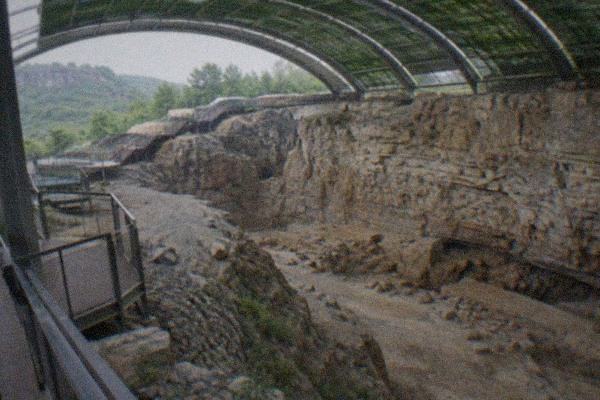
from $13 per person, live price on the listing
Check Price & Availability →Opens the official listing with live dates and prices. Book there; nothing is charged on this site.
Dragon Bone Hill, on the southwestern edge of Beijing, is where some of the most famous fossils in human prehistory came out of the ground. From the cave deposits at Zhoukoudian, excavators recovered the first Peking Man skullcap in 1929, a Homo erectus find that put East Asia firmly on the map of early human history. The Zhoukoudian Peking Man Site Museum now guards that hillside at 1 Zhoukoudian Street in Fangshan District, a UNESCO World Heritage site that combines museum halls with the excavated localities themselves. The original skullcaps were lost during the Second World War, which makes the site, the surviving casts and the later fossil record held here all the more significant. This is a full-day destination, not a city-center stop.
The Zhoukoudian Peking Man Site Museum is a paleoanthropology museum and UNESCO World Heritage site at 1 Zhoukoudian Street, Fangshan District, on the southwestern edge of Beijing. It protects and interprets the cave system on Dragon Bone Hill where the fossils known as Peking Man were excavated from the 1920s onward, and it displays the finds from work that has continued for more than a century. It sits well outside the city center and is properly a day-trip destination.
The discovery that made the site famous came in 1929, when excavators at Locality 1 recovered the first Peking Man skullcap, a Homo erectus find that fixed Zhoukoudian on the map of human prehistory. Excavation through the 1930s recovered further skullcaps, teeth and limb bones, along with stone tools and deep ash deposits that stood as evidence of fire use. The story took a darker turn during the Second World War, when the original fossil collection was lost in transit; the casts made before that loss, together with material from later excavation campaigns, now carry the record that the museum presents.
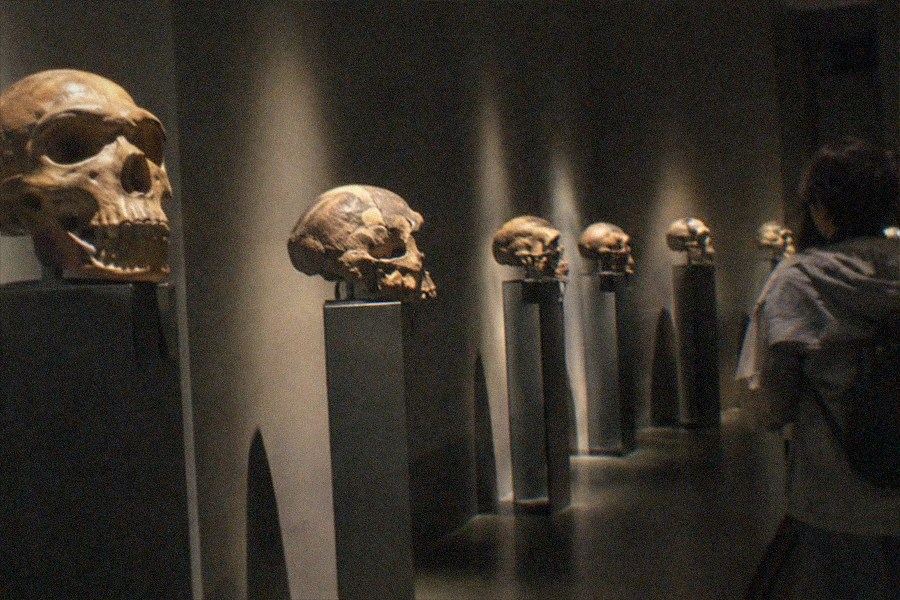
A visit splits naturally in two. The museum halls hold the fossil displays, the stone tools and the reconstructions; the hillside localities let you stand at the deposits themselves. Few museums in Beijing put you on the actual ground where their central finds came out of the earth, and that combination is what makes the long trip out here worthwhile. The planning facts are below, with the reservation details spelled out further down this page.
| Area | Fangshan District, Beijing |
|---|---|
| Address | 1 Zhoukoudian Street, Fangshan District, Beijing |
| Closed | Monday (except national holidays) |
| Reservation | Required, window opens 7 days ahead at 17:00 Beijing time |
| How long to allow | A full day, door to door (day-trip destination) |
| Official site | https://www.zkd.cn/ (Chinese only, no English version) |
No, entry is not free. Admission at the door is CNY 30, and an advance reservation product sold from $13 in US dollars covers the booking made under your details. These are two different transactions: the door price is what the venue itself charges in Chinese currency, and the product price is what a booking service charges in US dollars. Never treat one as the other, and never convert between them.
| Ticket | Price | What it covers |
|---|---|---|
| Admission at the door | CNY 30 | Entry to the museum and site, paid in Chinese currency |
| Advance reservation product | from $13 (USD) | A booking service that makes the required reservation under your details, paid in US dollars |
Because a reservation is required for entry, the details are in the next section, the practical order of operations for most visitors is to sort the booking first, then pay either on the day or through the product. Before locking travel dates around this museum, check availability on the listing, since the daily quota is what determines whether a given date works at all.
What the admission actually buys is generous: the exhibition halls with the fossil and stone-tool displays, plus access to the excavated hillside localities. This is not a single-room collection but a full site, which is why the door price sits at the same level as several of Beijing's larger specialist museums. Children, students and seniors commonly receive concession rates across Beijing's paid museums; the concession schedule for this venue is carried on its own channels, and no figure for it is printed here that the verified record does not supply.
One note on the two currencies, because it trips people up across Beijing: a price quoted in CNY is what you pay at the venue in Chinese currency, and a price quoted in USD is what a booking service charges before you travel. Averaging or converting them produces a number that is neither. Read each figure against its own transaction and the table above keeps them apart.
Yes, a reservation is required, and the booking window opens 7 days ahead at 17:00 Beijing time. The venue's own reservation channel is its WeChat mini-program and official WeChat public account, and the visit details sit on the museum's own site, https://www.zkd.cn/, which is live but carries no English version. There is no walk-up alternative for general visitors.
The mechanics of the window are simple and worth internalizing. Each day at 17:00 Beijing time, the museum releases the slots for the date seven days ahead. For a Saturday visit, the slots appear the preceding Saturday at 17:00. If a particular date matters, a school holiday, a long weekend, the tail end of a trip, the reminder belongs at 17:00 seven days out, not the night before. Slots are limited by the daily quota, and once a date is full it is full.
The channel itself is the museum's WeChat mini-program and its official WeChat public account, with the full visit information on the museum's own site. That site is live and current, but it has no English version, so the reservation flow assumes Chinese-language interaction end to end. This is not unusual in Beijing, the advance real-name reservation is the norm across the city's museums, and the channels that run it are overwhelmingly Chinese-language.
On foreign passports, the honest position is this: the museum does not publish whether a foreign passport is accepted in its own reservation channel. Rather than guess, visitors who cannot work the Chinese-language channel can have the booking made under their passport details through the advance reservation product, which exists for exactly this situation and is covered in the ticket section above.
Whatever route you take, the reservation is not a formality. It is the gate between planning a Zhoukoudian day and actually having one, and the 17:00 release time seven days ahead is the single most useful fact on this page.
The museum is closed on Mondays, except national holidays. Every other day of the week is a candidate for a visit. The Monday closure is the single most expensive planning mistake available here: arrive on a Monday that is not a national holiday and the site is shut, after a journey of the better part of a day.
The Monday closure is the standard rhythm across Beijing's museums, and it is worth building your whole itinerary around it. The Palace Museum (Forbidden City) follows the same Monday-except-holidays pattern, as do most of the city's major venues, so a Monday in Beijing is generally a day for parks, food and neighborhoods rather than museums. Planning a museum-heavy trip means treating Tuesday as the week's real opening day.
The exception is built into the rule: when a national holiday falls on a Monday, the museum opens. The statutory holidays in the Chinese calendar, New Year, the Spring Festival period, the May and October holiday weeks, shift the closure pattern, and holiday Mondays are working days for the site. The trade-off is crowds: holiday openings across Beijing draw heavy visitation, and a site that combines indoor halls with an open hillside is at its most comfortable on an ordinary weekday.
Picking the day is therefore straightforward. Any day from Tuesday to Sunday works, subject to the reservation window opening seven days ahead at 17:00. Pair the date with the travel reality in the next section, this is a day trip, so the day you choose needs a full day behind it, and a Tuesday or Wednesday outside holiday weeks gives you the site at its calmest.
Zhoukoudian is in Fangshan District, on the southwestern edge of Beijing, and it is a day-trip destination: allow a full day, door to door. No subway station serving the site directly is confirmed in the verified record, so the journey combines a long ride on the rail network with a taxi or bus for the final stretch, and the network leg is best planned on the official Beijing Subway site, https://www.bjsubway.com/.
The distance is the whole story of this museum. Beijing's museum district, the cluster around the city center that holds most of the venues on this site, thins out well before Fangshan, and Zhoukoudian sits beyond it, out where the city gives way to the hills. The rail network is the spine of any Beijing day trip, and the Beijing Subway site is the reference for working out the network leg; the final stretch to 1 Zhoukoudian Street is a taxi or bus ride from wherever the line you are on runs out.
Structure the day simply. Travel out in the morning, arrive around midday, give the site the early afternoon, the halls first, then the hillside localities while the light is good, and return to the city in the late afternoon or evening. That is a full day, and it is what the day-trip flag on this venue means in practice. Trying to bolt Zhoukoudian onto a city-center morning does not work; the travel alone eats the margin.
Two things make the day succeed or fail. The first is the Monday closure: check the day of the week before committing. The second is the reservation window: the slots for your chosen date open seven days ahead at 17:00 Beijing time, so the booking and the travel plan need to be made together, a week out. Get those two right and the long ride is the only hard part, and the hillside at the end of it is the payoff.
The visit divides between the museum's exhibition halls and the excavated hillside. Inside, the halls hold the fossil record, skullcap material, teeth, stone tools and the ash evidence of fire from the cave deposits, alongside reconstructions of Peking Man. Outside, the localities on the hillside put you at the deposits where the excavations actually happened, which is the part no city-center museum can replicate.
Inside the halls, the narrative runs from the geology of Dragon Bone Hill through the excavation history to the fossils themselves. The 1929 skullcap discovery anchors the story, and the fate of the original fossils, lost in transit during the Second World War, explains why casts and later-excavated material carry so much of the display. The stone tools and the deep ash layers are the exhibits that reward slow looking: they are the evidence that this was a living site, occupied over a long stretch of time, not a single dramatic moment.
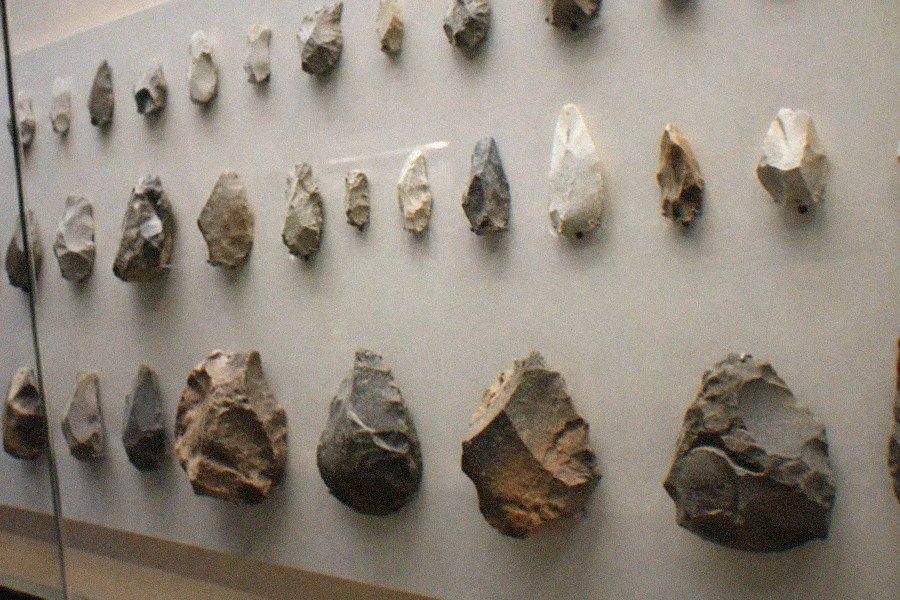
Outside, the hillside localities are the reason to make the trip. Standing at the mouth of the deposits where the Peking Man fossils came out of the ground does something a display case cannot, and the walk between the localities gives the site its scale. Bring shoes and weather sense for the outdoor portion; the hillside is part of the visit, not a backdrop.
For visitors building a science-and-nature itinerary around Beijing, the natural companions are the China Science and Technology Museum and the Beijing Planetarium, both in the city center and both covering the scientific story from the other end of the timeline. Zhoukoudian is the deep-past anchor of that itinerary, the day you give to where humans came from, set against the days you give to where the science of everything else lives.
No. This is one of Beijing's paid museums, not a free one. The ticket table on this page carries the current figures for both transactions: the admission price at the door in Chinese currency and the advance reservation product price in US dollars. The two are different transactions and should never be converted or averaged into one another.
Yes. A reservation is required, and there is no walk-up alternative for general visitors. The booking window opens 7 days ahead at 17:00 Beijing time, through the museum's WeChat mini-program and official WeChat public account. For a Saturday visit, the slots appear the preceding Saturday at 17:00, so set the reminder a full week out.
No. The museum is closed on Mondays, except national holidays. When a national holiday falls on a Monday, the site opens as part of the built-in exception. Any day from Tuesday to Sunday is a candidate for a visit, subject to the reservation window opening seven days ahead at 17:00 Beijing time.
A full day, door to door. Zhoukoudian is in Fangshan District on the southwestern edge of Beijing and is a day-trip destination: travel out in the morning, give the site the early afternoon across both the exhibition halls and the hillside localities, and return to the city in the late afternoon or evening. It cannot be bolted onto a city-center morning.
The address is 1 Zhoukoudian Street, Fangshan District, Beijing, on the southwestern edge of the city. No subway station serving the site directly is confirmed in the verified record, so the journey combines a long ride on the rail network with a taxi or bus for the final stretch. The network leg can be planned on the official Beijing Subway site.
No. The museum's own site is live and carries the visit information, but it has no English version, and the reservation flow through its WeChat channel assumes Chinese-language interaction end to end. This is common across Beijing's museums, where the real-name reservation channels that control entry are overwhelmingly Chinese-language.
The museum does not publish whether a foreign passport is accepted in its own reservation channel, and no claim either way is made here. Visitors who cannot work the Chinese-language channel can have the required booking made under their passport details through the advance reservation product, which is covered in the ticket section of this page.
Chaoyang
from $21 per person, live price on the listing Check availability →