China Science And Technology Museum Tickets
from $21 per person, live price on the listing
Check Price & Availability →Opens the official listing with live dates and prices. Book there; nothing is charged on this site.
- Area
- Chaoyang
- Theme
- Science & nature
A cube-shaped silver building on the Olympic Green, the China Science and Technology Museum is Beijing's flagship venue for hands-on science. Its main exhibition hall runs to four floors, each given over to a single theme: 'Splendors of Ancient China' on the ground, 'Exploration and Discovery' above it, then 'Science and Life', and 'Challenges and the Future' at the top. Exhibits are built to be touched, cranked, pedalled and launched, which is why the halls fill with school groups on weekdays and families on weekends. Alongside the main hall sit a Children's Science Paradise for ages three to eight, a set of special-format cinemas, and short-run exhibition spaces, each ticketed separately by session. The museum sits at 5 Beichen East Road in Chaoyang District, within walking distance of the Olympic Green, and it closes on Mondays.
What Is The China Science And Technology Museum?
The China Science and Technology Museum is China's national science centre, a state-run museum of interactive exhibits occupying a purpose-built complex on the Olympic Green in Chaoyang District. It is not a collection of glass cases: nearly everything on display is designed to be operated by the visitor. The main exhibition hall alone spans four floors of themed galleries.
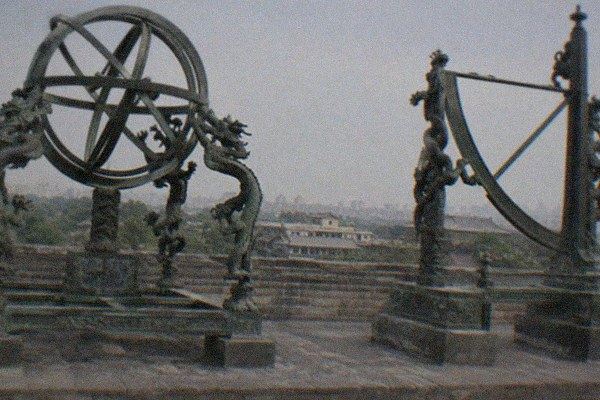
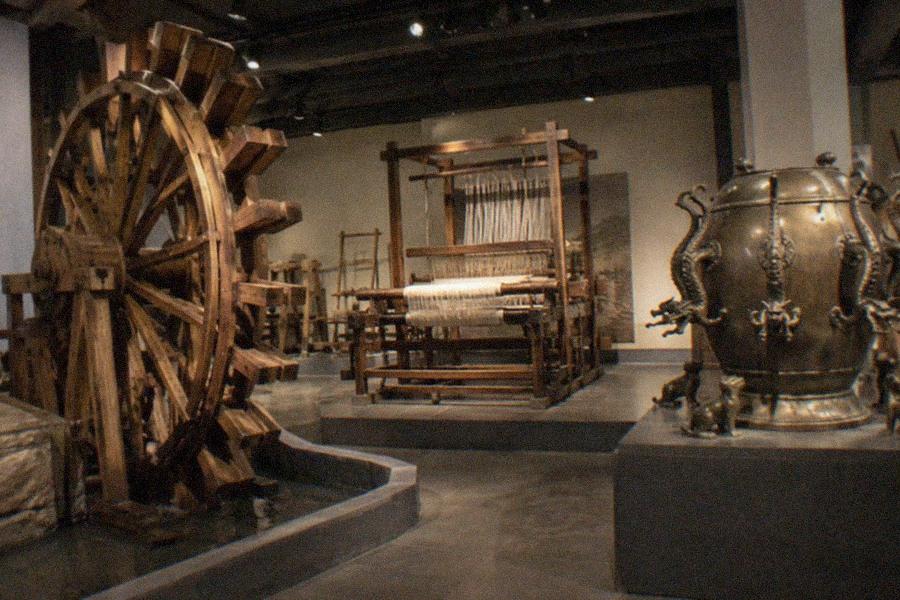
The ground floor, 'Splendors of Ancient China' (华夏之光), is the one part of the museum that behaves like a conventional exhibition. It reconstructs the technology of historical China: water clocks, astronomical instruments, printing presses, looms and shipbuilding, laid out to show how much of the world's early applied science came out of the country. It is also the quietest floor, and a good place to start before the crowds move up.
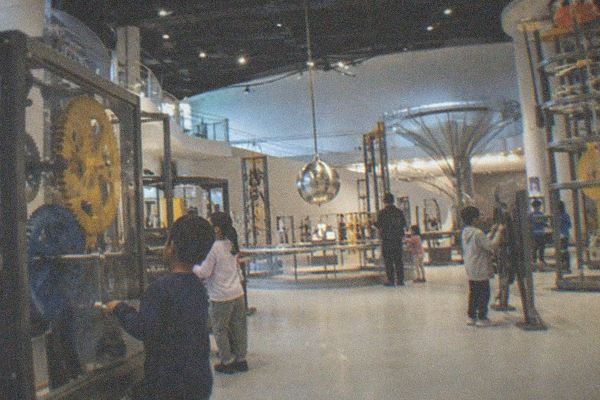
The floors above are where the museum earns its reputation. 'Exploration and Discovery' covers physics and mathematics with exhibits on mechanics, light, sound and electromagnetism; visitors can generate their own current, watch pendulums behave, and stand inside optical illusions. 'Science and Life' turns to the human body, health, food and daily technology. 'Challenges and the Future', the top floor, is the most forward-looking, dealing with energy, space exploration, materials and environmental questions. Children gravitate to the interactive stations on every level, and the museum is one of the few major Beijing venues that genuinely rewards a whole morning rather than an hour.
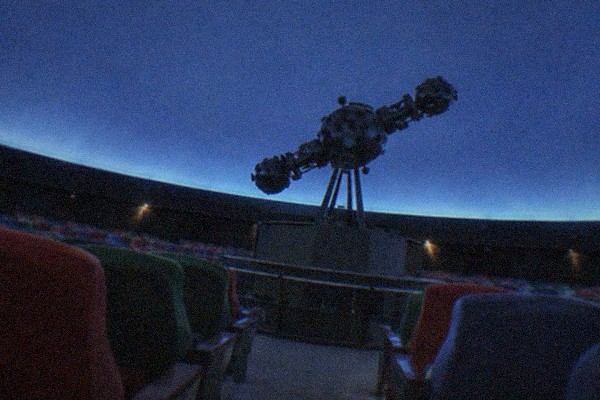
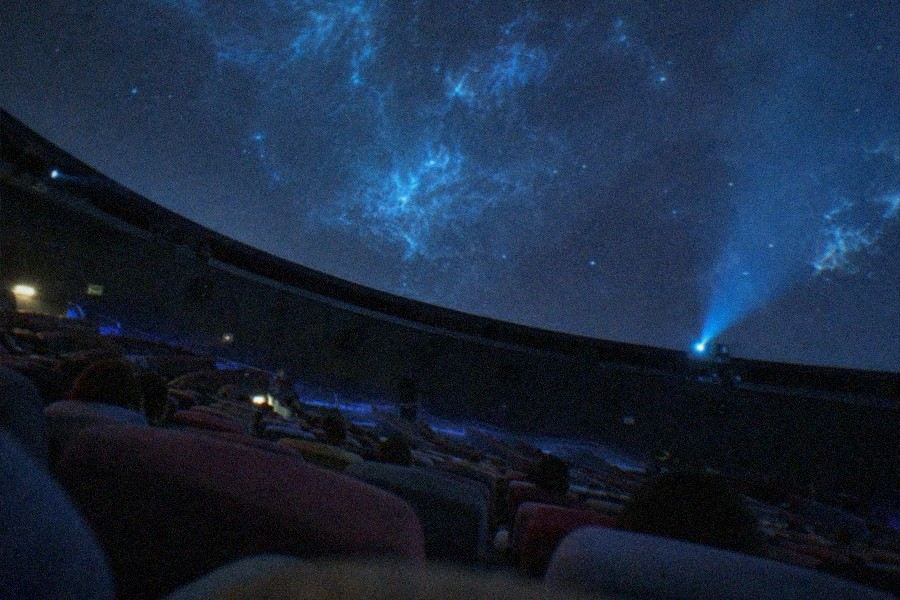
Alongside the main hall, the complex includes the Children's Science Paradise (儿童科学乐园), a separate ticketed area aimed at children aged three to eight visiting with a parent, running in two sessions: a morning session from 9:30 to 12:50 and an afternoon session from 13:40 to 17:00, each requiring its own ticket. There are also special-format cinemas, including a dome theatre, a giant-screen theatre, a 4D theatre and a motion theatre, each sold by session and priced separately from the main hall. Short-term exhibition halls complete the complex.
The museum's scale is its defining feature. Where most Beijing museums are single-building institutions, this is a campus: a family can spend an entire day here and still not see every floor and cinema session. That scale also means planning matters, because each area is ticketed separately and the reservation system applies to all of them.
How Much Do Tickets Cost?
General admission to the main exhibition hall is CNY 30 at the door. Every other area, including the Children's Science Paradise and all of the special-format cinemas, is ticketed separately by session. A third-party booking product for this museum is available from $21 USD, which is a different transaction from the door price and covers the reservation service rather than a discounted ticket.
The pricing structure is the part that catches visitors out. Buying a main-hall ticket does not get a child into the Children's Science Paradise, and it does not cover any cinema session. Families with young children typically need a main-hall ticket for the adults and a separate Paradise ticket per session for the child, choosing either the morning slot from 9:30 to 12:50 or the afternoon slot from 13:40 to 17:00. Cinema sessions are sold individually as well, so a visit combining the main hall with a dome-theatre screening means two purchases.
Certain groups, including young children accompanied by an adult, seniors aged 60 and above, and visitors with disabilities, qualify for free admission under the museum's published policies, but free does not mean unreserved: eligible visitors must still reserve a free ticket and show identification on arrival. This is standard practice across Beijing's museum system and applies here as much as anywhere.
| What you are buying | Price | Notes |
|---|---|---|
| Main exhibition hall (door) | CNY 30 | Four themed floors; general admission |
| Children's Science Paradise | Sold separately per session | Ages 3–8 with a parent; morning session 9:30–12:50, afternoon session 13:40–17:00 |
| Special-format cinemas (dome, giant screen, 4D, motion) | Sold separately per session | Not included in main-hall admission |
| Eligible free groups | Free with reservation | Young children with an adult, seniors 60+, disabled visitors and others; ID required |
Because the door price and the third-party product price are different transactions, treat them separately when budgeting: the CNY 30 figure is what the venue itself charges for the main hall, while the $21 USD figure is what the booking product costs. If you only want the main hall and can work the museum's own reservation channel, the door route is the cheaper one; if you want someone else to handle the Chinese-language booking, check availability on the listing to see what the service currently covers.
How Does The Reservation System Work?
A reservation is required, and the booking window opens exactly 7 days ahead of your visit date at 18:00 Beijing time, with limited pre-sale quantities that stop when the allocation is exhausted. There is no same-day walk-up purchase for general visitors. Reservations are made through the museum's own online channel at https://www.cstm.org.cn/ykfw/yygp/index.html and its associated WeChat accounts.
The 7-day, 18:00 pattern is the single most important planning fact about this museum. If you want to visit on a Saturday, your booking opens at 18:00 on the Saturday a week before, and the museum's own notice states plainly that pre-sale is limited and stops once the quota is filled. Weekend slots, particularly for the Children's Science Paradise, are the ones that disappear first, because each Paradise session has its own capacity and families book both the morning and the afternoon slot around school hours.
Set a reminder for 18:00 Beijing time on the day your window opens, and have your visit date, session choice and identification details ready before you start. The reservation is real-name, meaning the ticket is tied to the identity document used at booking, and the same document must be presented at entry. Booking for the wrong person, or arriving without the matching ID, will stop you at the gate regardless of having paid.
Two practical points follow from the 7-day window. First, you cannot book far in advance the way you can at venues with 10-day windows, so a trip planned months ahead cannot lock this museum in early; you simply have to be ready on the day. Second, if the quota for your chosen date is gone, the next opportunity is the following day at 18:00 for the date 7 days out, not a waitlist for the original date. Visitors who cannot work the Chinese-language booking channel themselves, or who want the reservation handled for them, can use the third-party booking product instead, which makes the reservation under your details and carries the same 7-day release timing.
The reservation system here is the same real-name model used across Beijing's major museums. The The Palace Museum (Forbidden City) runs a 7-day window with a 20:00 release, and the Beijing Planetarium opens 5 days ahead for its own ticketed sessions. If you are booking several Beijing venues for one trip, note the different release times and dates, because they do not open together.
When Is It Open And How Long Should You Allow?
The museum is closed on Mondays, except statutory holidays, so Tuesday through Sunday is the visiting week. Allow at least half a day for the main exhibition hall alone, and a full day if you are adding the Children's Science Paradise or any cinema session. The Paradise runs two fixed sessions daily: 9:30 to 12:50 and 13:40 to 17:00.
The Monday closure is the most expensive mistake to make here. Like most major Beijing museums, the China Science and Technology Museum shuts its doors on Mondays, reopening only when a statutory holiday falls on a Monday. Check the calendar before you build an Olympic Green day around it, because the National Stadium, the Water Cube and the Olympic Forest Park around it are open-air sites that do not close on Mondays, and visitors routinely arrive at the museum on the one day it is shut.
| Fact | Detail |
|---|---|
| Closed day | Monday (except statutory holidays) |
| Area | Chaoyang District, on the Olympic Green |
| Address | 5 Beichen East Road, Chaoyang District, Beijing |
| Reservation required | Yes |
| Booking window | Opens 7 days ahead at 18:00 Beijing time, limited pre-sale |
| Children's Science Paradise sessions | Morning 9:30–12:50; afternoon 13:40–17:00, separate tickets |
| Time to allow | Half a day for the main hall; a full day with the Paradise and cinemas |
Sequencing matters more here than at most museums. The four floors of the main hall reward a bottom-to-top route: start with the ancient-technology floor while school groups are still arriving, work up through the physics floor while energy is high, and finish on the top floor, where the space and energy exhibits are the most atmospheric. If you have booked a Paradise session for a young child, plan the adults' main-hall time around it: the morning Paradise session ends at 12:50, which pairs naturally with lunch in the area and an afternoon in the main hall.
Crowds follow the school calendar. Weekday mornings bring organised school groups, particularly to the interactive floors; weekends bring families, and the afternoon Paradise session is the harder ticket. The quietest realistic window for an adult visit is a weekday afternoon, after the school groups have left, on a Tuesday or Wednesday well outside Chinese public holidays.
How Do You Get There?
The museum stands at 5 Beichen East Road in Chaoyang District, on the north side of the Olympic Green, and the practical way to reach it is the Beijing Subway, whose network maps and station information are published at https://www.bjsubway.com/. The venue sits inside the Olympic Green area, so the surrounding roads are event-scale boulevards rather than hutongs, and walking from the nearest rail stops is straightforward.
Arriving by Metro, plan for a walk of several minutes from the station to the entrance once you are inside the Olympic Green precinct, and add time on event days at the National Stadium, when the whole area fills up. The museum's position on Beichen East Road puts it on the axis between the stadium and the Olympic Forest Park, so it is easy to combine with a walk through the park either before or after your session.
By car or taxi, the address is simple and well known to drivers, but parking around the Olympic Green is event-driven: on stadium concert or match days, nearby lots fill early and traffic on the Fourth Ring Road approaches slows to a crawl. If you are driving on a normal weekday this is not a problem, but check whether anything is scheduled at the National Stadium before you commit to the car. Taxis and ride-hailing work well here, with the usual Beijing caveat that drivers may drop you at the precinct edge rather than the door.
Build your day around the area rather than the museum alone. The National Stadium and the Water Cube are the obvious neighbours, the Olympic Forest Park stretches north of the museum, and the whole precinct is flat, shaded and walkable. A realistic Olympic Green day is a morning in the museum's main hall, lunch in the area, and an afternoon walking the park or the stadium exterior; the museum's Monday closure means this pairing only works Tuesday to Sunday.
Who Is The Museum For And What Else Is Nearby?
The museum suits families with children above all, and anyone with an interest in how things work; it suits collectors of art and antiquities least. Visitors expecting a conventional museum of artefacts will find the four themed floors closer to a science centre than a gallery, and the constant noise of interactive exhibits is part of the design rather than a defect.
For families, the combination of the main hall and the Children's Science Paradise is close to the best value day out in the city for young children, provided the 18:00 booking release is respected. The Paradise is explicitly built for ages three to eight with a parent, and its two-session structure means a family can choose a half-day rather than committing to the full museum. Older children and teenagers will get more from the physics and space floors, where the exhibits reward reading and experimentation rather than just pressing buttons.
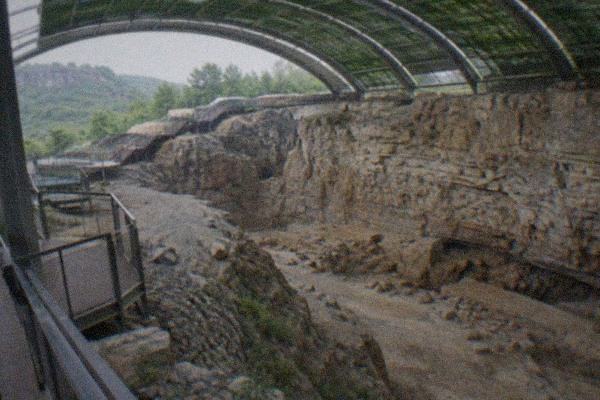
Adults visiting without children should calibrate expectations: the museum is genuinely interesting on the ancient-technology floor and the space and energy exhibits, but it is not a quiet museum. If your Beijing itinerary leans toward imperial history, the The Palace Museum (Forbidden City) is the opposite end of the spectrum, and the two make a good contrast across two days. If science is the theme of your trip, the Beijing Planetarium in Xicheng covers astronomy with its own ticketed theatre sessions, and the Zhoukoudian Peking Man Site Museum in Fangshan takes the science theme to the archaeological side, at the cave system where Peking Man fossils were found.
Within Chaoyang itself, the museum anchors the Olympic Green's cultural cluster, and there is enough in the immediate precinct for a full day without travelling further afield. The one hard constraint is the calendar: closed Mondays, reservations opening 7 days ahead at 18:00, and separate tickets for every area beyond the main hall. Get those three facts right and the museum is one of the easiest big venues in Beijing to enjoy; get them wrong and the most common outcomes are a locked door on a Monday or a sold-out weekend session booked six days too late.
Questions People Ask
How much does the China Science and Technology Museum cost?
General admission to the main exhibition hall is CNY 30 at the door. The Children's Science Paradise and all special-format cinemas are ticketed separately by session, so a family visit usually means more than one purchase. A third-party booking product is available from $21 USD, which is a separate transaction from the door price.
Do I need a reservation to visit?
Yes. A real-name reservation is required, and the booking window opens 7 days ahead of your visit date at 18:00 Beijing time. Pre-sale quantities are limited and stop once the allocation is exhausted, so weekend sessions, especially in the Children's Science Paradise, can sell out on the day they release.
When is the museum closed?
The museum closes on Mondays, except when a statutory holiday falls on a Monday. The visiting week is therefore Tuesday through Sunday. This matters for planning an Olympic Green day, because the surrounding park and stadium exteriors are open daily and can draw visitors to a museum that is shut.
How long should I allow for a visit?
Allow at least half a day for the main exhibition hall, which has four themed floors. A full day is realistic if you add the Children's Science Paradise, which runs a morning session from 9:30 to 12:50 and an afternoon session from 13:40 to 17:00, or any of the separately ticketed cinema sessions.
Is the Children's Science Paradise included in the main ticket?
No. The Children's Science Paradise is a separate ticketed area for children aged three to eight with a parent, sold by session, with a morning session from 9:30 to 12:50 and an afternoon session from 13:40 to 17:00. Each session requires its own ticket and its own reservation.
Can children or seniors enter free?
The museum's published policies give free admission to specific groups, including young children accompanied by an adult, seniors aged 60 and above, and visitors with disabilities. Free does not mean unreserved: eligible visitors must still reserve a free ticket and show identification on arrival.
Where is the museum and how do I get there?
The museum is at 5 Beichen East Road in Chaoyang District, on the north side of the Olympic Green. The Beijing Subway is the practical way in, with network and station information at bjsubway.com, and the surrounding precinct is flat and walkable, pairing easily with the National Stadium and the Olympic Forest Park.
Is this a good museum for adults without children?
It can be, with the right expectations. The ancient-technology floor and the space and energy exhibits reward adult attention, but the museum is an interactive science centre, not a quiet gallery. Adults with an interest in artefacts rather than demonstrations may prefer the Forbidden City, while astronomy fans can pair it with the Beijing Planetarium.
Other Science Museums Worth A Look
Zhoukoudian Peking Man Site Museum
Fangshan
from $13 per person, live price on the listing Check availability →