China Science and Technology Museum
Chaoyang
from $21 per person, live price on the listing Check availability →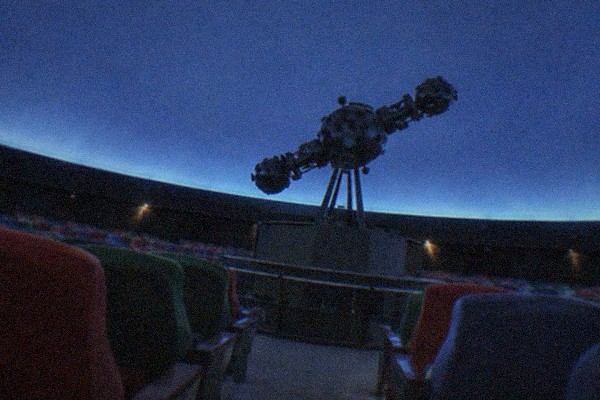
from $11 per person, live price on the listing
Check Price & Availability →Opens the official listing with live dates and prices. Book there; nothing is charged on this site.
Under a dome in Xicheng District, the Beijing Planetarium projects a night sky that downtown Beijing rarely shows on its own. The venue sits at 138 Xizhimenwai Street, in the dense museum corridor west of Xizhimen, and its business is the sky: domed theater sessions, exhibition halls on astronomy and space science, and a program that changes by season. It is a paid, ticketed venue, not a free walk-in, and its dome seats are sold session by session. That single fact shapes every part of a visit here, from how far ahead you book to how long you stand at the door. This guide covers the reservation window, the closed day, the subway approach and what to pair with a visit.
The Beijing Planetarium is a dedicated astronomy museum in Xicheng District, at 138 Xizhimenwai Street, built around domed theaters that screen star shows and space films alongside permanent exhibition halls. It is a paid venue, closed on Tuesdays except holidays, and it sits in one of the most museum-dense corners of central Beijing, a short walk from the Beijing Zoo and the Paleozoological Museum of China.
The core of a visit is the theater program. Shows run in timed sessions throughout the day, each one ticketed separately, and the daily schedule is what most visitors are actually buying into when they reserve. Around the theaters sit exhibition spaces on astronomy and space science, which are ticketed on their own terms rather than bundled automatically with every show. The mix means two visitors can have very different experiences on the same afternoon: one who books a dome session and one who only walks the halls.
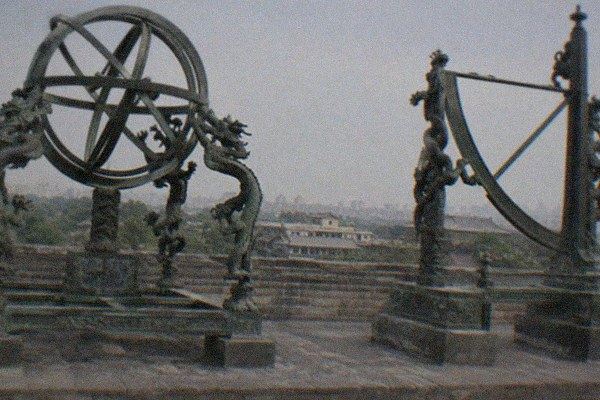
The planetarium also runs the Beijing Ancient Observatory at Jianguomen, the historic Ming and Qing instrument platform by the Second Ring Road, so the institution covers both the modern sky and the ancient one. Its own visitor and ticketing notices are published on its official channel at https://www.bjp.org.cn/cgzn/pwxx/index.shtml, which carries an English version alongside the Chinese pages, useful for checking the current show schedule before you commit to a date.
Thematically, the venue belongs with Beijing's science-nature cluster rather than its imperial palaces. If your trip is built around technology and natural history, it pairs naturally with the China Science and Technology Museum in Chaoyang, which covers a much broader sweep of engineering and physics, and with the Zhoukoudian Peking Man Site Museum if your interests run toward deep time rather than deep space.
Tickets are paid and split into two transactions: the exhibition halls and the dome theaters are ticketed separately, with each theater session sold on its own seat count. A booking-service product for entry starts at USD 11, while the venue's own CNY prices are set per hall and per show. Individual tickets open for reservation up to 5 days ahead and groups 3 days ahead, under daily quotas.
The practical consequence of the split is that you should decide before booking whether you want the halls, a dome show, or both. A halls-only ticket leaves you free to move at your own pace; a theater ticket locks you to a session time, so the rest of the visit has to be planned around it. Most first-time visitors do a theater session first, then the exhibition floors, because sessions can fill and the halls stay open continuously.
The from-price of USD 11 covers a booking service that handles the reservation for you; it is not the planetarium's own box-office price, and the two should never be confused. The booking service exists because the official channel requires a real-name reservation with daily quotas, which is friction for visitors without a Chinese phone number or payment setup. Check availability for your date before you build the rest of your day around a session, since a sold-out evening show changes the plan entirely.
| Item | Detail |
|---|---|
| Booking-service product (from) | USD 11 |
| Exhibition halls | Ticketed separately from the theaters |
| Dome theaters | Sold by session, limited seats per show |
| Individual booking window | Up to 5 days ahead |
| Group booking window | 3 days ahead |
| Daily quota | Yes, limited tickets released each day |
| Closed day | Tuesday, except holidays |
One warning worth repeating: do not plan a Tuesday visit. The planetarium closes on Tuesdays except public holidays, the opposite of the Monday pattern most Beijing visitors assume, and the museum corridor around Xizhimenwai Street follows the same Tuesday rhythm, so a Tuesday arrival can leave you standing in front of several locked doors in a row.
Yes, a reservation is required. Individual tickets can be reserved up to 5 days ahead of the visit date, and group bookings open 3 days ahead, with daily quotas limiting how many tickets are released each day. The time of day at which new slots release is not published, so the reliable strategy is to book on the first day the window opens for your date and treat popular sessions as first-come.
The 5-day window is short by Beijing standards. The Forbidden City opens 7 days ahead, Prince Gong's Mansion 10 days, and several free national museums 7 days, so visitors who learn those rhythms first often underestimate how quickly the planetarium's window arrives. If your trip is fixed, mark the calendar five days out and reserve that morning rather than waiting, because the daily quota is the constraint, not the calendar itself.
Groups get a tighter 3-day window, which matters for schools and tour parties more than for families. A family of five books as individuals under the 5-day rule; a coach party books as a group under the 3-day rule. The distinction is worth confirming when you book, because a group reservation made outside its window can simply fail.
The reservation runs through the planetarium's official channels, and the current ticketing notices, including any changes to quotas and session schedules, are published at https://www.bjp.org.cn/cgzn/pwxx/index.shtml. The site carries an English version, which is the right place to verify the show lineup for your date, since the theater program changes seasonally and a specific dome show is often the reason a visitor chose the venue at all.
For visitors who cannot work the official channel, the booking service described in the ticket section above exists precisely for this gap: it makes the real-name reservation on your behalf and you carry the matching identification on the day. Either route ends at the same door; what differs is who types the details into the system.
The planetarium sits at 138 Xizhimenwai Street in Xicheng District, directly served by the Xizhimen transport hub, where Metro Lines 2, 4 and 13 converge, with Beijing Zoo station on Line 4 also within easy walking distance. Arriving by Metro is the default choice: the address is on a busy multi-lane street where driving adds time rather than saving it, and the surrounding blocks are among the most walkable in the district.
From Xizhimen station, the planetarium is a short walk along Xizhimenwai Street, and the route is flat, signposted and busy at most hours. Line 4 is the most useful single line for visitors, because it stops at both Xizhimen and Beijing Zoo and connects through to the National Library station to the north; Line 2 brings the loop around the old city wall, and Line 13 arrives from the northwest suburbs. Current line maps, station exits and fare rules are published by the operator at https://www.bjsubway.com/, worth a look before a first Metro trip in the city.
By car or taxi, the destination is straightforward but the last stretch is not: Xizhimenwai Street carries heavy zoo-bound traffic on weekends and holidays, and the immediate blocks around the planetarium and zoo fill early. Allow more time than the map suggests on a Saturday, and treat any parking search near the zoo entrance as part of the journey rather than a five-minute errand. A drop-off one or two blocks away, finishing on foot, is usually faster than circling the door.
The same corridor works as a walking itinerary. The Paleozoological Museum of China stands at 142 Xizhimenwai Street, effectively across the street, and the Beijing Zoo spreads out behind it, so a single Line 4 journey can anchor a full day of science and nature without another Metro ride in between.
Allow two to three hours for a visit built around one dome theater session plus the exhibition halls, and closer to half a day if you add a second show or walk over to the Paleozoological Museum across the street. The theater session fixes your clock: arrive early enough to collect tickets and clear security before the session time, then let the halls fill the remaining gap.
The sequence that works for most visitors is theater first, halls second. Sessions start on a fixed schedule, the halls do not, and a session you miss is a session you miss. If your reservation is for an afternoon show, the morning can absorb the exhibition floors at an unhurried pace, lunch on Xizhimenwai Street, and a short walk to the zoo fence line before returning for the dome.
With children, the reverse logic applies to stamina rather than to clocks: the halls give them room to move and touch before they are asked to sit still in a darkened dome for the length of a show. Budget the halls generously, treat the session as the finale, and keep the group small enough that a bathroom stop does not threaten the session time.
Timing against the week matters as much as timing within the day. Weekends and school holidays push the daily quota harder, and Tuesdays close the venue entirely except on public holidays. A weekday morning, reserved on the first day the 5-day window opens, is the calm version of this museum; a holiday weekend is the crowded version, and the difference is large enough to plan around rather than endure.
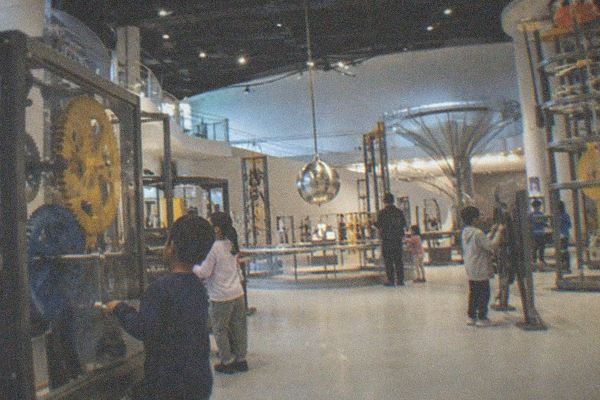
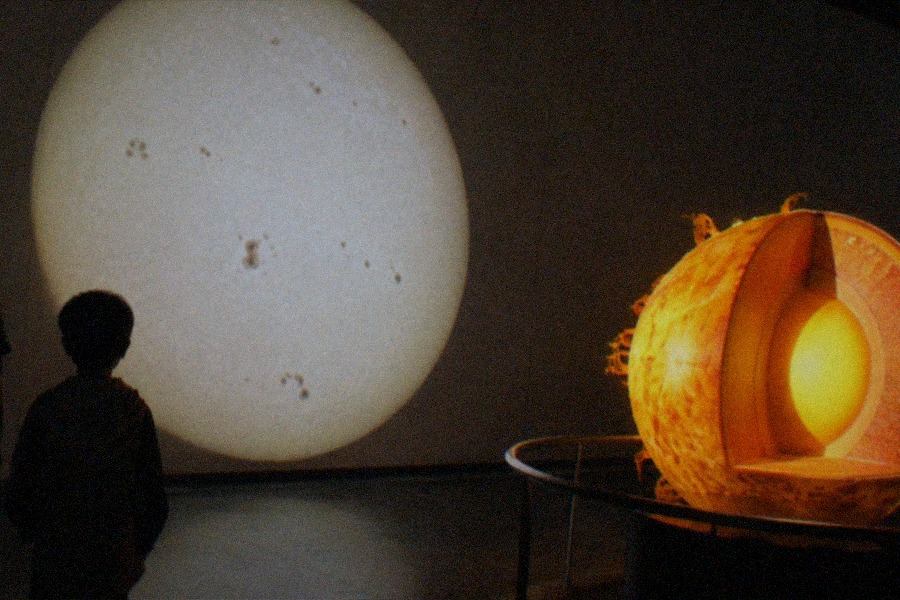
For a science-themed day that leaves Xicheng, the China Science and Technology Museum in the Olympic Green area makes a strong second stop on a different day, with its own theater complex and much larger floor space. Trying to do both on the same day is possible on paper and exhausting in practice.
The planetarium suits families with school-age children, astronomy enthusiasts, and any visitor who wants a half-day science stop in central Beijing; it suits less well anyone expecting a general museum or a full-day destination on its own. Its strongest pairing is the Paleozoological Museum of China at 142 Xizhimenwai Street, effectively across the street, followed by the Beijing Zoo behind it and the Beijing Ancient Observatory at Jianguomen, which the planetarium itself operates.
The Ancient Observatory deserves the mention even though it is a Metro ride away, because it completes the story the planetarium tells. The Ming and Qing astronomers who worked at Jianguomen measured the same sky the dome theaters now project, and the observatory's instrument platform survives with its historic instruments on display. It is a paid venue at CNY 20, closes on Tuesdays like the planetarium except national holidays, and its tickets open for reservation up to 5 days ahead through the planetarium's own channels, so the two can be booked in the same sitting.
Visitors building a broader Xicheng day can also head to Prince Gong's Mansion by the Shichahai lakes, a Qing princely residence with gardens, which trades astronomy for imperial architecture and gives the district its historical counterweight. For paleontology rather than astronomy, the Zhoukoudian Peking Man Site Museum is the deeper excursion, out in Fangshan, best saved for a day with nothing else on it.
| At A Glance | Detail |
|---|---|
| Area | Xicheng District |
| Address | 138 Xizhimenwai Street, Xicheng District, Beijing |
| Closed day | Tuesday (except holidays) |
| Reservation required | Yes, real-name, daily quotas |
| Booking window | 5 days ahead for individuals, 3 days for groups |
| Nearest subway | Xizhimen (Lines 2, 4, 13); Beijing Zoo (Line 4) within walking distance |
| How long to allow | 2 to 3 hours, half a day with a paired museum |
The honest summary of the venue's appeal is that it does one thing well rather than many things adequately. A dome session under a projected sky, a walk through the halls, and a short stroll to the fossils across the street make a complete and satisfying morning in a part of Beijing that handles visitors easily, provided the reservation was made when the window opened and the day is not a Tuesday.
No. It is a paid venue, unlike many of Beijing's state museums. The exhibition halls and the dome theaters are ticketed separately, and each theater session is sold on its own limited seat count. A booking service for entry starts at the from-price shown in the ticket panel above, which is a separate transaction from the venue's own box-office prices.
Yes. A real-name reservation is required, with daily quotas limiting how many tickets are released each day. Individual tickets can be reserved up to 5 days ahead of the visit date, and group bookings open 3 days ahead. The time of day at which new slots release is not published, so booking on the first day the window opens is the reliable approach.
Tuesday, except on public holidays. This is the opposite of the Monday closure most Beijing visitors expect, and it matters doubly here because the surrounding corridor follows the same rhythm: the Paleozoological Museum across the street and the Beijing Ancient Observatory at Jianguomen also close on Tuesdays, so a Tuesday visit can strand you in front of several locked doors.
The venue prices its exhibition halls and dome theaters separately, with each theater session ticketed on its own. A booking-service product for entry starts at USD 11; that is a reservation service price in dollars, not the planetarium's own CNY box-office price, and the two transactions should never be confused with each other.
Take Metro Line 2, 4 or 13 to Xizhimen station, where the three lines converge at the Xizhimen transport hub; the planetarium at 138 Xizhimenwai Street is a short, flat walk from the station. Beijing Zoo station on Line 4 is also within easy walking distance, which is convenient if you are pairing the visit with the zoo or the museum across the street.
Plan on two to three hours for one dome theater session plus the exhibition halls, and closer to half a day if you add a second show or cross the street to the Paleozoological Museum of China. The theater session fixes your clock, so arrive early enough to collect tickets and clear security before the session time.
Yes, it is one of Beijing's most family-friendly venues, and school holidays are its busiest periods. With younger children, do the exhibition halls first, where they can move freely, and save the dome session for after, since a show asks them to sit still in the dark for its full length. Weekend and holiday dates push the daily quota hardest, so reserve early.
The Paleozoological Museum of China at 142 Xizhimenwai Street is effectively across the street and makes the easiest pairing. The Beijing Zoo spreads out behind it. Farther afield, the planetarium also operates the Beijing Ancient Observatory at Jianguomen, a paid historic site that closes Tuesdays and books up to 5 days ahead through the planetarium's own channels.
Chaoyang
from $21 per person, live price on the listing Check availability →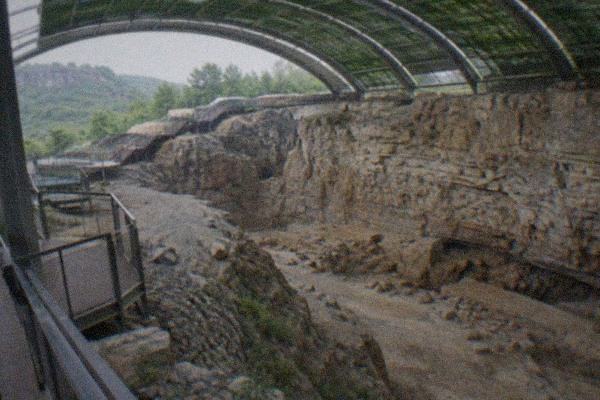
Fangshan
from $13 per person, live price on the listing Check availability →