Is The National Art Museum Of China Really Free?
Yes, general admission to the National Art Museum of China is free, but it requires an advance real-name reservation that opens 7 days ahead at 16:00. Here is exactly how the system works.
Is The National Art Museum Of China Really Free?
Yes, the general admission price is genuinely zero. The National Art Museum of China charges nothing for its permanent collection and most exhibitions. The catch is procedural rather than financial: entry runs on a real-name reservation system that opens 7 days ahead at 16:00 Beijing time, the daily quota is capped at roughly 6,000, and the museum closes Mondays except statutory holidays. Free and walk-in are two different things here.
The museum sits at No. 1 Wusi Street in Dongcheng, a short walk east of the Forbidden City's north edge and just north of the National Art Museum subway station. It is one of the largest art museums in China, holding a permanent collection heavy on modern and contemporary Chinese painting, calligraphy, prints, sculpture and folk art. For a visitor building a Beijing itinerary, it is one of the best value stops in the city, provided the reservation gets made in time.
That provision is where trips go wrong. Beijing's museum scene has a pattern that surprises almost every first-time visitor: the price is rarely the barrier, the booking window is. Across the 31 major museums and heritage venues this site covers, 22 require an advance real-name reservation and only 6 take genuine walk-ups. The National Art Museum of China sits firmly in the reserved majority, and its quota can run dry on weekends and holiday periods even though the ticket itself costs nothing.
If your Beijing plan leans on imperial sites rather than galleries, a different set of booking windows applies, and those do carry prices.
The three venues above are the ones most often paired with an art museum day in Dongcheng, because all three sit within a few kilometers of Wusi Street. Each has its own reservation rhythm: the Forbidden City opens 7 days ahead at 20:00, the Summer Palace requires a reservation with no published release window, and the Lama Temple opens 7 days ahead. Planning the week around these release times, rather than around opening hours, is what separates a smooth trip from a disappointed one.
How Do You Actually Book A Free Ticket?
You reserve through the museum's own official channels: its website, its WeChat service account, or its WeChat mini-program, starting 7 days before your visit at 16:00 Beijing time. Each reservation is tied to one named person with a valid ID, and a foreign passport is accepted for the real-name registration. There is no payment step, and the reservation is presented with the matching ID at the entrance.
The booking window is the part worth memorizing. Slots release at 16:00, seven days ahead, which means a visitor planning a Saturday visit needs to be ready on the preceding Saturday afternoon, Beijing time. The museum publishes its visiting guidance on its official reservation notice, and the reservation channel itself runs through the museum's site and WeChat presence rather than any third-party seller. For travelers already inside China's digital ecosystem this takes a few minutes. For everyone else it takes a little preparation: the passport is the ID document, and the name on the reservation must match it exactly.
A practical note on timing. Afternoon release slots mean that travelers in Europe or North America are asleep when the window opens, which matters mostly during Chinese public holidays, summer weekends, and the weeks around major temporary exhibitions. On ordinary weekdays the quota is generous relative to demand, and same-week bookings usually succeed. During Golden Week or a blockbuster exhibition opening, the calculus changes completely, and booking at the moment of release becomes the difference between getting in and standing outside.
One more detail worth knowing: each ID can hold one reservation per day, so a family or group needs each member booked individually rather than one booking covering everyone. That sounds bureaucratic, and it is, but it also means a cancellation frees exactly one slot, which is why checking back for released slots genuinely works. Keep the confirmation accessible on your phone, since the entrance check is digital, and carry the original passport rather than a photocopy or a photo of it.
The same logic applies to the paid imperial sites nearby, and this is where a booking service earns its fee: the reservation is made under your passport details, confirmation follows when the official window opens, and if the official quota sells out first the order is refunded.
For visitors who want the gallery morning and an imperial afternoon, the pairing that works best is the National Art Museum of China in the morning followed by a reserved slot elsewhere after lunch. The museum is a two-to-three-hour stop for most people, and Wusi Street puts you within reach of several alternatives. If the Summer Palace is your afternoon, its inner halls such as the Tower of Buddhist Incense close on Mondays except public holidays, so the day of the week matters as much as the booking. The broader booking mechanics for every museum in the city are laid out in the guide to booking Beijing museum tickets, and the free venues are compared in the free museums in Beijing guide.
What Happens If The Daily Quota Runs Out?
When the day's quota is exhausted, the museum simply stops admitting visitors, because there is no walk-in channel at all. There are no same-day tickets to buy, no standby line, and no door price that unlocks entry. The only options are to book a different day, keep watch for released slots from cancellations, or pivot to one of the six Beijing venues that genuinely take walk-ups.
This is the failure mode nobody warns you about. A traveler standing outside a paid attraction can usually buy a ticket at some price, even if it is an expensive one. A traveler standing outside a free Beijing museum with no reservation has nothing to purchase, because the free price is attached to a reserved slot rather than to a door transaction. The museum does not sell entry, it allocates it. That distinction is the single most important sentence in this article for anyone planning a tight itinerary.
The workable fallbacks, in order of reliability: rebook for the next available day first, since midweek slots often remain; watch the mini-program for cancellation releases, which happen irregularly but do happen; and if the itinerary is fixed, switch to a walk-up venue. The genuine walk-up options in central Beijing include the Capital Museum, which is free with ID-based entry and closed Tuesdays, and the Guanfu Museum, which admits same-day visitors at its full door price of CNY 100. The Capital Museum's strengths as a visit are covered separately, and it makes a strong substitute for an art-focused day, since its own collection leans on Beijing history and classical Chinese artifacts.
The comparison table below shows how differently the free museums in this city handle the same problem:
| Free museum | Reservation | Window | Closed day |
|---|---|---|---|
| National Art Museum of China | Required, real-name | 7 days ahead at 16:00 | Monday except statutory holidays |
| National Museum of China | Required, real-name | 7 days ahead at 17:00 | Monday except statutory holidays |
| Capital Museum | Not required, ID at door | Walk-up | Tuesday |
| National Natural History Museum of China | Required, real-name | 3 days ahead at 11:00 | Monday except statutory holidays |
| China National Film Museum | Required | Window not published | Monday except holidays |
| Beijing Grand Canal Museum | Not required | Walk-up | Monday except national holidays |
Two patterns jump out. First, four of the six free venues still require a reservation, so free never implies casual. Second, the closed days differ: the Capital Museum closes Tuesday while nearly everything else closes Monday, which makes Tuesday the natural fallback day for anything missed on a Monday, and vice versa. The museums open on Monday are a short but useful list, and every itinerary should be built around it.
What Is Actually Inside, And Is It Worth The Booking Effort?
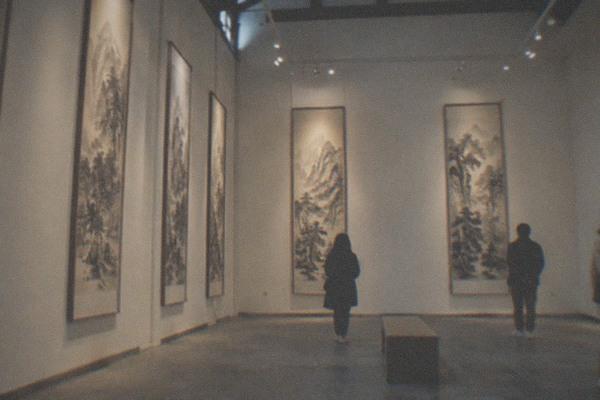
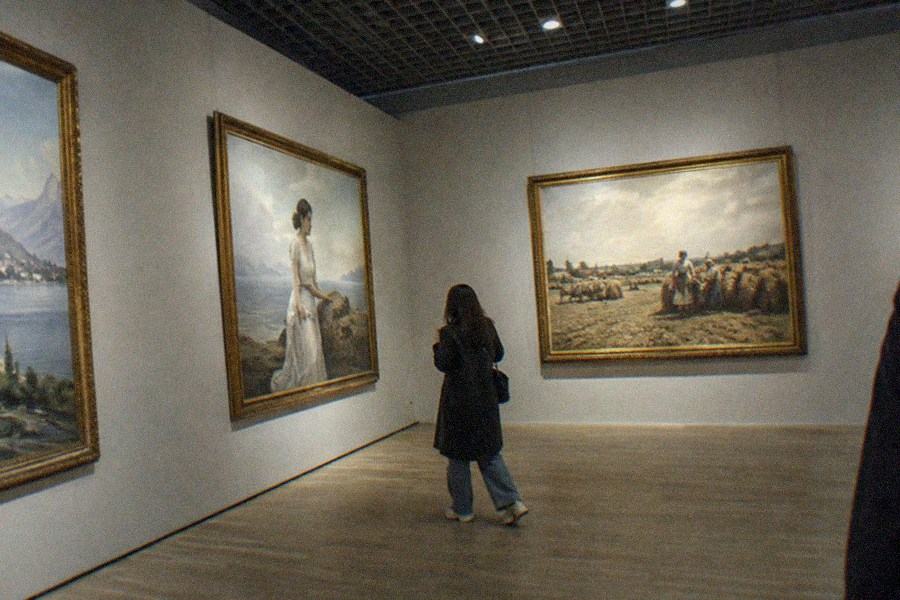
The permanent collection centers on modern and contemporary Chinese art: ink painting, calligraphy, oil painting, prints, sculpture, New Year pictures and folk art, with rotating temporary exhibitions that regularly draw larger crowds than the permanent galleries. Most visitors spend two to three hours. For anyone with even a passing interest in Chinese painting, it is one of the highest-value free visits in the capital.
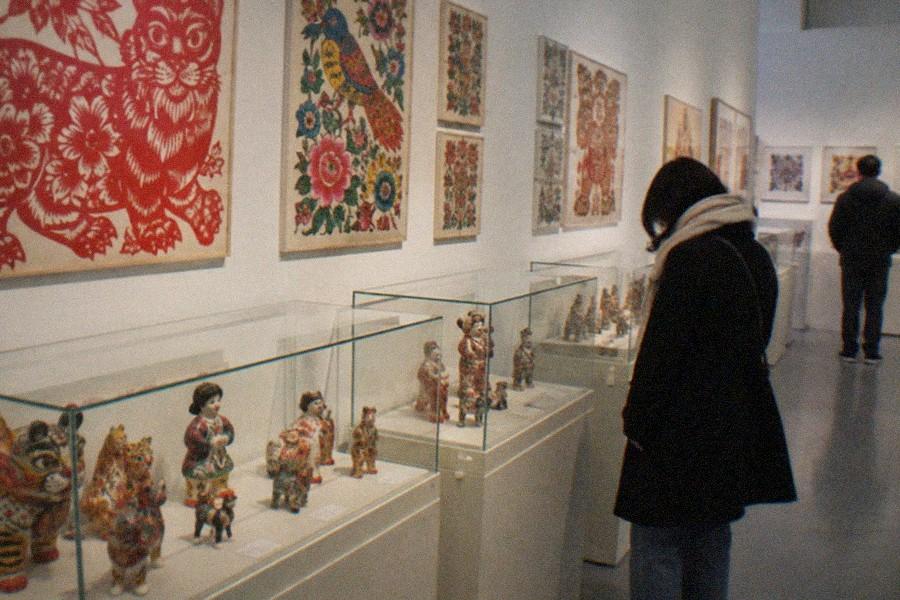
The museum's strength is the century of Chinese art from roughly the late Qing onward. The ink painting and calligraphy holdings are the core: works by the major modern masters hang in rotation, and the galleries are arranged so that a visitor with no background in the subject can follow the shift from literati traditions to the revolutionary-era and contemporary work that followed. The print collection is among the best in the country, and the folk art galleries, including New Year pictures and paper cuts, give a counterweight to the fine-art rooms that many visitors find the most memorable part. More of these guides are collected on Beijing Museums.
Temporary exhibitions are the wildcard. The museum hosts loan exhibitions from other Chinese institutions and from abroad, and a major opening can fill the daily quota within hours of release. The museum's official site lists the current exhibition schedule, and checking it before choosing a visit date is the single most useful piece of preparation, because an ordinary Tuesday with the permanent collection and an opening weekend are entirely different visits. The Beijing municipal government's own English-language museum pages carry useful context on the city's museum landscape as a whole.
One honest caveat about the building itself. The galleries are large, well-lit and functional, but this is a working national museum rather than a destination architecture piece, and the immediate neighborhood, for all its history, is a busy commercial stretch. Come for the collection, not for the setting, and the collection repays the effort. Photography rules vary by gallery, with loan exhibitions often restricting it entirely, so assume no flash and check the signage in each room before raising a camera.
What About Monday, And How Do You Get There?
The museum is closed on Mondays except statutory holidays, the standard pattern for Chinese national museums, and it is the single most expensive planning mistake to get wrong in Beijing. The nearest subway station is the National Art Museum station, named for the venue, and the museum sits at No. 1 Wusi Street in Dongcheng. Arrive with the passport used for the reservation, because the name and document must match at the door.
The Monday rule deserves its own sentence in every itinerary. Statutory holidays override it, so a Monday during Golden Week may well be open, but on an ordinary Monday the doors stay shut and the reservation system offers nothing. Check the holiday calendar before assuming an exception, because the exceptions cluster around the national holiday schedule rather than around any local pattern. The museum's own visiting guidance, published on its official visiting page, is the authoritative statement of the current arrangement.
Getting there is simple. The National Art Museum subway station serves the museum directly, and the walk from the station exit to the entrance takes only a few minutes. The location is genuinely central: the Forbidden City's north gate, the Lama Temple, the Confucius Temple and Guozijian, and the Shichahai lake district all sit within a short ride or a longer walk, which makes the museum easy to fold into a Dongcheng day. Visitors combining it with the Forbidden City should remember that the Forbidden City requires its own reservation, opening 7 days ahead at 20:00, and it is closed Mondays too, so the two do not make a natural Monday pair.
For a fuller sense of how the Dongcheng sites cluster together, the 3-day Beijing museum itinerary sequences them into a workable order, and the map of Beijing's museums shows how tight the central cluster really is. On a rainy or freezing day, the museum also ranks high among the indoor options for cold and rainy days, since the galleries are fully enclosed and the subway ride is short.
Is There A Free Walking Tour Near The Museum?
Yes, and it is one of the best-matched walks in the city. The immersive street food walk meets at the National Art Museum station, Exit B, the northeast entrance, and runs about two and a half hours through markets and snack streets starting right outside the museum's own subway stop. It is a pay-what-you-want walk: you book a free slot and tip the guide at the end.
The walk is the Immersive Street Food Tour on GuruWalk, and the wider selection of English-language walks is listed on the Beijing hub page. The route passes the Zhaojunsheng vegetable market, a well-known coffee stop, and the original Daoxiangcun store, the bakery chain Beijing locals treat as an institution. Because the meeting point is the museum's own station exit, the practical sequence is obvious: reserve the gallery for the morning, exit onto Wusi Street, and meet the walk at Exit B when it begins.
The pay-what-you-want model deserves a plain explanation, because the phrase free tour misleads people. You reserve a place at no charge, the guide runs the walk regardless, and at the end you hand over whatever you think the two and a half hours were worth. Guides work for those tips, so the walks skew energetic and personal. For a visitor who has just spent a free morning in a national gallery, the symmetry is appealing: two of the best experiences in Dongcheng cost nothing up front.
Not every venue in the city has walk coverage, and it is worth being direct about that. The walks that exist cluster around the imperial axis, the hutongs north of the Forbidden City, and the food streets of Dongcheng and Xicheng. If your day is built around a museum outside those corridors, plan the transport yourself rather than assuming a guided option exists.
How Does The Free Museum Compare With The Paid Imperial Sites?
In pure value terms the comparison is not close: the National Art Museum of China costs nothing and delivers a world-class collection, while the paid imperial sites charge between CNY 25 and CNY 60 at the door and deliver architecture, gardens and history that paintings cannot substitute for. They are complements, not competitors. A visitor with three days should do both.
The paid sites around it are worth naming plainly. The Forbidden City charges CNY 60 at the door in peak season, CNY 40 off-peak, and its reservation opens 7 days ahead at 20:00. The Lama Temple charges CNY 25 and opens 7 days ahead. The Summer Palace charges CNY 30 at the door, and its reservation window is required but not published, which makes it the least predictable of the three to plan. The Summer Palace product this site carries is a reservation service priced from $14, rated 4.7 across 1,144 reviews, and its inner halls close Monday except public holidays, while the park itself stays open daily.
The one trap in mixing free and paid venues is assuming the free ones are easier. They are not. The National Museum of China, free and magnificent, opens its window 7 days ahead at 17:00 and its quota is among the first to vanish on holiday weekends, a pattern discussed in whether the National Museum of China is really free. The National Art Museum of China, free and less internationally famous, is easier on ordinary weeks but tightens around exhibitions. The paid sites at least reward effort with a guaranteed product: once the reservation exists, the visit exists.
So the honest answer to the page's question is a two-part one. The museum is free in the sense that matters, no payment for general admission, and it is demanding in the sense that surprises people, a real-name reservation seven days out, a capped quota, and a Monday closure. Prepare for the second part and the first part feels like a gift. Skip the preparation and the free ticket is exactly as unavailable as an expensive one.
Common Questions About The National Art Museum Of China
Is The National Art Museum Of China Really Free?
Yes. General admission to the permanent collection and most exhibitions costs nothing. Entry requires a free real-name reservation made 7 days ahead at 16:00 Beijing time, and the museum closes Mondays except statutory holidays.
Do foreigners need a Chinese ID to reserve?
No. A foreign passport is accepted for the real-name registration. The name on the reservation must match the passport exactly, and the same passport is presented at the entrance on the day of the visit.
Can you walk in without a reservation?
No. There is no walk-up channel and no same-day ticket to buy. When the daily quota of roughly 6,000 is exhausted, the only options are another day, a cancellation release, or a different venue.
How much time should you spend there?
Most visitors spend two to three hours. The permanent collection alone fills that comfortably, and a major temporary exhibition can extend the visit, which is why checking the exhibition schedule before booking matters.
Which day is the museum closed?
Monday, except statutory holidays. This follows the standard Chinese national museum pattern, so check the national holiday calendar before assuming a Monday exception.
What is the nearest subway station?
The National Art Museum station, which is named for the venue. The museum is at No. 1 Wusi Street in Dongcheng, a few minutes' walk from the station exit.