Confucius Temple And Imperial College Museum Tickets
from $12 per person, live price on the listing
Check Price & Availability →Opens the official listing with live dates and prices. Book there; nothing is charged on this site.
- Area
- Dongcheng
- Theme
- History & culture
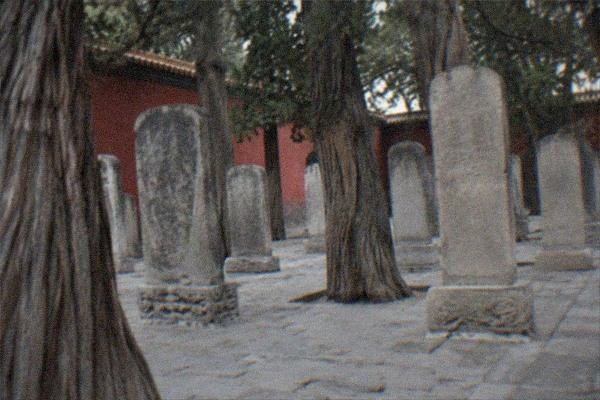
Two institutions share one walled compound on Guozijian Street: the Confucius Temple, where emperors paid homage to China's greatest teacher, and the Imperial College (Guozijian), the highest seat of learning in the Ming and Qing empires. Inside the temple courtyard, stone steles carved with the names of more than fifty thousand jinshi degree holders stand row after row, a literal monument to the examination system that shaped Chinese society for centuries. Next door, the Biyong, a circular hall ringed by water where the emperor himself lectured, sits at the heart of the academy. This is one of Beijing's quietest major heritage sites, a short walk from the Lama Temple, and it rewards visitors who understand its reservation rules before they arrive.
What Is The Confucius Temple And Imperial College Museum?
The Confucius Temple and Imperial College Museum is a single museum spread across two adjoining walled compounds at 15 Guozijian Street in Dongcheng District: a Yuan-dynasty Confucian temple and the Guozijian, the imperial academy that served as the highest educational institution in China from the 14th century until 1905. Adult admission is CNY 30 at the door, and entry requires a timed reservation made at least one day ahead.
The pairing is deliberate and ancient. In imperial China, the temple and the academy were always built together: students worshipped the master whose texts they studied, and the state used both to project its vision of learning and loyalty. Beijing's version was established under the Yuan dynasty and expanded repeatedly under the Ming and Qing, so what you walk through today is a layered record of more than six centuries of state-sponsored scholarship.
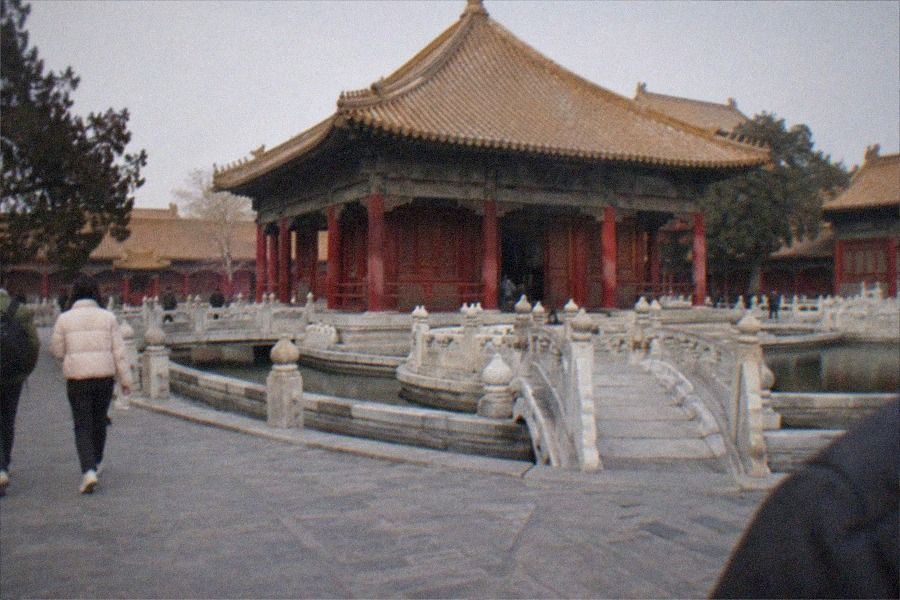
The temple compound holds the Great Cheng Hall, the main sanctuary where ceremonies honouring Confucius were performed, along with spirit tablets and ritual spaces arranged according to strict Confucian order. The most affecting detail for most visitors is the forest of steles: carved tablets listing the names, home counties and examination years of the men who passed the highest imperial examinations. Finding a surname from your own family tree, or simply reading the counties, connects the abstract history of the examination system to real individuals.
The Guozijian side is organised around the Biyong, a square platform surrounded by a circular moat and crowned with a glazed-tile hall. This was the symbolic centre of Chinese learning, where the emperor came to deliver lectures to assembled scholars. The surrounding halls now hold exhibitions on the history of the academy, the examination system, and classical Chinese education.
The museum publishes its visitor information in both Chinese and English on its official website, which is the right place to confirm current exhibitions and any temporary changes before you set out.
How Much Do Tickets Cost?
Standard adult admission is CNY 30, paid at the venue. A third-party booking option is also available from US$12, which bundles the reservation process with English-language support. Entry is not free, and there is no walk-up alternative to the reservation requirement: every visitor needs a timed slot booked at least one day ahead, regardless of how they pay.
The two prices belong to two different transactions and should not be confused. The CNY 30 figure is the museum's own admission price, what you pay at the door once your reservation is in place. The US$12 figure is what a third-party reservation service charges, in dollars, for handling the booking under your passport details and providing support in English. Neither price converts into the other.
| Item | Details |
|---|---|
| Adult admission (at the venue) | CNY 30 |
| Third-party booking option | From US$12 |
| Free entry | No |
| Reservation | Required, at least 1 day ahead, timed slots |
| Same-day tickets | No |
Because the reservation is mandatory and timed, the practical question is less about money and more about logistics. If you are comfortable booking through Chinese-language channels and can complete the process yourself, the door price is the cheaper route. If you would rather have someone else handle the real-name booking and confirm your slot, the paid option above does that; check availability in the booking panel at the top of this page.
Visitors planning several paid heritage sites across a week should also know that the Beijing Museum Pass exists: the 2026 edition covers roughly 140 venues at CNY 120 and admits two people across the year. Whether this museum participates in the current edition is worth confirming with the pass publisher before relying on it for this specific visit.
Do You Need A Reservation To Visit?
Yes. A timed reservation is required for every visitor, and it must be made at least one day in advance of your visit. There is no same-day booking and no walk-up entry. The exact time of day at which slots are released is not published by the museum, so plan around the one-day minimum rather than a release hour.
This makes the museum part of the pattern that governs most of Beijing's major cultural venues: 22 of the 31 major museums and heritage sites in the city require an advance real-name reservation, and only six take genuine walk-ups. The Confucius Temple and Imperial College Museum sits in the reserved majority, though its one-day window is far shorter than the seven-day windows used by the Palace Museum (Forbidden City) or the ten-day window at Prince Gong's Mansion.
The short window cuts both ways. It means you can decide to visit relatively late in your trip, without locking in a date a week ahead. It also means you cannot decide on the morning itself: by the time you want to go, the earliest bookable day is tomorrow. Build the one-day buffer into your itinerary, especially around weekends and public holidays when timed slots fill first.
On the question of whether a foreign passport works in the museum's own reservation channel, the museum has not published a confirmed answer. Rather than guess, the honest position is this: the requirement is real, the window is one day, and if you are unsure whether your passport will be accepted in the official channel, the third-party booking option above exists precisely to handle real-name registration for foreign visitors.
One further planning note: the museum is closed on Mondays, except public holidays, a closure schedule that was restored in September 2025. Do not schedule a Tuesday visit assuming a Monday closure carried over, and do not assume a holiday Monday is closed. Check the calendar against the Chinese public holiday schedule when you book.
What Will You Actually See Inside?
Two compounds, three core sights: the Great Cheng Hall and the stele forest in the Confucius Temple, and the Biyong hall and its surrounding courtyard in the Imperial College. Exhibitions on the imperial examination system and the history of the Guozijian fill the side halls. Most visitors spend between one and two hours on the site, and the sequence temple-first, academy-second is the natural one.
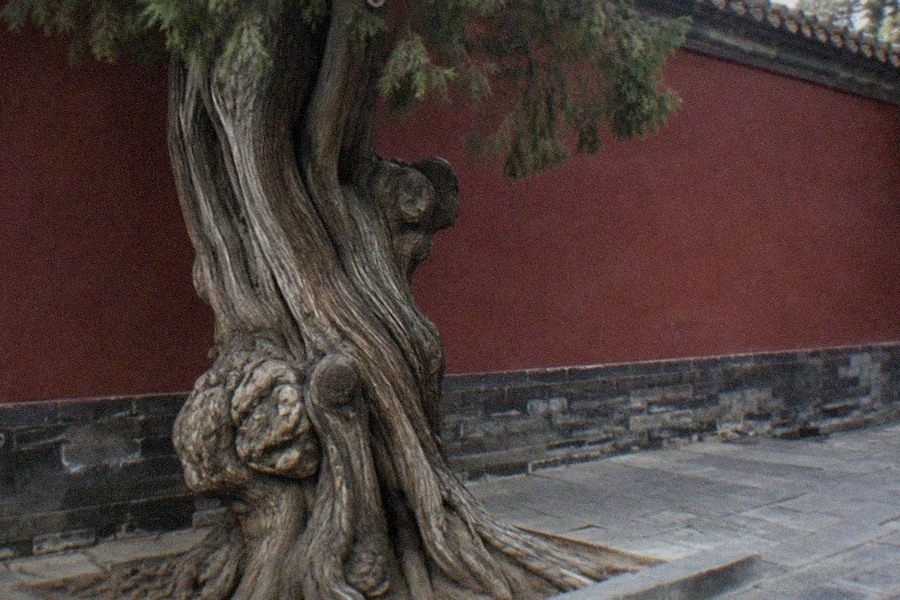
Enter through the temple gate on Guozijian Street and the first courtyard opens up with ancient cypresses, some of the oldest planted trees in central Beijing, shading the approach to the Great Cheng Hall. The hall itself is the ritual heart of the complex, holding the spirit tablet of Confucius at its centre, flanked by tablets honouring his disciples and later Confucian scholars. The arrangement follows the strict hierarchy of state ritual, and the museum's signage explains who sat where and why.
The stele forest is the site's most distinctive feature. These carved stone tablets record the jinshi, the men who passed the highest level of the imperial examinations, across multiple dynasties. Walking the rows, you read not a narrative of emperors but a census of scholarship: names, birthplaces, dates. The examination system that produced them was the primary route into officialdom for roughly thirteen centuries, and this is one of the few places where its human output is displayed so literally.
Cross to the Guozijian compound and the scale changes. The Biyong, with its circular moat and glazed-tile pavilion, was built so the emperor could perform the lecture rite in person, an event of enormous symbolic weight. The side halls around it now function as exhibition galleries, covering the founding of the academy, the mechanics of the examination system, and the daily life of the students who studied here.
Allow ninety minutes if you read the signage, two hours if you read everything and linger in the courtyards. The site is compact and flat, and the tree-shaded courtyards make it one of the more restful heritage visits in the city centre, a contrast to the crowds at the Forbidden City a short distance south.
How Do You Get There?
The museum is at 15 Guozijian Street, Dongcheng District, a short walk from the Lama Temple in central Beijing. The street itself is a preserved hutong, so the final approach is on foot regardless of how you arrive. Beijing's subway network covers the area well, and route and fare details are available through the Beijing Subway's official site.
Guozijian Street runs east from Yonghegong Street, and the museum's gate sits on the north side of the street. The street is closed to through traffic and lined with renovated hutong facades, so arriving by Metro and walking in is the standard pattern. The surrounding Dongcheng neighbourhood is dense with hutongs, and the walk from the nearest station passes incense shops and small courtyards that set the mood before you reach the gate.
By car, the practical reality is that parking in this part of Dongcheng is scarce, the street itself is pedestrian-priority, and there is no dedicated museum car park. Taxis and ride-hailing cars drop visitors at the Yonghegong Street end of Guozijian Street, from which it is a short walk west to the entrance. If your driver is unsure of the gate location, the Lama Temple makes an unambiguous landmark.
The neighbourhood is one of the most convenient pairings in Beijing. The Lama Temple stands a few minutes' walk east, and combining the two in one morning is the classic itinerary: the incense-filled halls of a working Tibetan Buddhist temple followed by the austere courtyards of Confucian scholarship. Further afield in the same district, the National Museum of China and the Forbidden City anchor the southern end of Dongcheng, while the Military Museum of the Chinese People's Revolution sits across the city in Haidian.
Because your reservation is timed, plan to arrive at the gate ten to fifteen minutes before your slot. Security screening operates at the entrance, and the timed system keeps queues short, which is one of the site's quiet advantages over Beijing's headline attractions.
Who Should Visit And What Should You Know Before Going?
The museum suits visitors interested in Chinese intellectual history, classical architecture, and quiet heritage sites away from large crowds. It is a poor fit for anyone seeking interactive displays or high-energy attractions: the experience is courtyards, stone carving, and explanatory text. Families with school-age children who can read signage get real value from the examination-system story; toddlers will find little to hold them.
The at-a-glance facts below carry the planning essentials in one place. Note what is absent: the museum does not publish a confirmed opening-hours schedule in the materials this directory could verify, so no hours figure appears here. Confirm your timed slot, which itself defines your arrival window, when you book.
| Fact | Details |
|---|---|
| Area | Dongcheng District |
| Address | 15 Guozijian Street, Dongcheng District, Beijing |
| Closed day | Monday (except public holidays; restored September 2025) |
| Reservation required | Yes |
| Reservation window | At least 1 day ahead, timed slots |
| How long to allow | 1 to 2 hours |
Three mistakes account for most failed visits here. First, turning up on a Monday outside a public holiday and finding the gates shut. Second, assuming same-day entry is possible; it is not, and the one-day minimum is firm. Third, arriving without the identification linked to the reservation, which will block entry at the gate regardless of a valid booking.
The best-sequenced visit pairs this museum with the Lama Temple in a single morning, starting at whichever site opens first for your timed slot and walking between them. Add lunch in the surrounding hutongs, and the trip fills half a day without rushing. Visitors with a full day in Dongcheng can extend south to the Forbidden City or the National Museum of China, both of which have their own, longer reservation windows and should be booked days ahead, not the day before.
In short: reserve at least a day ahead, avoid Mondays, bring your passport or ID, and give the stele forest the time it deserves. The site is small by Beijing standards, but its subject, thirteen centuries of the world's oldest merit-based examination system, is anything but.
Questions People Ask
Do I need a reservation to visit the Confucius Temple and Imperial College Museum?
Yes. Every visitor needs a timed reservation made at least one day in advance, and there is no same-day booking or walk-up entry. The exact time of day slots are released is not published, so plan around the one-day minimum. A third-party booking option from US$12 can handle the reservation for you.
How much does it cost to get in?
Adult admission is CNY 30 paid at the venue. A third-party reservation service charges from US$12 to handle the booking process with English support. These are two different transactions and are not interchangeable or convertible.
When is the museum closed?
The museum is closed on Mondays, except public holidays. This Monday closure was restored in September 2025, so check the current calendar against the Chinese public holiday schedule when you plan your visit, as holiday Mondays are open.
How long should I allow for a visit?
Plan for one to two hours. The site is compact and flat, with two compounds: the Confucius Temple with its Great Cheng Hall and stele forest, and the Imperial College with the Biyong hall and exhibition galleries. Readers who linger in the courtyards should budget the full two hours.
Where is the museum and how do I get there?
The address is 15 Guozijian Street, Dongcheng District, Beijing, a short walk west of the Lama Temple. The street is a preserved hutong closed to through traffic, so the final approach is on foot. Subway route details are available through the Beijing Subway's official site.
Can I visit on the same day I decide to go?
No. Reservations must be made at least one day ahead with timed slots, so the earliest possible visit is tomorrow. Build this buffer into your itinerary, particularly around weekends and public holidays when timed slots fill first.
Is the museum suitable for children?
It suits school-age children who can read the exhibition signage, especially the story of the imperial examination system recorded on the stele forest. There are no interactive displays, so toddlers and very young children will find little to hold their attention across the one to two hours a visit takes.
Other History Museums Worth A Look