Confucius Temple and Imperial College Museum
Dongcheng
from $12 per person, live price on the listing Check availability →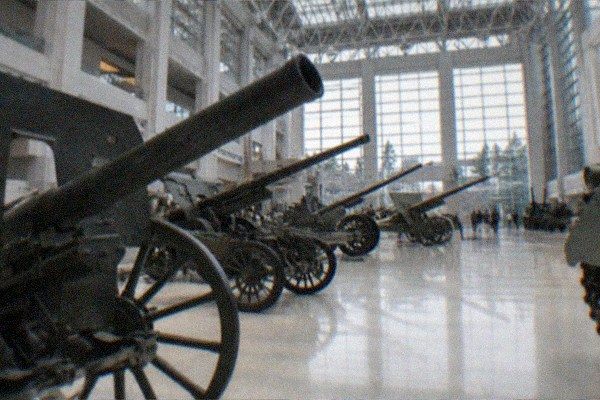
Free entry, no ticket needed.
Plan your visit →Opens the museum's own visitor page. There is nothing to book: the permanent collection is free.
A tank sits in the forecourt of the Military Museum of the Chinese People's Revolution, and it is not a prop. The building at 9 Fuxing Road in Haidian District is one of Beijing's most visited history museums, a ten-columned socialist-classicist landmark on the city's east-west axis devoted to the military history of China from ancient weapons to the People's Liberation Army. Admission is free, but that word misleads more visitors here than almost anywhere else in the city: entry requires an advance real-name reservation, released up to eight days ahead at fixed times of day. Getting the booking right is the difference between walking in and standing outside. This page covers the reservation system in full, the closed day to avoid, how the paid booking services relate to the free door price, and how to plan a visit.
General admission is free: the door price is CNY 0, and the museum sells no paid ticket of its own. What costs money is the optional third-party booking service, which lists from $21 USD. That service is a different transaction from the free ticket itself, and the two should never be confused. Free entry still requires an advance real-name reservation.
Beijing's free museums follow a consistent pattern, and this one is no exception. The museum charges nothing at the door, but it does not hand out entry on a first-come basis. Every visitor, including foreigners, needs a reservation made in advance under their own identification document. The reservation is what gets you through security; the ticket price is simply zero.
The paid option exists because the official reservation channel can be awkward for foreign visitors. A booking service handles the real-name reservation on your behalf, typically in exchange for a fee starting at $21 USD. It does not buy you a better ticket, the underlying entry remains the free, officially issued reservation. If you are comfortable using the official channel yourself with a passport, the reservation itself costs nothing. If you would rather have someone manage the timing and the Chinese-language interface for you, check availability on the listing before your travel dates, since the reservation window opens on a fixed schedule.
| Item | Price | Notes |
|---|---|---|
| General admission at the door | CNY 0 (free) | Real-name reservation required in advance; no walk-up purchase because there is nothing to purchase |
| Third-party booking service | From $21 USD | A reservation service, not a museum ticket; a separate transaction from the free entry |
| Visitor rating of the booking product | 4.4 / 5 | Based on 10 reviews |
Compared with other Haidian venues, the value here is hard to beat. The Summer Palace charges CNY 30 at the door for its park, and the Confucius Temple and Imperial College Museum charges CNY 30 in Dongcheng. This museum asks for nothing but a booking. The honest note is that free in Beijing almost never means walk-in: of the major museums in this directory, the overwhelming majority require an advance real-name reservation, and this one is firmly in that camp.
Reservations open up to 8 days ahead, with slots released at 08:00, 17:00 and 20:00 Beijing time. A real-name reservation is mandatory for every visitor, and there is no same-day or on-site reservation for general visitors. The booking is tied to your identification document and checked at entry.
This is the single most important thing to understand about visiting, and it deserves real planning attention. The reservation window opens eight days before your intended visit date, which is a longer lead time than many Beijing venues, the Forbidden City uses seven days, and the Confucius Temple uses one. The daily quota is released in three batches, at 08:00, 17:00 and 20:00 Beijing time, which means you have three chances each day to grab a slot for a date eight days out. Popular dates, weekends, school holidays, and the days around statutory holidays, go fastest, so the 08:00 release is the one worth being awake for.
The official channel is the museum's own reservation system, described on its visitor guide page at http://www.jb.mil.cn/cgfw/cgzn/. Reservations are made through the museum's WeChat public account or its WeChat mini-program, both of which operate in Chinese. A foreign passport is accepted for the real-name registration, you enter your passport details when booking and present the same physical passport at the entrance. The passport you book with must be the passport you carry on the day; a mismatch is the most common reason visitors are turned away at Chinese museums that use real-name entry.
For visitors without a Chinese phone number or WeChat account set up for mini-programs, the third-party booking service exists precisely for this gap. It makes the official reservation under your passport details on your behalf, timed to the release schedule. It is a convenience, not a different ticket: the entry you receive is the same free reservation everyone else holds. The museum publishes its visiting procedures on its official site, which also carries an English version, so you can read the rules directly rather than relying on secondhand summaries.
The museum closes on Mondays, except statutory holidays. That means a Monday visit is off the table for most of the year, and Monday is the single most expensive planning mistake a Beijing visitor can make. During statutory holiday weeks the Monday closure is lifted, and the museum opens as usual.
The Monday closure is near-universal among Beijing's state museums, and it catches out an enormous number of visitors every year because Monday is often the quiet day on a tourist itinerary. The exception wording matters: on statutory holidays, the national holiday weeks in early October and around the Lunar New Year, plus the shorter public holidays, the museum opens on Mondays too. If your trip falls in one of those windows, a Monday visit is possible, but demand on those dates is also at its peak and reservations should be treated as urgent.
Pair this with the reservation window and the planning rule becomes simple: pick your date, count back eight days, and be ready at 08:00 Beijing time on that day. If you miss the 08:00 release, the 17:00 and 20:00 releases are your fallback. Do not plan to arrive in Beijing and book then, by the time you land, the window for dates within your stay may already have opened and closed.
The same Monday rule applies to most of the museums you might pair with this one. The National Museum of China closes Monday except statutory holidays, as does the National Art Museum of China. If your itinerary has a museum-heavy day, make it any day but Monday, or use Monday for the sites that stay open, such as parks.
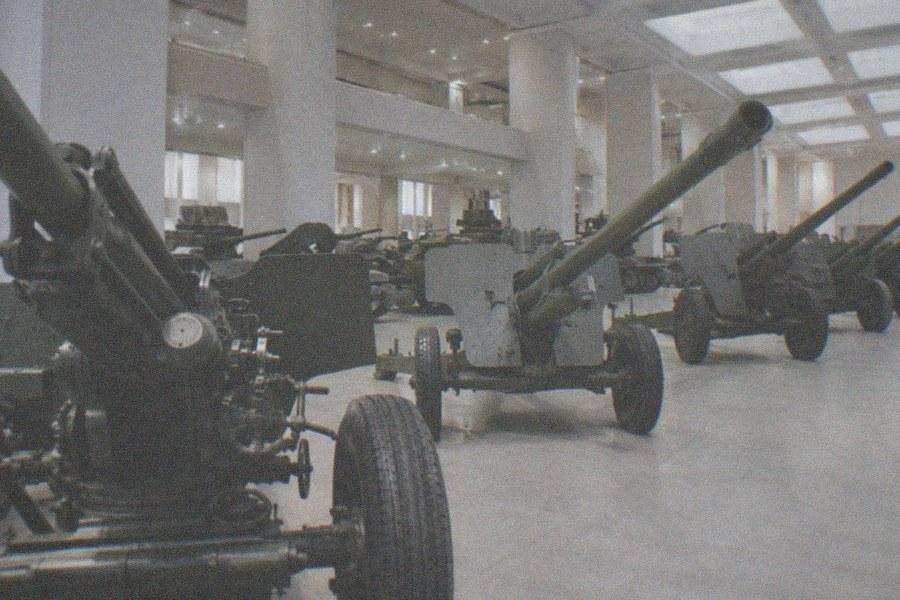
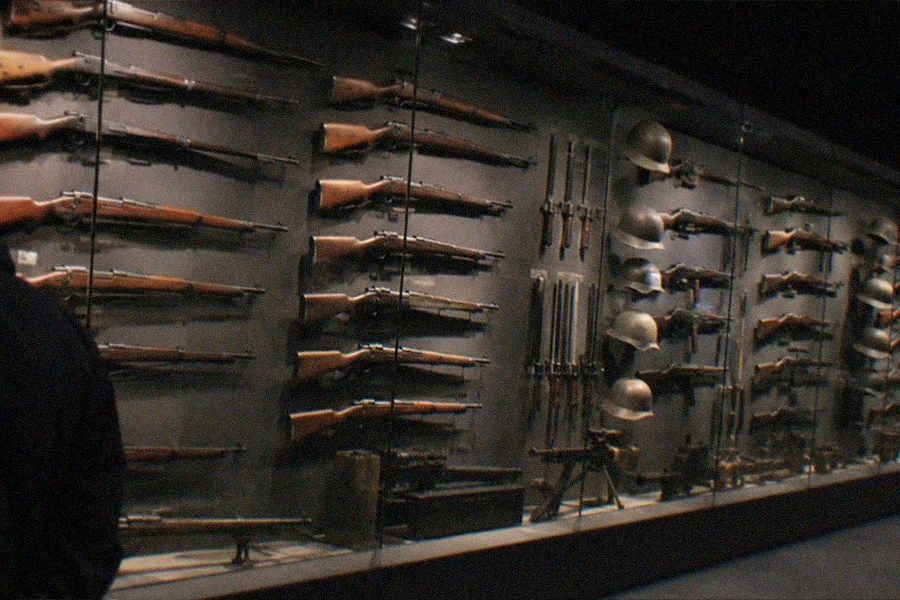
The museum presents the military history of China from ancient weaponry through the revolutionary period to the modern People's Liberation Army, with aircraft, tanks, artillery and small arms displayed alongside uniforms, documents and photographs. It is a history-culture museum, and its collection is built around hardware as much as narrative.
The building itself is part of the experience. The museum sits directly on Fuxing Road, one of the broad avenues that make up Beijing's ceremonial east-west axis, in a monumental structure with a colonnaded facade that reads as unmistakably mid-twentieth-century state architecture. The exhibits inside trace a long arc: ancient Chinese weapons and armor, the wars of the nineteenth and early twentieth centuries, the revolutionary civil wars, the war against Japanese aggression, and the development of the PLA into a modern force.
For most visitors the draw is the heavy equipment. Aircraft and missiles stand in the central halls, tanks and artillery pieces occupy the ground floors, and cases of sidearms, swords and rifles line the galleries. Labels are predominantly in Chinese, though the museum's official site maintains an English version of its visitor information, and the objects largely speak for themselves. Photography of the displays is a normal part of visiting, and the halls are spacious enough that even busy days do not feel crushed.
Who suits this museum? Anyone with an interest in military history or twentieth-century Chinese history will get a great deal from it, and it is one of the better free museums in the city for older children, who gravitate to the vehicles and aircraft. Visitors looking for art or decorative objects should head elsewhere, the Confucius Temple and Imperial College Museum covers imperial scholarship, and the National Museum of China offers a broader cultural sweep. Allow a solid half-day if you read labels carefully; the building is large and the sequence of halls rewards unhurried viewing.
The museum stands at 9 Fuxing Road, Haidian District, Beijing, on one of the city's main east-west avenues. It is served by the Beijing Subway, whose network maps and line information are published at https://www.bjsubway.com/, and by buses along Fuxing Road. Taxis and ride-hailing drop off directly outside.
Haidian is the university and technology district in Beijing's northwest, and Fuxing Road runs through its southern edge, continuing east toward the city center. A subway journey to the museum is the standard approach for most visitors: the subway is cheap, avoids the traffic that builds on the ring roads at rush hour, and delivers you within a short walk of the entrance. Check the Beijing Subway's own site for the current line map, fares and first and last train times when planning your journey, since interchange patterns and operating hours are the two details worth confirming in advance.
If you take a car or taxi, the museum's address is straightforward for any driver, Fuxing Road is a landmark avenue and the museum is a well-known destination. Allow extra time on weekday mornings and evenings when the avenue and its cross-streets are congested. Security screening applies at the entrance to the museum grounds, so factor a short queue into your arrival time, and arrive holding the passport your reservation was made under.
For pairing, the museum sits in the same district as the Summer Palace, which lies further northwest beyond the Fifth Ring. A realistic day combines the museum in the morning with an afternoon at the Summer Palace, though the palace deserves more than a rushed couple of hours, so some visitors prefer to give each its own half-day. Closer at hand, Haidian also holds the National Museum of Classic Books at the National Library of China and the Beijing Stone Carving Art Museum, both of which make quieter companions if the military museum's quota has beaten you.
Bring the passport you booked with, arrive inside your reserved time slot, and do not plan a Monday visit outside statutory holidays. Entry is free, but the reservation is mandatory and the daily quota is finite. That combination, free but strictly booked, defines the whole visit.
The practical checklist is short but unforgiving. First, the reservation: made up to eight days ahead, released at 08:00, 17:00 and 20:00 Beijing time, under your real name and passport number. Second, the document: the physical passport, matching the booking, carried on the day. Third, the calendar: any day except Monday, unless a statutory holiday lifts the closure. Fourth, the timing: arrive for your slot, not hours after it.
| At a glance | Detail |
|---|---|
| Area | Haidian District |
| Address | 9 Fuxing Road, Haidian District, Beijing |
| Closed day | Monday (except statutory holidays) |
| Reservation required | Yes, real-name, up to 8 days ahead |
| Reservation release times | 08:00, 17:00 and 20:00 Beijing time |
| Admission | Free (CNY 0 at the door) |
What the museum does not offer is worth knowing too. There are no same-day or on-site reservations for general visitors, so turning up without a booking is a wasted journey. The museum's own visitor guide, live at http://www.jb.mil.cn/cgfw/cgzn/, is the authoritative source for current procedures, and it carries an English version. Read it before you book rather than after.
Finally, a note on expectations. This is a state military history museum, and its galleries present Chinese military history from a Chinese perspective, with the emphasis you would anticipate given the institution. Visitors who engage with that framing on its own terms, and who come for the aircraft, the armor and the sheer scale of the collection, consistently rate the experience highly. Visitors seeking a critical or comparative treatment of the same history should calibrate accordingly. Either way, the price is unbeatable, and with an eight-day reservation window there is no excuse for arriving without a slot.
Yes. General admission is free, the door price is CNY 0, but free does not mean walk-in. Every visitor needs an advance real-name reservation, released up to 8 days ahead at 08:00, 17:00 and 20:00 Beijing time. A third-party booking service from $21 USD exists, but it is a convenience for the same free reservation, not a different ticket.
The reservation window opens up to 8 days before your visit date, with slots released in three daily batches at 08:00, 17:00 and 20:00 Beijing time. Popular dates such as weekends and holiday periods go fastest, so aim for the 08:00 release. There is no same-day or on-site reservation for general visitors.
Yes. A foreign passport is accepted for the real-name reservation. You enter your passport details when booking through the museum's official channel and must present the same physical passport at entry. The passport you book with must match the passport you carry on the day of your visit.
The museum closes on Mondays, except statutory holidays. During national holiday periods the Monday closure is lifted and the museum opens as usual. For most of the year, plan your visit for Tuesday through Sunday, and use Monday for parks or other sites that stay open.
The museum is at 9 Fuxing Road, Haidian District, Beijing, on one of the city's main east-west avenues. It is reachable by the Beijing Subway, by bus along Fuxing Road, or by taxi and ride-hailing, which can drop off directly outside. Current subway line and fare information is published by Beijing Subway.
Plan on a solid half-day if you read the labels carefully. The building is large, with aircraft, tanks, artillery and small arms spread across multiple floors, and the sequence of halls rewards unhurried viewing. Visitors with children often move faster through the narrative galleries and slower around the vehicles and aircraft.
It is one of the better free museums in Beijing for older children, who tend to gravitate to the tanks, aircraft and artillery on display. Labels are predominantly in Chinese, but the objects themselves carry much of the display. Visitors seeking art rather than military history would do better at other museums in the directory.
No. There are no same-day or on-site reservations for general visitors, so arriving without a booking means being turned away. Secure your real-name reservation up to 8 days ahead through the official channel, or use a booking service that makes the reservation under your passport details on your behalf.
Dongcheng
from $12 per person, live price on the listing Check availability →