Confucius Temple and Imperial College Museum
Dongcheng
from $12 per person, live price on the listing Check availability →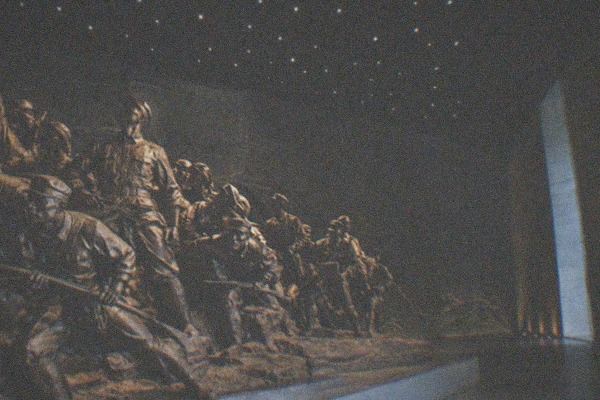
Free entry, no ticket needed.
Plan your visit →Opens the museum's own visitor page. There is nothing to book: the permanent collection is free.
The museum stands inside Wanping Fortress, a walled Ming-era garrison town whose gates and ramparts still carry the scars of the fighting that began here on 7 July 1937, when Japanese troops opened fire near the Marco Polo Bridge. Inside, the exhibition traces the full course of the War of Chinese People’s Resistance Against Japanese Aggression through weapons, documents, photographs and recovered artefacts, and the surrounding fortress itself, bullet-pocked walls, the bridge just outside, turns a visit into a walk through the ground where the war started. The museum reopened in July 2025 after a renovation, and general admission is free, with no reservation needed for the main halls.
General admission is free: the door price is CNY 0, and there is no paid ticket, no timed entry quota and no booking fee for the main exhibition halls. Entry works on a walk-up basis, and you simply pass through security with valid identification. Nothing in the standard visit costs money.
This makes the museum one of the simpler free venues in Beijing to enter. Many of the city’s free museums, the National Museum of China, the Military Museum of the Chinese People’s Revolution, the National Art Museum of China, pair free admission with a mandatory advance real-name reservation, often released on a fixed schedule days ahead. Here, the general visit does not work that way: you arrive, show ID at the security check, and walk in. The one exception is the panorama hall, a separate presentation space that does require a reservation, up to 3 days ahead through the museum’s official WeChat account.
Because entry is free and unticketed, there is genuinely nothing to buy in advance, and no third-party booking service is needed or appropriate. The museum’s own channel, www.1937china.com, is where any operational changes, holiday openings, special exhibitions, panorama hall schedules, are announced, and it is the only channel worth consulting before a visit.
| Item | Price / requirement |
|---|---|
| General admission | Free (CNY 0) |
| Reservation for main halls | Not required, walk-up entry with valid ID |
| Panorama hall | Reservation required, up to 3 days ahead via the official WeChat account |
| Special exhibitions | Announced through the museum’s own channel |
The honest cost of a visit here is therefore not the ticket. It is the time and transport: the museum sits at the far southwestern edge of Fengtai District, farther from the city centre than most of Beijing’s major museums, and reaching it takes real planning. Budget for the journey, not the entry.
No reservation is required for general entry, this venue is a genuine walk-up museum, which is rare in Beijing. The only reservable element is the panorama hall, which takes bookings up to 3 days in advance through the museum’s official WeChat account. The release time of daily slots is not published.
This is the single most useful planning fact about the museum. Of the 31 major venues covered on this site, only six take genuine walk-ups; the rest require an advance real-name reservation, and free admission in Beijing almost never means walk-in entry. Here it does. If you arrive on an open day with a passport or other valid identification, you can enter the main exhibition halls without having booked anything.
The panorama hall is the exception. It is a dedicated presentation space, and the museum manages its capacity by reservation only: up to 3 days ahead, through the official WeChat account (中国人民抗日战争纪念馆). Two things are not published: the time of day at which slots release, and whether a foreign passport is accepted in that WeChat reservation flow. Where the window or the release time is not published, this page does not invent one, treat the WeChat account itself, reached via the museum’s site, as the source of truth for the panorama hall.
For foreign visitors without WeChat set up, the practical advice is simple: the main halls, the substance of the museum, need no booking at all. If the panorama hall matters to you, arrange WeChat access before your trip, since that is the only channel through which it is reserved.
The museum is closed on Mondays, except holidays and commemorative days, a wider exception than most Beijing museums state. On open days, general entry requires no booking, so a Monday is the only calendar mistake that can end a visit. Check the museum’s own channel for holiday openings.
The Monday closure follows the standard Beijing pattern, but the wording here is distinctive: the exception covers not just statutory holidays but also commemorative days. Given the museum’s subject, and given that 7 July, the anniversary of the Marco Polo Bridge Incident, is marked at this very site, commemorative dates are exactly when the museum is most likely to open its doors on a Monday and to hold ceremonies. If your trip overlaps a significant anniversary, expect activity around Wanping Fortress and confirm opening status via www.1937china.com.
The museum reopened in July 2025 after a renovation, so if you read older travel material describing previous layouts or closures, treat the current site as the authority on what is open now. Exact daily opening hours and last-entry times are not published in the verified record for this venue, so this page states none; plan your arrival for the morning or early afternoon, which is the safe pattern for any Beijing museum, and confirm the day’s hours on the museum’s own channel if your schedule is tight.
| At a glance | Detail |
|---|---|
| Closed day | Monday (except holidays and commemorative days) |
| Area | Fengtai District, Beijing |
| Reservation | Not required for general entry; panorama hall only, up to 3 days ahead |
| How long to allow | Half a day including the fortress walls and the Marco Polo Bridge |
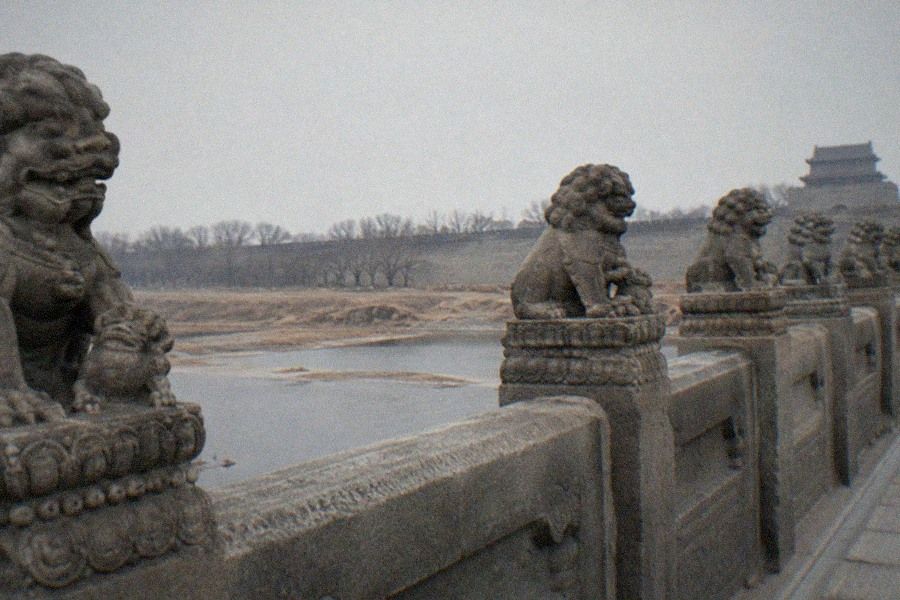
Pair the museum with a walk through Wanping Fortress itself: the walls are walkable, the gate towers are intact, and the Marco Polo Bridge, the stone bridge whose lions are a Beijing landmark in their own right, sits immediately beside the fortress. Allow time for all three; the site is a destination, not a stopover.
The museum sits inside Wanping Fortress, beside the Marco Polo Bridge in Fengtai District, far southwestern Beijing, well outside the museum cluster around Tiananmen. Reaching it means a long Metro ride, a bus connection or a car journey, so build the travel time into your day rather than treating it as a quick stop.
By Metro, the journey runs along the southwestern lines toward the Wanping area; the specific station serving the fortress is not confirmed in the verified record for this venue, so this page names none, use the Beijing Subway’s own journey planner at www.bjsubway.com to map the route from wherever you are staying, and allow generous time for the distance. The fare structure is standard for the network, and the ride from the centre is one of the longer museum trips in the city.
By car or taxi, the fortress is reachable via the southwestern ring roads, and the drive from central Beijing is substantial in weekday traffic. Parking at the fortress area is not free, parking around a heritage site of this scale is paid, and the exact tariff is not published in the verified record, so arrive prepared to pay a standard lot fee rather than expecting free parking. On commemorative days and holiday periods, the immediate area around the bridge and fortress gets busy, and the lots fill first; arriving early in the day is the reliable strategy.
Because the museum is a walk-up venue with no timed slot, transport flexibility matters more here than at reserved museums: you cannot lose a booking by arriving late, but you also have no reserved window to protect you if crowds build. Go early.
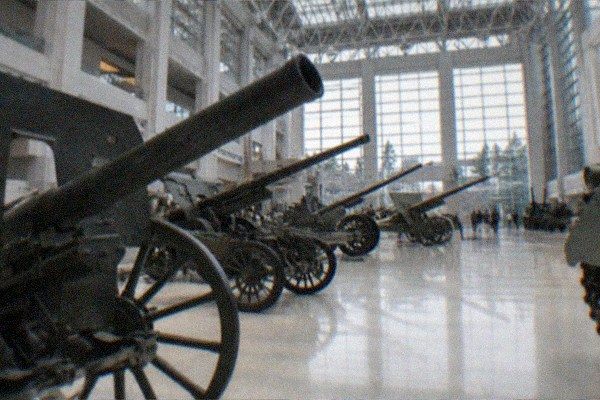
The exhibition covers the full war from its outbreak at the Marco Polo Bridge in 1937 through to victory in 1945, told with weapons, uniforms, documents, photographs and personal artefacts, and the museum’s location, inside the fortress where the fighting began, gives the displays a physical anchor few war museums anywhere can match.
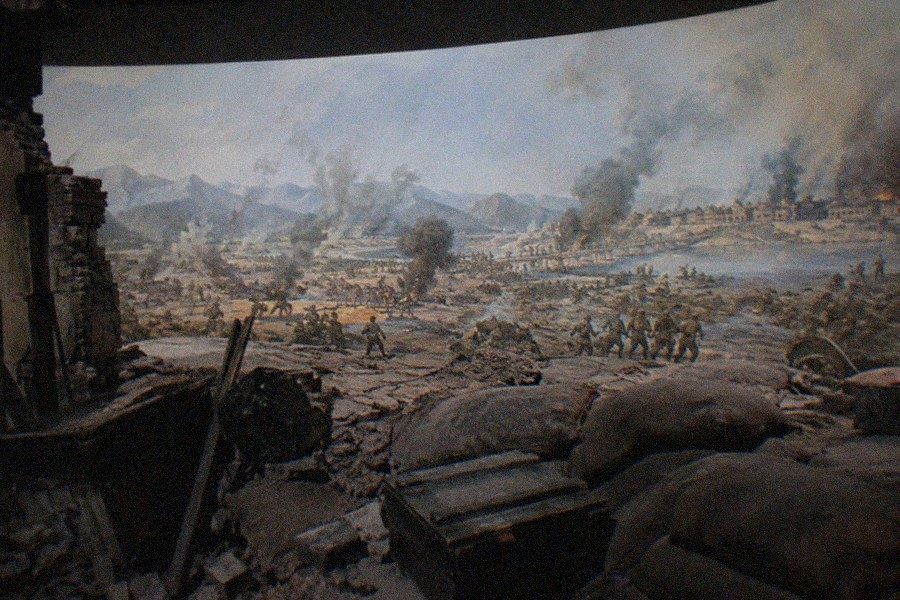
The museum reopened in July 2025 after renovation, and the renewed displays carry the narrative through the years of occupation, resistance and eventual victory. Labels and interpretation are primarily in Chinese; the museum’s own site does not carry an English version, so foreign visitors relying on English should expect to read the objects rather than the text panels, or to bring a translation app for the wall copy. The artefacts themselves, ordnance, equipment, period photographs, communicate much of the story regardless of language.
Outside the halls, the fortress is part of the experience. The Ming-era walls of Wanping still show damage from the 1937 fighting, preserved in place, and the Marco Polo Bridge runs directly alongside, a stone bridge dating back centuries, famous for the carved lions along its balustrades, and the literal spot where the war began. A visit that covers only the interior misses half the site.
For visitors who want more of Beijing’s military and historical narrative, the Military Museum of the Chinese People’s Revolution covers the broader arc of China’s modern military history in Haidian, and the National Museum of China places the war in the wider sweep of Chinese history on Tiananmen Square’s east side.
The museum suits anyone with a serious interest in twentieth-century history, and the free, walk-up entry makes it a low-friction addition to a Beijing trip, but the distance from the centre means it deserves a planned half-day rather than a casual drop-in. Allow the morning for the halls and the afternoon for the fortress and bridge.
For history-focused travellers, this is one of Beijing’s most consequential sites: the war that the museum documents began at the bridge outside its gates, and the combination of exhibition and location is unmatched among the city’s museums. For families, note that the content is a war museum’s content, weapons, photographs and accounts of a brutal conflict, so judge the material against the ages of any children in your group. For visitors with only a day or two in Beijing and a list centred on the imperial sites, the Forbidden City, the Confucius Temple and Imperial College Museum, this museum is a stretch too far; it belongs on the itinerary of a third or fourth day.
A sensible sequence: arrive in the morning, walk a stretch of the fortress walls first while the light is good and the lots are emptier, then enter the museum halls, then finish at the bridge itself. The museum is not part of the Beijing Museum Pass circuit’s paid venues, entry is free outright, so a pass saves you nothing here, and there is no combined ticket to buy. The only logistics worth locking down in advance are the panorama hall, if you want it, via the museum’s official WeChat account up to 3 days ahead, and a check of www.1937china.com for the day’s status if your visit falls near a Monday holiday or a commemorative date.
Yes. General admission is completely free, the door price is CNY 0, and there is no paid ticket or booking fee for the main exhibition halls. Entry is walk-up with valid identification, which makes it one of the few Beijing museums where free genuinely means walk in.
No reservation is needed for the main halls; you walk up with valid ID. The only exception is the panorama hall, which requires a reservation up to 3 days ahead through the museum’s official WeChat account. The release time of panorama slots is not published.
It is closed on Mondays, with an exception for holidays and commemorative days, a broader exception than most Beijing museums state, reflecting the site’s role in anniversary events around the Marco Polo Bridge. Confirm holiday openings via the museum’s own channel before a Monday visit.
Inside Wanping Fortress, beside the Marco Polo Bridge, in Fengtai District, far southwestern Beijing. It is one of the city’s more remote major museums, so allow substantial travel time from the centre whether you come by Metro, bus or car, and plan a half-day for the site.
No. Parking around the fortress and bridge area is paid, and the exact tariff is not published in the verified record, so arrive expecting a standard lot fee. On holidays and commemorative days the lots fill early, which is one more reason to come in the morning.
Interpretation is primarily in Chinese, and the museum’s own website does not carry an English version. The objects, weapons, documents, photographs, carry much of the story visually, but visitors relying on English should bring a translation app for the wall panels.
Plan a half-day: the exhibition halls cover the full 1937–1945 war, and the surrounding Wanping Fortress walls and the Marco Polo Bridge itself, where the fighting began, are part of the same site and deserve their own time. Arriving early leaves room for all three.
Yes. The museum reopened in July 2025 after a renovation, so older travel material may describe previous layouts or closures. The museum’s own site, www.1937china.com, is the authority on what is currently open, including any special exhibitions and panorama hall schedules.
Dongcheng
from $12 per person, live price on the listing Check availability →