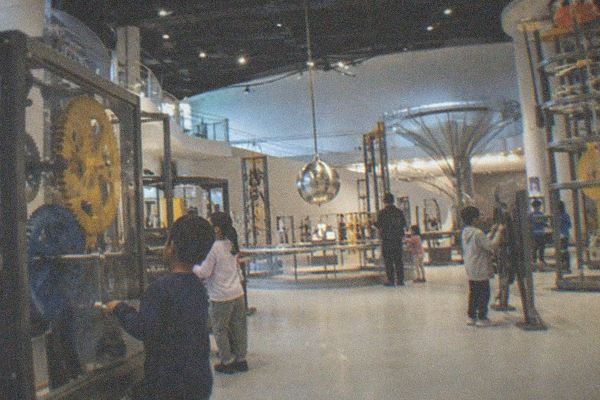
China Science and Technology Museum
Chaoyang
from $21 per person, live price on the listing Check availability →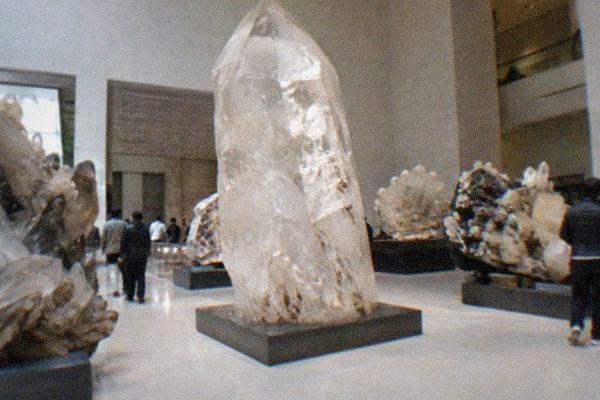
Current admission is on the museum's own ticket page.
Visitor info →Opens the museum's own website. Book on the official site; nothing is charged on this page.
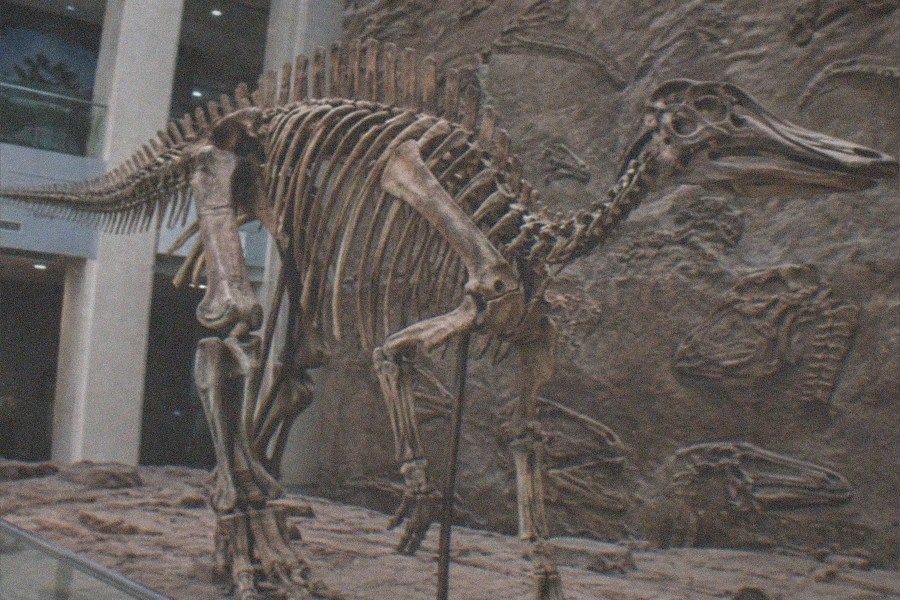
A giant, glowing cluster of amethyst crystals; a slab of fossil fish from an ancient lake bed; a hall given over almost entirely to minerals, rocks and gems in every colour the earth can produce. The Geological Museum of China, tucked into a hutong off Xisi in Xicheng District, is China's oldest and largest museum of earth sciences, and its collection runs from dinosaur eggs and towering fossil skeletons to the shengxiong stone that Chinese scholars have prized for centuries. Admission is a modest CNY 15, but the museum still runs on Beijing's real-name reservation system, so a ticket is booked in advance through the museum's official WeChat account rather than bought on the street.
China's national museum of the earth sciences, founded to exhibit the country's mineral, rock and fossil wealth under one roof. It sits at 15 Yangrou Hutong, Xisi, in Xicheng District, and charges CNY 15 for adult admission. It is one of Beijing's most quietly rewarding science museums, and it closes on Mondays except statutory holidays.
The museum's strength is depth over spectacle. Where the China Science and Technology Museum builds interactive machines for children to clamber over, the Geological Museum concentrates on the objects themselves: crystals, ores, meteorite slices, fossil fish, dinosaur eggs, and some of the finest mineral specimens ever pulled out of Chinese mines. The mineral and gem halls are the reason most international visitors seek the place out, cases of cinnabar, stibnite, fluorite and malachite displayed at a scale few museums anywhere can match.
The building is easy to miss. It stands back from the main road inside a hutong near the Xisi intersection, a short walk from the commercial strip along Fuchengmennei Street. That location matters for planning: this is central Xicheng, close to the Beijing Planetarium and the Beijing Ancient Architecture Museum, so the museum slots naturally into a day spent in the west of the old city rather than demanding its own expedition.
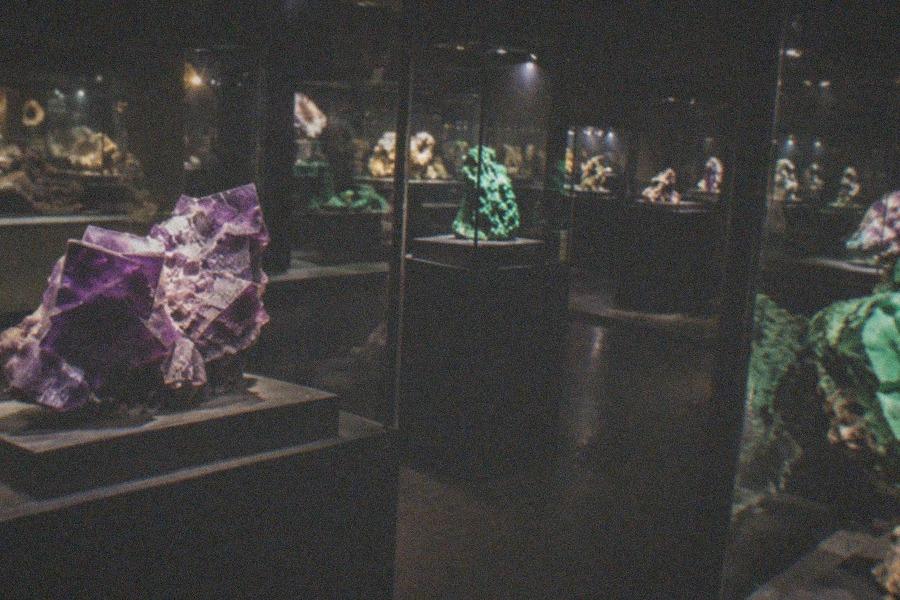
The museum's remit is national. Its collection documents the geology of the whole country, the ore bodies of the southwest, the fossil beds of Liaoning, the gem mines of the east, and it has historically served geologists as much as tourists. That gives the galleries a slightly academic, unhurried character. Labels are primarily in Chinese, and the museum's official website at www.gmc.org.cn carries no English version, so visitors who do not read Chinese should plan to enjoy the objects visually and treat the visit as a specimen-viewing trip rather than a text-guided one.
Adult admission is CNY 15 at the door, and the museum is not free. That price covers the permanent exhibition halls. There is no third-party ticket product for this venue: booking runs through the museum's own official channels, and the CNY 15 door price is the only published admission figure.
Fifteen yuan places the Geological Museum among the cheapest of Beijing's paid museums, the same nominal tier as the Beijing Ancient Architecture Museum, and below the CNY 20 charged at the Paleozoological Museum of China a short distance away. Discount and free policies exist for eligible groups, which is standard practice at Chinese state museums, but the museum publishes no separate concession price list that this page can verify, so the honest figure to plan around is the adult CNY 15.
| Ticket | Price |
|---|---|
| Adult admission | CNY 15 |
| Free or discounted entry | Available for eligible groups; the museum has not published a concession price list |
| Booking route | Official WeChat account, up to 7 days ahead |
| Third-party ticket products | None exist for this venue |
Because there is no reseller product, there is no markup to avoid, but also no shortcut around the reservation system. If a website other than the museum's own channel offers to sell you a Geological Museum of China ticket, treat it with suspicion. The museum's own site is the authoritative source for prices and policy, though be warned that www.gmc.org.cn is unreachable from outside mainland China, so the site may simply not load if you are browsing from abroad. The WeChat reservation channel is the practical route for most visitors, including those already in Beijing on a short stay.
A reservation is required, and the booking window opens up to 7 days ahead of your visit through the museum's official WeChat account. The exact time of day at which slots release is not published, so there is no daily drop time to camp on. Book as early inside the 7-day window as your plans allow.
This is the part of a Beijing museum visit that catches most first-time visitors out, and the Geological Museum follows the citywide pattern: a real-name reservation tied to an identity document, made in advance, with the ticket checked against that document at entry. The reservation is made through the museum's official WeChat account, which is also where the practical booking flow lives. The museum's own website, www.gmc.org.cn, is the official information channel, but it does not answer from outside mainland China, so if you are planning from overseas, expect that link to fail rather than to help. The WeChat route is the one that works in practice.
On the question of foreign identity documents: the museum's reservation channel is documented to accept foreign permanent residence ID holders for real-name booking. For an ordinary foreign passport, the museum has not published a confirmation either way, so plan conservatively, if you hold a foreign passport, assume the WeChat flow may require a local contact's help and build in a fallback plan. This is not unique to this venue; it is the general friction of Beijing's real-name systems, and it affects the free museums most of all.
Two practical notes. First, the 7-day window means you cannot book months ahead, set a reminder for seven days before your intended visit and book on that day. Second, because the release time of day is not published, there is no advantage to waking early for a slot drop; there is simply an advantage to booking near the front of the window, since popular days, weekends and school holidays especially, can fill. The museum also notes extended hours in peak periods, so opening times can vary by season; the closed day, however, is fixed.
Every Monday, except statutory holidays. This is the single most expensive planning mistake available at this museum: a Monday arrival finds the doors shut. On statutory holidays that fall on a Monday, the museum opens, but every ordinary Monday it does not.
Beijing's museum closure rhythm is almost universally Monday, and the Geological Museum follows it exactly. If your itinerary puts you in Xicheng on a Monday, the sensible move is to swap days: the museum works on Tuesday through Sunday, and the surrounding neighbourhood, the hutongs south of Xisi, the Beijing Ancient Architecture Museum at Xiannongtan further south, the Beijing Planetarium to the northwest, is walkable enough that a midweek visit costs you nothing in logistics.
Seasonal variation exists in opening hours, extended hours have been announced in peak visitor periods, but the museum does not publish a fixed daily schedule that this page can state with confidence, so the safe assumption is a standard daytime opening with afternoon entry still possible, and a check of the WeChat account on the day you book, where current hours accompany the reservation flow. What does not vary is the closed day. Plan around Monday, and the rest of the week is yours.
| Fact | Detail |
|---|---|
| Closed day | Monday (except statutory holidays) |
| Area | Xicheng |
| Address | 15 Yangrou Hutong, Xisi, Xicheng District, Beijing |
| Reservation required | Yes |
| Reservation window | Up to 7 days ahead via the official WeChat account |
| Slot release time | Not published |
| How long to allow | 1.5 to 2.5 hours for the permanent halls |
That visit length is a comfortable estimate rather than an official figure: the permanent collection is compact enough that a focused hour and a half covers the mineral and fossil halls, while visitors with a geology interest or children in tow will stretch toward two and a half.
The museum sits inside a hutong just off the Xisi intersection in central Xicheng District, at 15 Yangrou Hutong. There is no verified nearest subway station for this venue, so do not trust a blog that names one without checking, instead, plan around the Xisi area, which is served by central Beijing's subway network, and confirm your route on the operator's own site, www.bjsubway.com.
By Metro, the practical approach is to plan your journey to the Xisi intersection and walk from there. Beijing's subway is the reliable spine of any museum day in this city, cheap, frequent, and immune to the traffic that chokes Fuchengmennei Street at rush hour, and the operator's official site at www.bjsubway.com publishes the network map, first and last train times, and fare rules that a foreign visitor needs. Because the museum's own nearest-station detail is not verified, the honest instruction is: route to the Xisi area on Line 4, then navigate on foot for the last few hundred metres. The hutong location means the final approach is a walk through a genuinely old Beijing street grid, which is part of the charm.
By car or taxi, be aware that hutong addresses are awkward for drivers. Yangrou Hutong is a narrow lane; the drop-off will be at the hutong mouth rather than the door, and parking in this part of Xicheng is scarce and metered. A taxi or ride-hail to "Xisi, Yangrou Hutong" gets you within a two-minute walk. If you are driving yourself, do not count on parking at the museum, plan to use a commercial lot in the Xisi commercial strip and walk in. For most visitors, the subway-plus-walk combination is faster than any road option in central Xicheng.
Pairing the museum with neighbours is easy. The Beijing Planetarium sits to the northwest in the same district, and the Paleozoological Museum of China is also in Xicheng, an earth-history day of geology, fossils and astronomy is entirely feasible between mid-morning and late afternoon. Further afield, the Zhoukoudian Peking Man Site Museum in Fangshan is the natural sequel for anyone whose interest in deep time was awakened here, though it is a separate expedition out of the city centre.
Anyone drawn to minerals, gems, fossils and the deep history of the earth, and anyone who wants a substantial science museum without the crowds of the headline institutions. It suits independent adult visitors and curious older children best; families wanting hands-on interactives will find less to press and pull here than at the technology museums.
The core audience is the specimen lover. If your interest in Beijing's museums is imperial architecture and dynastic art, this is not your stop. But if a hall of Chinese mineral specimens, cinnabar crystals, giant quartz, ore samples from famous mines, sounds like a good afternoon, the CNY 15 admission is among the best value in the city. The fossil galleries carry the story of life on earth through Chinese fossil beds, which connect directly to the Zhoukoudian Peking Man Site Museum and its human-fossil story in Fangshan.
Two caveats temper the recommendation. First, the language: the museum's official site has no English version, and gallery labels are overwhelmingly Chinese, so the interpretive layer is thin for non-readers. Second, the reservation system: this is not a walk-up-and-wander venue, and the 7-day WeChat window plus an unconfirmed passport path means foreign visitors should treat booking as the hard part of the trip, not the visit itself. For visitors who clear those two hurdles, the reward is one of Beijing's most distinctive collections, in a quiet hutong setting, for the price of a cup of coffee.
Adult admission is CNY 15, paid through the museum's official reservation channel. There is no free general entry, though free and discounted admission exists for eligible groups. No third-party ticket product exists for this venue, so CNY 15 is the only published price.
Yes. A real-name reservation is required, made up to 7 days ahead through the museum's official WeChat account. The exact time of day at which slots release is not published, so book as early in the 7-day window as your plans allow, especially for weekends and holiday periods.
No. The museum closes every Monday except statutory holidays. If a public holiday falls on a Monday, the museum opens; every ordinary Monday it does not. Plan your Xicheng museum day for Tuesday through Sunday.
The reservation channel is documented to accept foreign permanent residence ID holders. For an ordinary foreign passport, the museum has not published a confirmation either way, so plan conservatively and be prepared to ask a local contact for help with the WeChat booking flow.
The museum's official site, www.gmc.org.cn, does not answer from outside mainland China. If you are browsing from abroad, the link may simply fail. The WeChat reservation channel is the practical route for booking once you are in China.
Roughly 1.5 to 2.5 hours covers the permanent mineral, gem and fossil halls. Visitors with a strong geology interest or children in tow will sit at the upper end of that range; a focused walk-through takes about an hour and a half.
No nearest station has been verified for this venue. The practical approach is to route to the Xisi intersection in Xicheng on the subway and walk the last few hundred metres to 15 Yangrou Hutong. Confirm routes on the official bjsubway.com site.
Curious older children enjoy the fossils, dinosaur eggs and dramatic mineral specimens, but the museum is a specimen-viewing collection rather than a hands-on science centre. Families wanting interactive exhibits will find more to press and pull at the China Science and Technology Museum.
Chaoyang
from $21 per person, live price on the listing Check availability →
Fangshan
from $13 per person, live price on the listing Check availability →